Türkiye is advancing efforts to reinforce its future security by linking national stability with broader regional cooperation across neighboring areas.
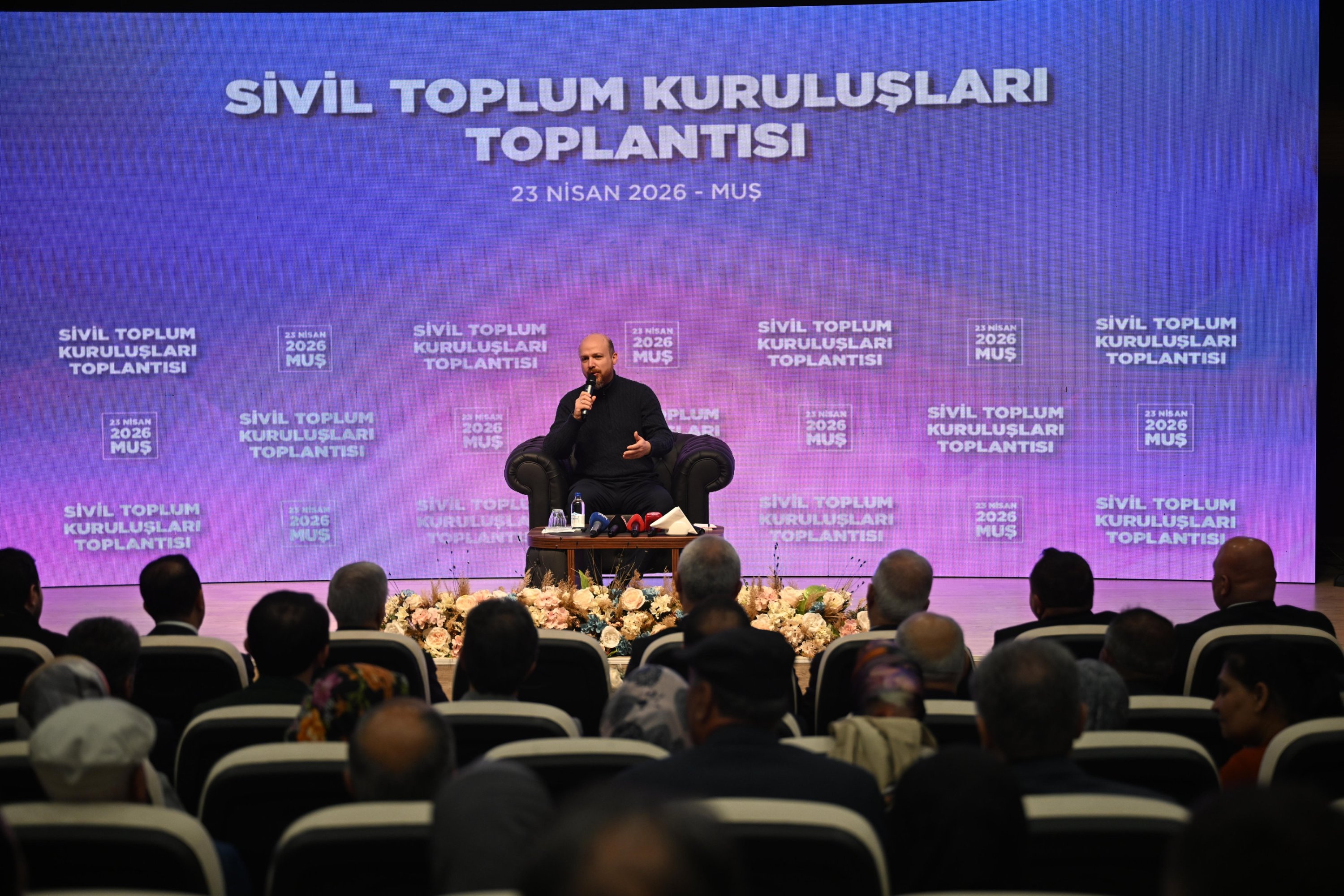
Speaking at a Civil Society Organizations Meeting held at the Faculty of Theology of Muş Alparslan University in eastern Türkiye on Thursday, Necmeddin Bilal Erdoğan, chairperson of the board of trustees of the Ilim Yayma Foundation, said Türkiye’s defense approach can no longer be limited to its own territory.
“If we want to ensure our own security, we must also work to ensure the security of all countries in our region,” he said. “Türkiye must now establish its defense line beyond its borders.”
He added that instability in regions such as the Balkans, the Middle East, North Africa, and the Caucasus directly impacts Türkiye, and that lasting peace in these areas would significantly strengthen the country’s security and prosperity.
Erdoğan emphasized that Türkiye is increasingly gaining the capacity to act on this broader strategic vision but warned that long-term goals depend on preparing younger generations. “If we fail to prepare our children with a strong vision, we cannot achieve these goals,” he said.
Education and child development were highlighted as a shared responsibility of society, with emphasis placed on the idea that raising children should not be limited to parents or teachers but should involve all members of society.
“We must accept that raising a child is not only the duty of parents or teachers,” he said. “This is a shared responsibility of society.”
He stressed that every interaction with a child contributes to shaping their character. “When I meet a child, I am responsible for their upbringing,” he said.
“I must greet a child so they learn to greet. I must treat them with kindness so they learn kindness. I must show mercy so they learn mercy. No one can say this is not their responsibility,” he added.
He said values are learned through daily behavior and social examples rather than instruction alone.
The importance of teachers as central figures in education and social development was also emphasized, with calls for stronger support for educators rather than questioning their professional role.
“The teacher is the one who will guide us. We should not try to teach teachers how to do their job,” he said, stressing that educators must be supported in their professional roles rather than subjected to external direction or interference.
“We have lost too much time,” he said. “If we had taken the right steps 25-30 years ago, if we had properly addressed these issues earlier, and if the necessary reforms had been implemented on time, we would be in a much better position today in terms of education, social development, and protecting our children.”
He warned that social media is exposing children to increasing risks and argued that earlier regulatory steps could have reduced current challenges.
He also pointed to what he described as a wider social crisis of declining trust.
“How many people in society truly care for one another?” he said. “This weakening of social bonds creates space for negative influences.”
He said the erosion of trust affects children directly and contributes to broader societal instability.
He referred to ongoing conflicts in Ukraine, Gaza, Iran, Lebanon and other regions, describing the broader geography as one marked by prolonged instability, repeated crises, and continuous security challenges.
“We live in a region where conflict and unrest have continued for decades,” he said, adding that Türkiye cannot isolate itself from these dynamics and must instead position itself in a way that accounts for the realities of its surrounding environment.
He argued that in such a setting, national security cannot be understood only within domestic borders and that both internal resilience and external strategic depth are necessary.
“If Türkiye wants to be secure, it must be very strong,” he said, stressing that strength must be maintained simultaneously inside the country and in its wider regional influence.
He went on to say that Türkiye’s security concept must evolve beyond its traditional framework and extend into neighboring regions where instability directly affects national interests.
“Türkiye must establish its defense line not only within its territory but also in the Balkans, the Middle East, North Africa, and the Caucasus,” he said, underlining that security, stability, and development in these regions are directly interconnected with Türkiye’s own long-term stability and prosperity.
He added that stability in neighboring regions directly reinforces Türkiye’s own security environment, creating a more predictable and sustainable regional order in which economic and political development become mutually supportive.
Türkiye’s long-term strategic vision also came into focus, with references to the 2023, 2053, and 2071 targets, which were presented as part of a shift from short-term thinking to long-term national planning.
“We moved from a country that could not see one year ahead to one that now sees 10 years ahead,” he said, framing the transformation as a structural change in national outlook and governance.
Despite global crises and regional conflicts, he noted that Türkiye has largely met or come close to its 2023 objectives, describing this as evidence of resilience under difficult international conditions.
The 2053 vision, he said, represents a structured long-term roadmap designed to guide the country’s development, strengthen its global position, and shape its strategic trajectory over the coming decades.
Attention then turned to youth and education, where he pointed to changing aspirations among young people, noting that increased access to opportunities has significantly influenced career and study choices abroad.
“Today, 30% to 40% of young people aim for education or careers abroad because they see it as accessible,” he said, linking this trend to expanded mobility and broader educational possibilities compared to previous decades.
At the same time, he stressed that expanding opportunities must be matched with stronger expectations in terms of discipline, ambition and performance across all fields of education and work.