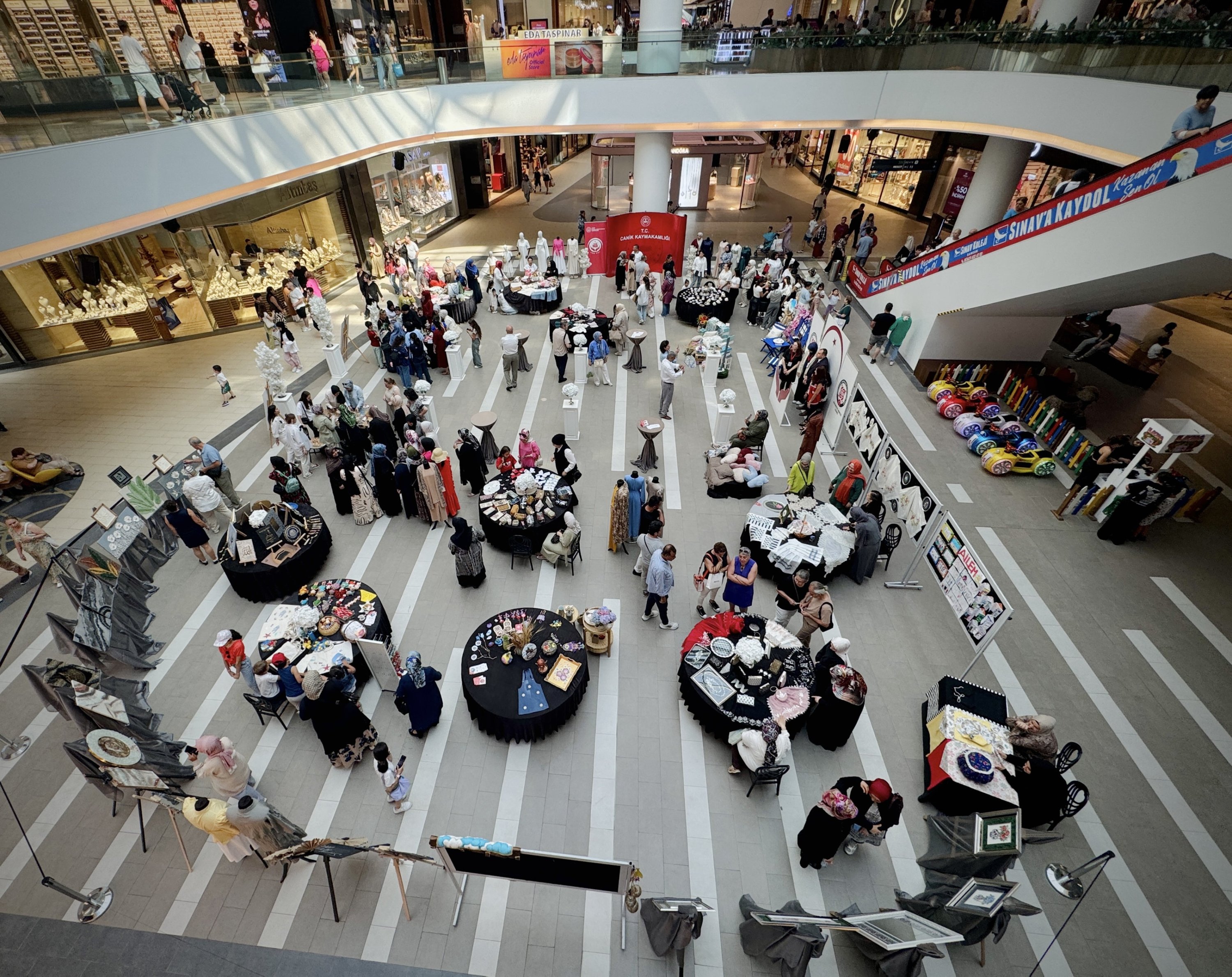
In a nationwide effort to strengthen the role of women in society and support family well-being, Türkiye’s Ministry of Family and Social Services announced that 60,000 women benefited from programs provided by 559 Family Support Centers (ADEM) across the country this year.
Operating under the theme of the 2025 Year of the Family and guided by the principle “strong women, strong families, strong Türkiye,” the Family Support Centers serve as vital community hubs that offer free training, education and social support to women of all backgrounds. The centers aim to reinforce family structures, promote national and cultural values, support women’s personal development, and increase their participation in economic life.
In a written statement, Minister of Family and Social Services Mahinur Özdemir Göktaş emphasized the significance of empowering women in all spheres of life. “Women play a critical role in achieving social justice, family stability and national progress,” she said. “To help unlock their potential, we are continuing to expand and diversify the services we offer through ADEM.”
At the heart of the ADEM model is a commitment to holistic development. Each center offers programs tailored to support women’s psychosocial well-being, cultural engagement, vocational training and personal growth. The services are delivered by professional staff from the ministry and partner public institutions, who lead structured courses, workshops and counseling sessions.
A wide variety of vocational programs is provided through cooperation with local Public Education Centers. Instructors deliver courses based on the needs and demands of the region, including skills such as textile work, food production, digital literacy and entrepreneurship. Many participants go on to sell their handmade products at community bazaars organized by the centers, enabling them to generate income and build financial independence.
“These programs do not just provide training; they open pathways to economic empowerment,” said Göktaş. “Our goal is to see more women actively contributing to and benefiting from the economy.”
To ensure more women can access these services, ADEM centers also provide early childhood support. Nearly all centers include dedicated nursery and playroom spaces for children aged 0-6, where they are supervised by trained early education professionals. This allows mothers to attend courses while their children are cared for in a safe and enriching environment.
In addition to skill-building, the centers offer opportunities for social interaction and community building, which are especially valuable for women who may otherwise be isolated or without access to support networks.
Göktaş also underscored the ministry’s commitment to sustainability. In 2024, a partnership was launched with the Ministry of Environment, Urbanization and Climate Change to integrate the Zero Waste initiative into social services. With support from first lady Emine Erdoğan, the initiative has been adopted in ADEM centers as part of a broader effort to promote environmental responsibility at the household level.
“We have embedded an environmentally conscious, sustainable approach into all our programming, starting with ADEM,” Göktaş said. “Thanks to the leadership of first lady Emine Erdoğan, we are working to instill zero waste awareness in every home.”
Göktaş emphasized that the ministry will continue expanding the ADEM network in line with local needs and demand. “From vocational training to cultural programs, ADEM centers are transforming lives,” she said. “In 2025 alone, we reached 60,000 women, and our goal is to reach even more.”
She added that citizens interested in participating in the free courses and programs can visit their nearest ADEM center to apply. “These are not just places for training; they are spaces for empowerment, community and opportunity,” Göktaş concluded.