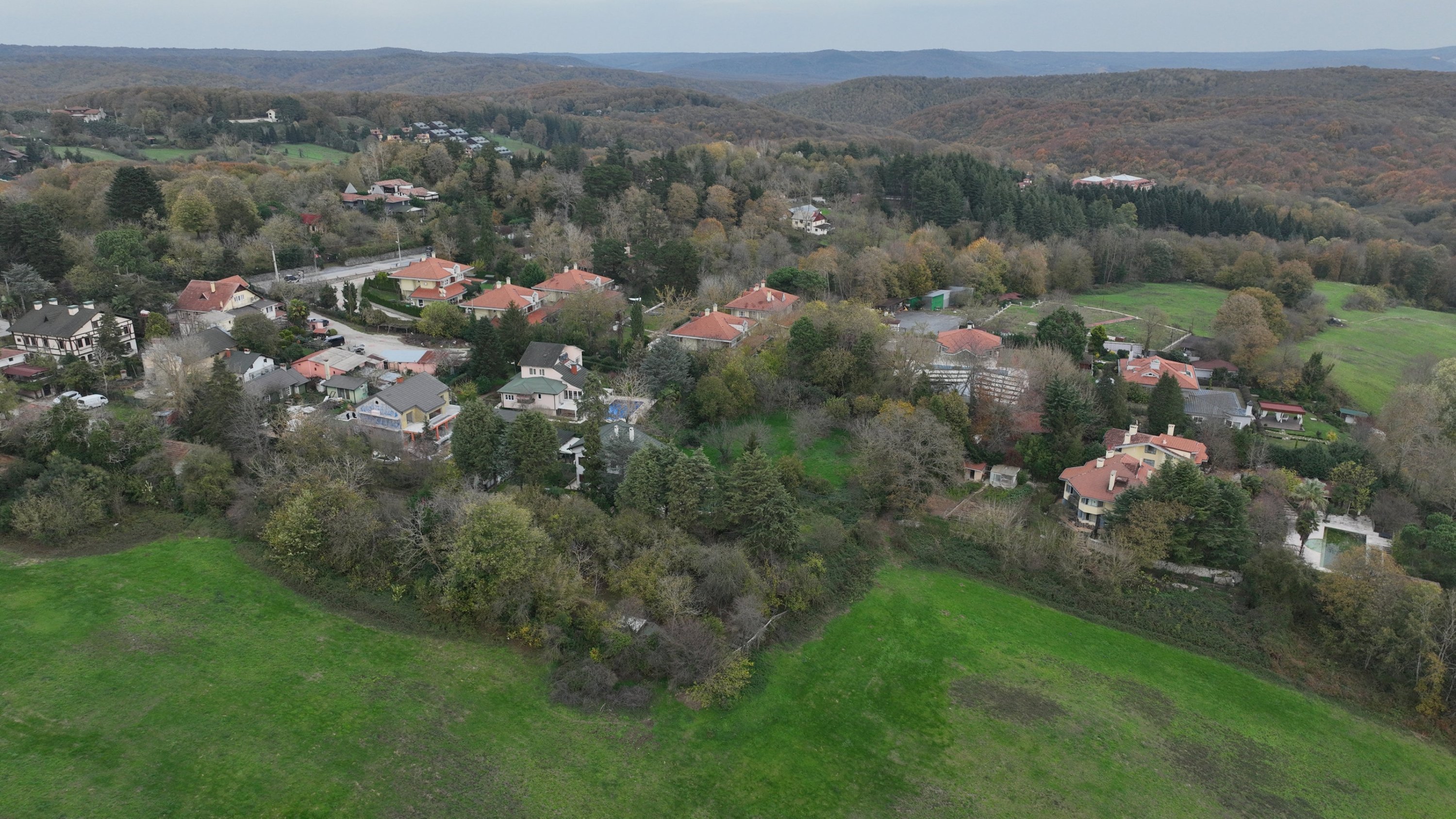
Global warming and the advance of industrialization continue to place unprecedented strain on forest ecosystems worldwide, even as Türkiye, China, Russia and India recorded the highest rates of forest expansion globally between 2015 and 2025.
Drawing on the latest Global Forest Resources Assessment prepared by the U.N. Food and Agriculture Organization (FAO), global forest cover currently stands at 4.14 billion hectares (10.23 billion acres), corresponding to 32% of the world’s terrestrial land surface. Per capita availability remains at 0.50 hectares, while tropical zones maintain their lead with 45% of the total global forest stock.
Europe accounts for 25% of global forested land, whereas South America remains the region with the greatest forest concentration relative to its landmass. According to FAO, 54% of the world’s forests are concentrated in only five countries: Russia, Brazil, Canada, the U.S. and China.
The FAO report highlights that annual net global forest loss, which reached 10.7 million hectares between 1990 and 2000, has slowed to 4.12 million hectares over the past decade. However, while the rate of forest expansion in Asia has recently weakened, South America has continued to face significant tree cover reduction.
Since 1990, an estimated 489 million hectares of forest surface have disappeared as a result of deforestation activities. Simultaneously, annual global forest expansion declined from 9.88 million hectares during 2000-2015 to 6.78 million hectares in the last decade.
Naturally regenerating forest systems still constitute 92% of total forested zones, covering 3.83 billion hectares. Yet, this category contracted by 324 million hectares between 1990 and 2025. Annual net loss in this segment narrowed from 13.8 million hectares in the 1990-2000 period to 6.97 million hectares between 2015 and 2025.
While the FAO emphasizes intensifying climate stress and industrial land conversion as the chief global threats to forest integrity, Türkiye’s trajectory diverges significantly. Türkiye ranked among the world’s top four countries with the highest annual forest expansion rates, adding 118,000 hectares of forest land each year – equivalent to a 0.53% increase.
This places Türkiye first in Europe and fourth internationally. China leads the list with 1.686 million hectares of annual forest growth, followed by Russia with 942,000 hectares and India with 191,000 hectares. Australia's 105,000 hectares, France's 95,900 hectares, Indonesia's 94,100 hectares, South Africa's 87,600 hectares, Canada's 82,500 hectares and Vietnam's 72,800 hectares followed Türkiye in recorded expansion.
Meanwhile, global loss trends remain acutely concentrated. Brazil, with an annual decline of 2.942 million hectares, sustains the highest deforestation volume worldwide. Angola's 510,000 hectares, Tanzania's 469,000 hectares, Myanmar's 290,000 hectares, Congo's 283,000 hectares and Mozambique's 267,000 hectares follow closely.
Cambodia's 251,000 hectares, Peru's 239,000 hectares, Bolivia's 232,000 hectares and Paraguay's 207,000 hectares also rank among the most severely affected. Apart from Cambodia, the top countries suffering the highest forest attrition are located across South America and Africa.
The report underscores wildfires as the dominant system-wide destabilizer. Between 2007 and 2019, an average of 130 million hectares of land was affected annually by fire events. In addition, pest infestations, disease outbreaks and severe weather systems collectively impacted 41 million hectares of global forests in 2020 alone.
Legal conservation zones encompass approximately 813 million hectares, amounting to 20% of global forestry acreage, a figure FAO identifies as a pivotal buffer against climate volatility, biomass depletion and market-driven land consumption pressures.