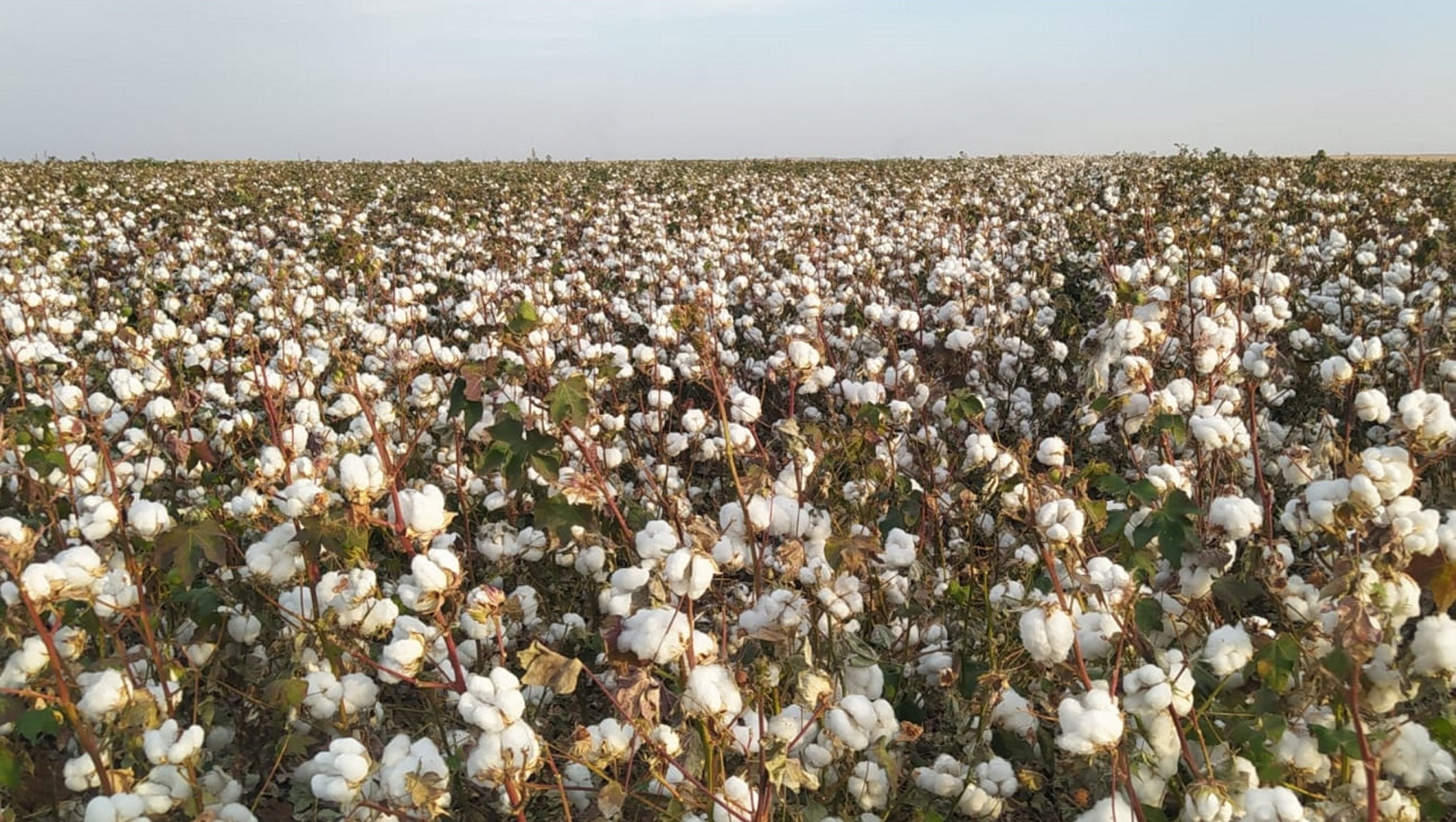
Global climate change is expected to significantly alter Türkiye's cotton production landscape by the 2050s, with the Marmara and Black Sea coasts becoming more suitable for cotton cultivation, according to Sami Doğanlar from the Faculty of Science at Izmir Institute of Technology (IYTE).
Cotton, a crop that thrives in warm climates and takes about five to six months to grow from planting to harvest, is influenced by soil temperature and moisture levels during germination. The impacts of global warming on these factors are likely to reshape cotton production areas, output and yield.
Doğanlar emphasized that cotton grows best in warm, humid climates with slightly acidic soils and does not tolerate excessive rainfall.
Highlighting that the top six global cotton producers are China, India, the U.S., Pakistan, Brazil and Uzbekistan, Doğanlar stated that Türkiye ranks seventh, with smaller production volumes compared to these countries but remains a significant player in the global cotton market.
Doğanlar emphasized that Türkiye ranks 11th in global cotton cultivation area size, fifth in fiber cotton yield per unit area, and fourth in both cotton consumption and imports, underlining the country's crucial position. He added that Şanlıurfa in the southeast of the country accounts for the largest share of cotton production in Türkiye at 42%, followed by Diyarbakır with 14.4%, Aydın in west with 11.6%, Hatay in south with 8.8%, Izmir in west with 5.5% and Adana in south with 4.1%.
Describing cotton as a water-intensive crop, Doğanlar explained: "The water used in cotton cultivation comprises rainwater (green water) and underground flows (blue water). Approximately 3.68 billion cubic meters of blue water are used annually for cotton production. The green and blue water footprint per ton of cotton ranges from 205 to 1,641 cubic meters. Cotton cultivation in arid regions, in particular, has adverse effects on the sustainability of water resources."
Doğanlar explained how climate change affects cotton production through rising temperatures, reduced water resources, drought and extreme weather events like intense heat or cold. He emphasized that high temperatures decrease yields, water shortages increase irrigation needs and changing climate conditions exacerbate the adverse impacts of diseases and pests on the production process.
He continued: "Excessive rainfall or drought, meaning irregular precipitation patterns, has disrupted initial sowing and led to replanting. The shortening of the growing season has also reduced yield. Extreme heat waves during critical growth periods, such as budding, flowering and boll formation, have stressed cotton plants. All these factors have resulted in declines in yield and fiber quality. Over the past five years, climate change has caused significant yield and quality losses in cotton production in Türkiye. While there are regional differences, the overall quantity of crops harvested per unit area and profitability have decreased."
Noting that Türkiye's most significant cotton production areas are located in the Aegean, Mediterranean and southeastern Anatolia regions, Doğanlar said that increasing temperatures, drought and water scarcity put these regions' cotton cultivation at high risk. According to climate change scenarios, Türkiye’s cotton production areas are expected to change significantly in the future.
He also added: "Cotton production areas in the Aegean region could shift toward the northern parts of the region due to warming. However, even there, rising temperatures and changes in rainfall patterns could lead to reductions in productivity and output. According to climate change scenarios, opportunities for cotton cultivation could increase in Türkiye’s northwestern regions, including the Marmara and Black Sea coasts, where rising temperatures may make these areas more suitable for cotton farming in the future."
"However, challenges like excessive rainfall and flood risks will emerge in these regions. Consequently, by the 2050s, Türkiye's cotton production map is expected to undergo significant changes, with existing production areas shrinking and new areas emerging. Depending on the trajectory of climate change, cotton farming could become entirely unfeasible in some regions," he said.
Doğanlar also warned that fossil fuels and chemical fertilizers used in cotton production could increase carbon emissions. He recommended adopting sustainable farming practices, increasing the use of renewable energy sources and reducing fossil fuel usage to minimize the environmental impacts of production and mitigate the negative effects of climate change on cotton cultivation.