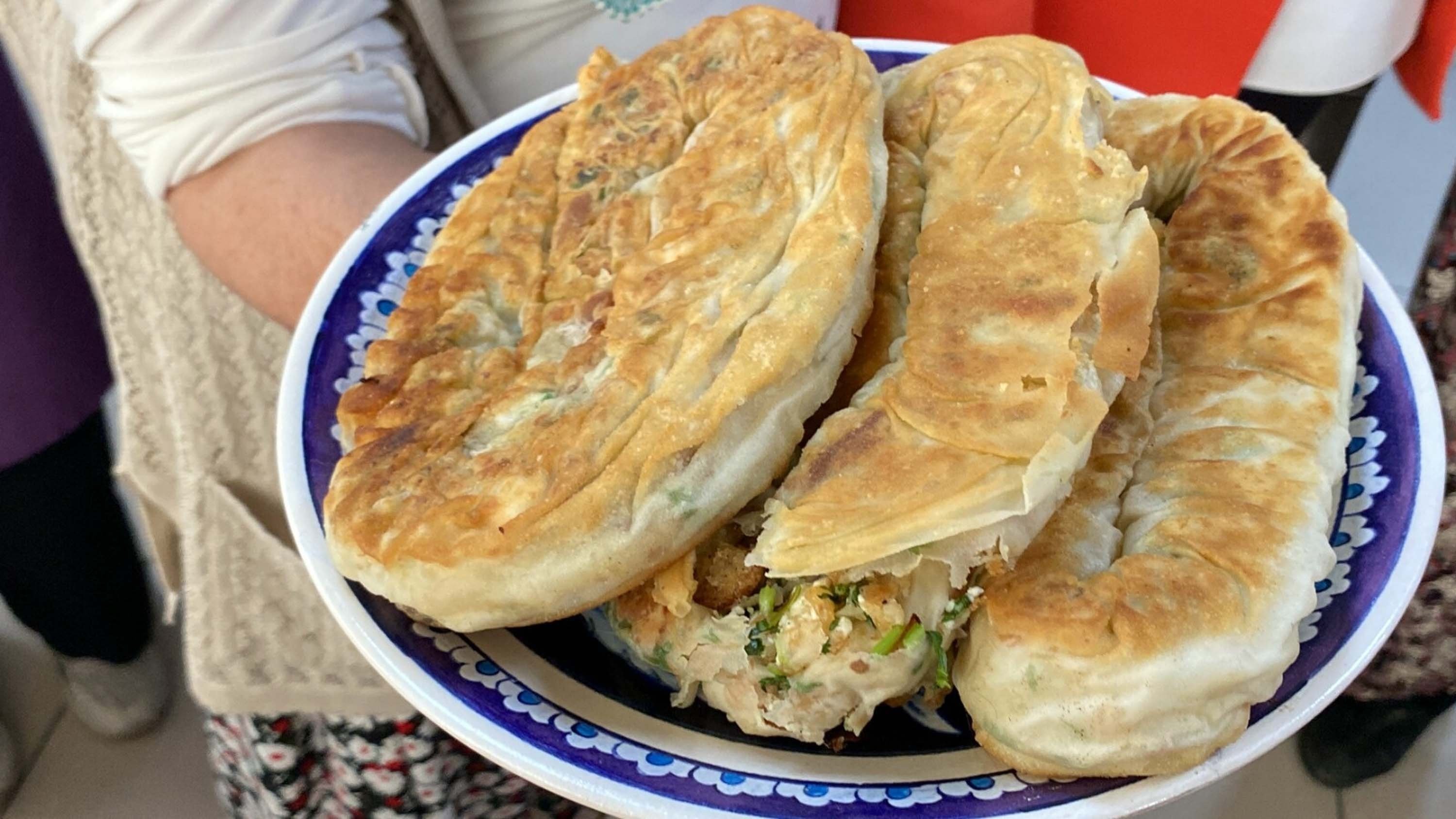
A cultural initiative in Izmir, in western Türkiye, is working to revive traditional village dishes and protect the region’s culinary memory for future generations.
Led by the Karabağlar Public Education Center, a local institution operating under the Ministry of National Education (MEB) and serving the Karabağlar district of Izmir, the project documents recipes collected from elderly women in rural neighborhoods and prepares them for long-term archiving.
The effort focuses on restoring dishes once common in Izmir’s villages but now rarely seen. Recipes gathered through field visits are being recorded, digitized and organized for a planned book publication. Culinary trainees at the center are also learning these dishes to ensure structured intergenerational knowledge transfer.
Karabağlar Public Education Center Director Fatma Demirci said traditional recipes had begun to disappear across the region. She noted that the center’s team visited villages, met elderly residents and recorded flavors inherited from grandmothers and great-grandmothers.
“These healthy recipes were being forgotten. We are teaching them to our trainees and archiving them. We will also deliver the full study to our ministry,” she said.
Demirci added that more than 20 dishes unique to Izmir, including külür cookies and topalak soup, have already been documented. She emphasized that preserving local culinary heritage also strengthens cultural continuity and supports the center’s long-term education strategy.
Village residents contributing to the project say their motivation is to safeguard authentic flavors for future generations. Kavacık villager Cavidan Çınar said she shared her grandmother’s Kabakucu recipe and wants the dish to remain part of Izmir’s food culture. “This flavor belongs to our village, and it excites me to see it being preserved,” she said.
Another participant, Fatma Aksu, highlighted the importance of promoting healthier, homemade dishes. She teaches külür, a traditional cookie made with Kavacık molasses. “These flavors should not be forgotten. Young people need to reconnect with meals that are nutritious and satisfying,” she said.
Tülay Dündar introduced a zero-waste pastry made with stale bread, a technique once used to prevent food waste in village kitchens. “Bread was never thrown away. It was turned into pastries with spices and other ingredients. Bringing back this recipe gives me joy,” she explained.
Young trainees also view the project as an opportunity to learn directly from experienced village cooks. Nineteen-year-old Umut Barış Gezgin said spending time with elders and learning their recipes creates a meaningful link between generations.
Eighteen-year-old Sedanur Poyraz added that many traditional dishes had already been forgotten and must be shared more widely to survive.