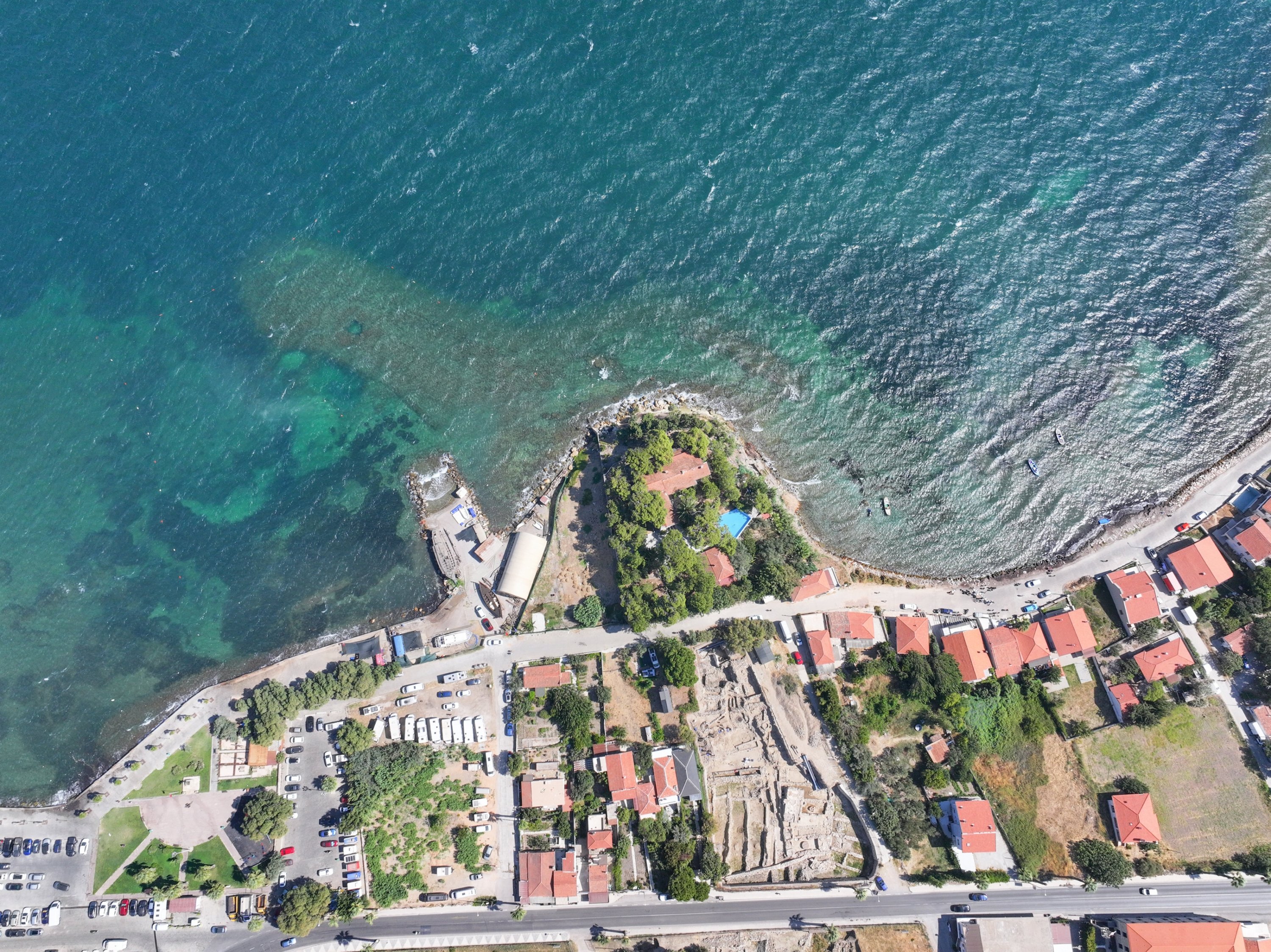
Sea temperatures around Türkiye have risen faster than the global average, scientists warn, causing severe stress to marine ecosystems and threatening species such as seagrasses, pines and cold-water corals. Professor Barış Salihoğlu, director of the Institute of Marine Sciences at Middle East Technical University (ODTU), said that these increases are already producing measurable ecological consequences.
Data from ODTU, which has monitored sea temperatures since 1984, show that Mediterranean sea surface temperatures reached 28 degrees Celsius (82.4 degrees Fahrenheit) this summer, 1 degree above the long-term average.
In the Aegean Sea, measurements at two locations recorded 26 degrees Celsius in Bodrum and 25 degrees Celsius in Türkiye’s Izmir, both 2 degrees Celsius above historical averages. The Sea of Marmara, with a long-term average of 24 degrees Celsius, reached 26-27 degrees Celsius, while the Black Sea, which has a historical average of 25 degrees Celsius, measured 27 degrees Celsius.
The European Union’s Copernicus satellite monitoring system confirmed that non-polar ocean temperatures hit a record high of 20.87 degrees Celsius in 2024. Salihoğlu noted that after the record-breaking temperatures of 2024, sea surface temperatures in 2025 are continuing at similarly high levels.
“Over the last 40 years, global sea temperatures have risen by 1.2-1.5 degrees Celsius, but in Türkiye’s surrounding seas, the increase exceeds 2 degrees Celsius. In some areas of the Marmara, Black Sea and Eastern Mediterranean, the rise has reached 2-2.5 degrees Celsius,” he said.
Salihoğlu explained that last year’s high temperatures were largely driven by the El Nino phenomenon, which continues to influence sea conditions. Although 2025 has not set new records, temperatures remain significantly above long-term averages. Climate change has also increased the frequency of heatwaves by up to 65%, raising air temperatures by 5-10 degrees Celsius and sea surface temperatures by 3-4 degrees Celsius.
Rising sea temperatures are already affecting marine life. “Seagrasses, pines and cold-water corals experience lethal damage. Some fish species cannot adapt and leave the region, migration patterns are changing and species from the Red Sea are increasingly appearing in the Mediterranean,” Salihoğlu said. He added that biodiversity loss is also affecting tourism and putting pressure on the blue economy.
Warming waters are altering the physical and chemical structure of the seas. In the Mediterranean, the formation of the “Levant Intermediate Water,” which supports local ecology, is decreasing. In the Black Sea, the disappearance of the cold intermediate layer allows hydrogen-sulfide-rich deep water to approach the surface, disrupting oxygenated layers. “This is a disaster for the Sea of Marmara because the supply of oxygenated water to its surface is at risk,” Salihoğlu warned.
Salihoğlu also highlighted the impact of droughts caused by global warming, which are reducing freshwater flows from rivers into the seas. “Rivers support seas with minerals and are critical for biodiversity in areas where they enter. Türkiye needs to shape its water policies considering this reality,” he said.
Rising sea temperatures are also fueling extreme weather events along coastal regions. Salihoğlu warned that increased heatwaves, especially in summer, amplify storms and tornado-like phenomena. “The overheating of seas acts as an energy source for the atmosphere, supporting the formation of storms and cyclones. In the coming years, we could see tropical storm-like events in the Mediterranean and tornadoes in the Black Sea,” he said. He added that by 2050, extreme weather events could increase five- to sixfold.
The warming trend also accelerates harmful algal blooms, which deplete oxygen and threaten underwater life. On the Marmara and Mediterranean coasts, the presence of these algae, combined with pollution and overfishing, multiplies ecological damage and increases the risk of mucilage formation.
To protect Türkiye’s marine ecosystems, Salihoğlu called for urgent action. “Sustainable fishing practices must be adopted, particularly ending trawl fishing, and marine protected areas must be expanded. With the pressure of climate change, all seas should have at least 30% of their areas protected to make them more resilient,” he concluded.