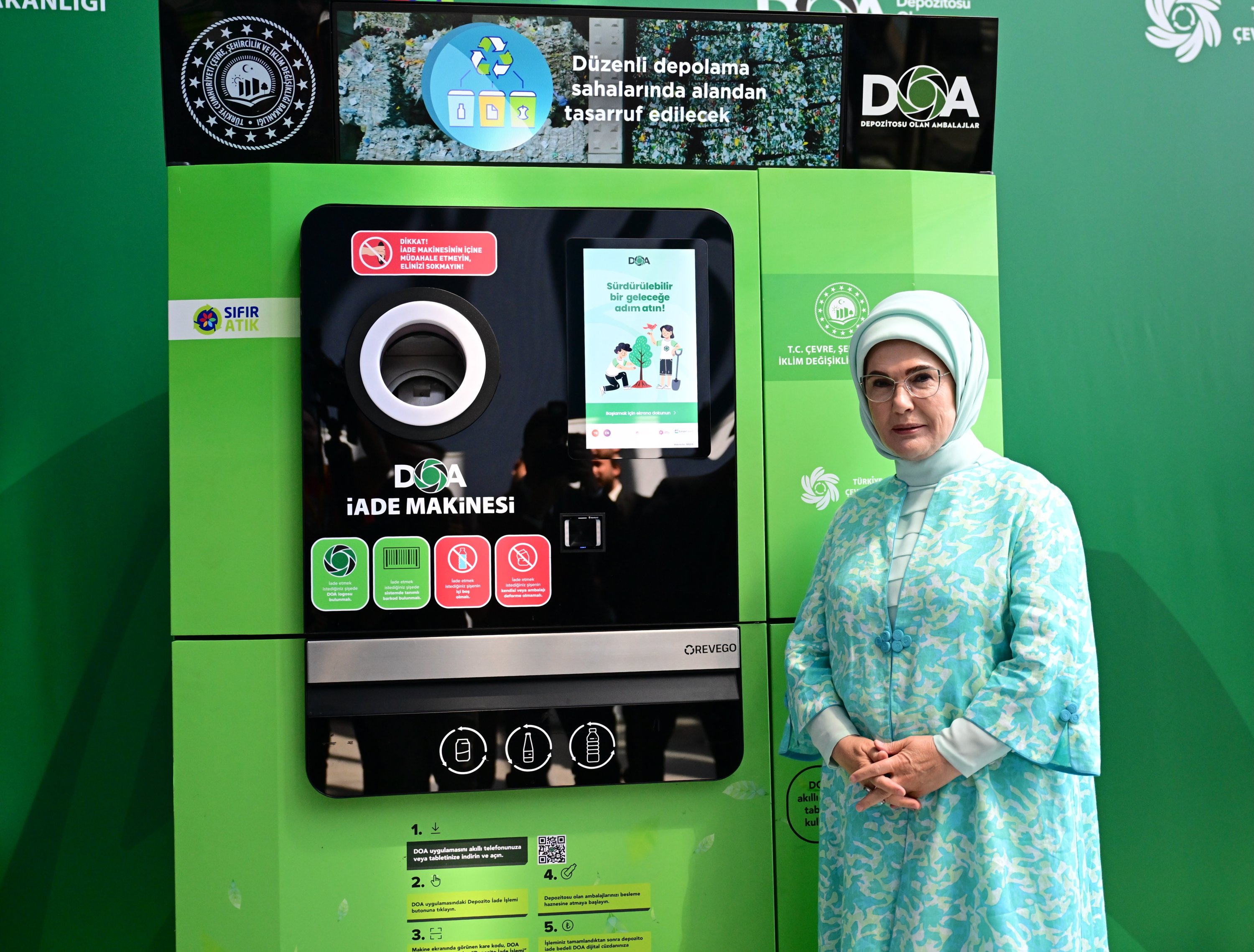
Türkiye is entering a new phase in its waste management efforts as the Deposit Management System (DMS) expands toward full national coverage by the end of this year. Spearheaded by the Ministry of Environment, Urbanization and Climate Change, this initiative aims to transform waste from mere garbage into valuable raw materials, supporting both environmental sustainability and economic growth.
The Deposit Management System, the latest stage of the nationally embraced Zero Waste Project championed by first lady Emine Erdoğan, has already seen successful pilot implementation in Sakarya. Following this initial phase, the ministry has begun laying the infrastructure in six additional provinces: Erzurum, Mersin, Gaziantep, Samsun, Izmir and Konya. Return machine installations are underway in these cities, with governors and mayors actively participating in coordination efforts.
By year-end, the system is planned to be operational in all 81 provinces and districts across Türkiye. Around 4,500 automated return machines will be installed at secure, accessible locations such as government buildings, municipalities and chain stores to facilitate convenient waste collection.
Citizens will be able to use the “Deposit Packaging Returns (DOA)” mobile app to scan QR codes and deposit eligible packaging materials into the machines, earning money per item, which will be credited to their electronic wallets. This seamless process encourages widespread participation and supports the country’s growing circular economy.
The ministry has also implemented a sophisticated digital monitoring system that tracks machine fullness in real time, dispatching teams promptly to empty them and ensure uninterrupted service.
The projected impact of the Deposit Management System is significant. By 2026, Türkiye expects to generate 520 million euros ($607 million) annually from the recycling of an estimated 25 billion waste bottles each year. This influx of raw materials will reduce reliance on imports across multiple sectors, including textiles and automotive manufacturing, reinforcing Türkiye’s economic resilience.
Moreover, these funds will unlock new opportunities for public investments. The government plans to allocate resources toward building 10,000 earthquake-resistant homes and more than 150 new schools nationwide, enhancing both infrastructure and community well-being.
This ambitious project reflects Türkiye’s commitment to sustainable development and circular economy principles, transforming waste management from a challenge into an opportunity for environmental protection and economic advancement.