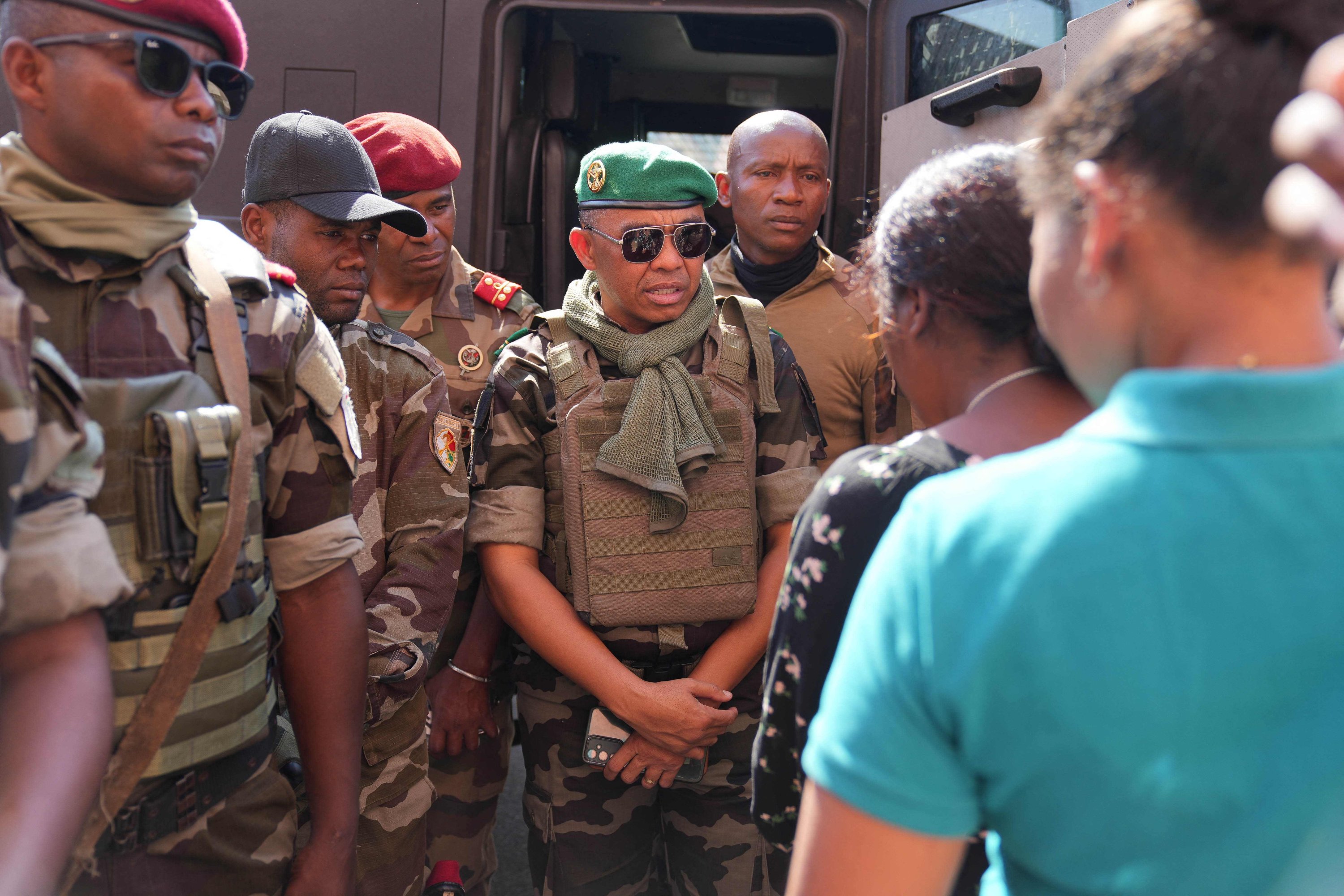
Colonel Michael Randrianirina, the commander of an elite army unit, was sworn in Friday as Madagascar’s new leader following a lightning-fast coup that forced the sitting president into hiding.
The oath-taking took place in the main chamber of the nation’s High Constitutional Court, just three days after Randrianirina announced the military’s seizure of power on the Indian Ocean island of roughly 30 million people.
The United Nations has condemned the takeover as an unconstitutional change of government.
The military coup, which followed three weeks of anti-government protests by mainly young people, also prompted Madagascar’s suspension from the African Union.
President Andry Rajoelina’s whereabouts are unknown after he left the country, claiming his life was in danger following the rebellion by soldiers loyal to Randrianirina.
In his absence, Rajoelina was impeached in a parliamentary vote Tuesday, just before the colonel announced the military takeover.
Randrianirina, who emerged from relative obscurity to lead the rebellion by his CAPSAT military unit, was briefly imprisoned two years ago for an attempted mutiny.
He said he spent most of the three months he was detained in late 2023 and early 2024 at a military hospital.
Madagascar has high poverty rates, affecting around 75% of the population, according to the World Bank.
The former French colony also has a history of political instability since gaining independence in 1960, including several coups and attempted coups.
Rajoelina himself came to power as a transitional leader in 2009 after a military-backed coup.
Randrianirina has said Madagascar will be run by a military council with him as president for 18 months to two years before any new elections, meaning young people who inspired the uprising against Rajoelina may face a long wait before choosing their new leader.
The protests, which began last month, have echoed other Gen Z-led uprisings in Nepal, Sri Lanka and elsewhere.
Young Madagascans first took to the streets to protest regular water and power outages, but later raised other issues, including the cost of living, lack of opportunities, and alleged corruption and nepotism among the elite.
Randrianirina seized on the momentum last weekend by turning against Rajoelina and joining the anti-government protests that called for the president and government ministers to step down.
There was a brief clash between his soldiers and members of the gendarmerie security forces still loyal to Rajoelina, during which one CAPSAT soldier was killed, the colonel said.
But there has been no major violence on the streets, and Randrianirina’s troops have been cheered, with the takeover celebrated by many Madagascans.
Randrianirina told The Associated Press on Wednesday that the military takeover was a move to “take responsibility as citizens and patriots.”
“From now on, we will restore the country to its former glory, fight against insecurity, and gradually try to solve the social problems that Malagasy people experience,” he said in an interview at his unit’s barracks.
On Thursday, U.N. Secretary-General António Guterres condemned the unconstitutional change of government and called “for the return to constitutional order and the rule of law,” his spokesperson, Stéphane Dujarric, said. There has been little significant reaction from other countries, including Madagascar’s former colonial ruler, France.