Authorities in eastern Congo are shifting their Ebola response toward communities and villages as the virus continues to spread faster than health workers can track and contain it, Africa’s top public health agency said Thursday.
The Africa Centers for Disease Control and Prevention warned that the outbreak has likely not yet peaked. Since it was declared in mid-May, the virus has spread from three health zones to 60, infecting 6,250 people and killing 3,039, according to government data.
Insecurity, displacement and intense population movements have made it harder to detect cases, trace contacts and contain transmission.
The scale of the outbreak has already surpassed the devastating 2014-16 Ebola epidemic in West Africa, which killed more than 11,000 people and remains the deadliest Ebola outbreak on record.
The current outbreak has recorded six times as many confirmed cases and five times as many deaths, the Africa CDC said.
Despite efforts to contain the virus, significant gaps remain in Congo’s response, according to a U.S. Centers for Disease Control and Prevention report released this week.
Here are five areas where the response is falling short:
One of the biggest weaknesses is the limited use of community-based surveillance to quickly investigate alerts, identify infections and track transmission, the U.S. health agency said. Without faster detection at the community level, health workers risk losing valuable time as the virus spreads.
Delays in detection, reluctance to report cases and inadequate community engagement are contributing to preventable deaths. At least 63% of deaths recorded in the past week occurred outside Ebola treatment centers, Africa CDC data showed.
Authorities are now using a "village-centered approach," working with community leaders to build trust and improve collaboration with residents, said Yap Boum, head of emergency preparedness and response at Africa CDC.
Ituri province, where the outbreak is concentrated, is also at the center of the rebel conflict in eastern Congo, complicating efforts to gain residents' trust.
"Building that trust in the middle of an outbreak is quite complex," Boum said.
Quickly identifying and tracing people who have come in contact with Ebola patients remains challenging across the six provinces affected.
Although 81% of contacts have been followed up with by surveillance teams, that figure does not reflect the full reality because it refers only to listed contacts and does not include those who have yet to be traced.
Africa CDC estimates that cases confirmed in the last three weeks should have generated 97,600 contacts, based on an average of 60 contacts per confirmed case. Only 19% of the total expected contacts have been traced.
Health data shows that treatment centers had expanded capacity to more than 1,300 beds in late August, while their occupancy rate is currently 67%, with 869 patients.
However, experts have called for more treatment and isolation centers and beds in affected health zones to prepare for cases that have yet to be detected.
Many affected health zones are in areas where cases go undetected or unreported for several reasons, including distrust of health authorities.
Some health zones are also inaccessible to surveillance teams or health workers trying to treat patients, Boum said.
Experts also say laboratory testing capacity needs to be expanded to promptly identify cases and treat patients.
The World Health Organization said last month that several treatment and transit centers in Ituri, the outbreak's epicenter, were "saturated," while North Kivu, the second-most affected province, lacked sufficient options to refer patients to specialized facilities.
Health workers at existing treatment centers are also exhausted, said Jeannot Krikeija, who works at an Ebola treatment center in Bunia, Ituri's capital.
"Ebola is tiring us all the more because we don't know when this scourge will end. This ordeal is unbearable for me," Krikeija said.
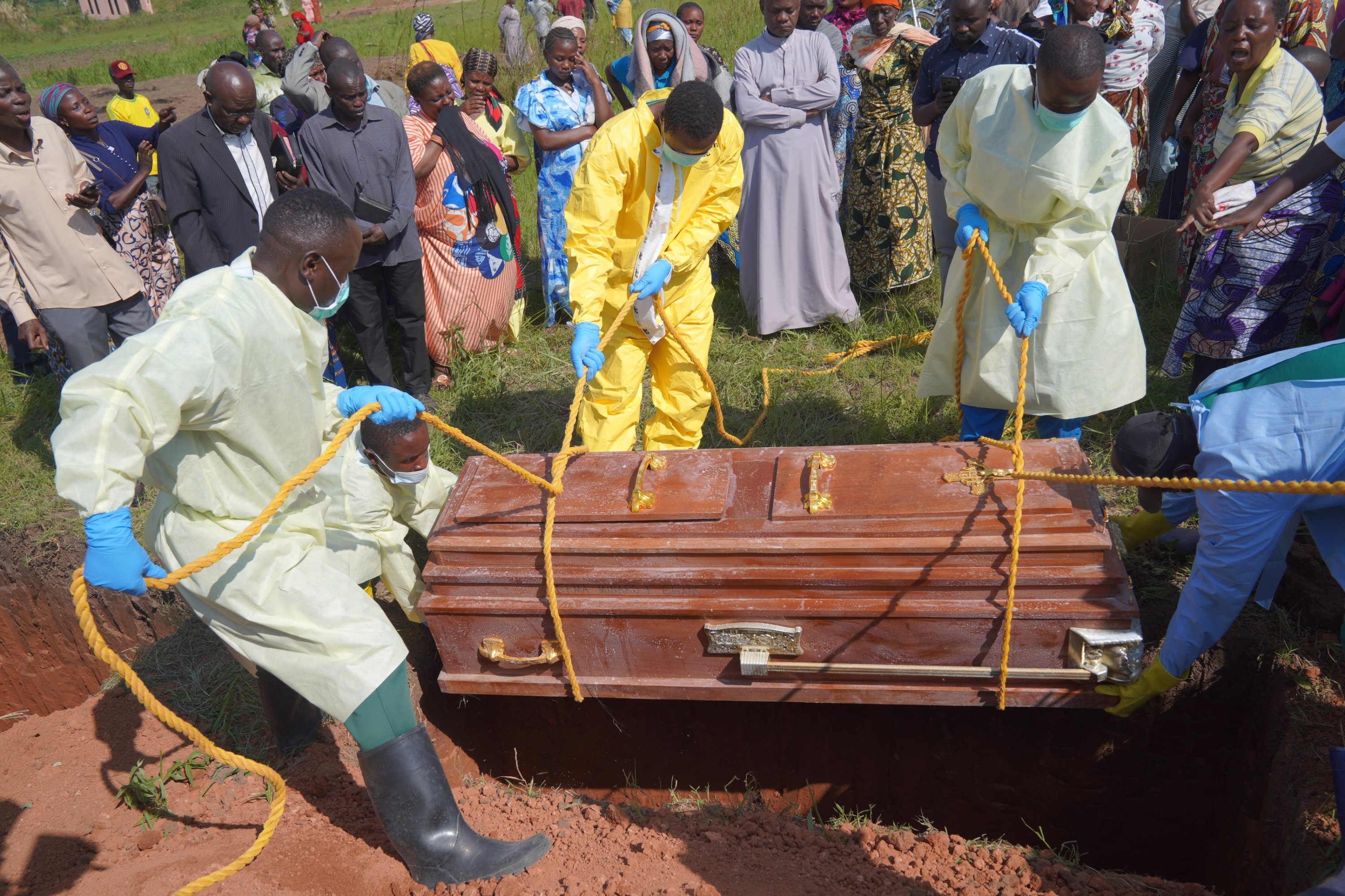
Authorities have deployed safe and dignified burial teams for the more than 3,000 people who have died from Ebola, but gaps remain in how the burials are carried out, according to the U.S. health agency.
Ebola can spread between people through direct contact with the blood or other bodily fluids of someone who is sick with or has died from Ebola. Experts have warned that the bodies of victims can still carry large amounts of active virus.
In Ituri and other affected areas, burial teams have been attacked on multiple occasions, often by families seeking to protect loved ones who died of Ebola. It is also common to see people surrounding the graves of Ebola victims during burials, sometimes within a few meters of the coffins.