At least 52 people died after an overloaded boat carrying farmers and laborers to rice farms capsized in northwestern Nigeria's Sokoto state, authorities said Friday, as rescue teams continued searching waterways for additional victims.
The boat overturned Thursday while crossing a waterway near Gorau in the Goronyo Local Government Area, a rural community where waterways are a vital link to farmland. Local residents said the vessel was carrying more than 70 people, although accounts of the exact number on board varied.
Tukur Abubakar, head of operations for the National Emergency Management Agency in Sokoto state, confirmed Friday that the death toll had risen to 52.
"The death toll has now risen to 52," Abubakar told Anadolu Agency (AA), adding that officials were preparing to meet with local government authorities to identify the victims and contact their families.
The casualty figures had fluctuated sharply in the hours after the accident as rescuers recovered bodies from the water. Sokoto police initially reported 46 bodies recovered and 15 people rescued, with others still missing. By Friday, however, officials and local sources had reported more than 50 deaths, reflecting the difficulty of accounting for passengers in the remote area.
The tragedy was particularly devastating because many of those aboard were children. Officials and residents said a large number of passengers were between 10 and 15 years old, with children routinely accompanying adults to farms during the rainy season.
Abdulkadir Yusuf, Sokoto state manager of the National Inland Waterways Authority, said about 40 children's bodies had been recovered during the initial search. The passengers included farm owners, hired laborers and women traveling to rice fields for planting or harvesting work.
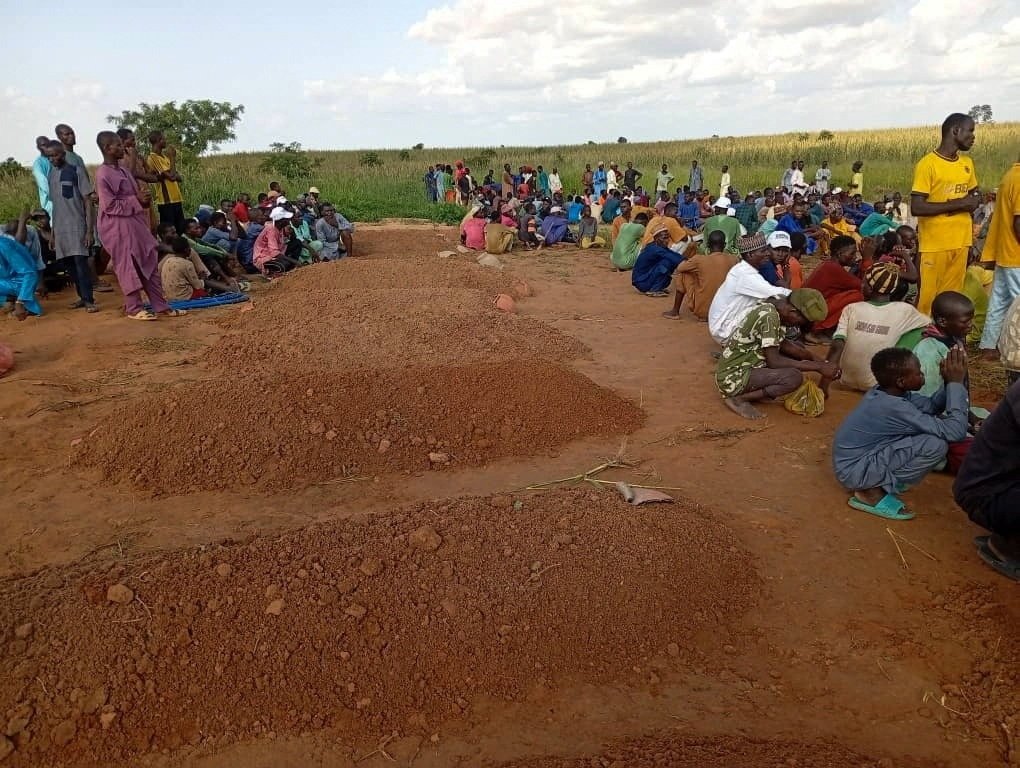
The scale of the disaster became clear as bodies were brought ashore and taken to a community mosque in Gorau. A Reuters witness saw about 50 bodies, many wrapped in mats and traditional cloth, awaiting burial. Local reports said at least 52 victims were eventually buried, including 11 members of one family.
For families in Gorau, the tragedy quickly became a communal loss.
Samaila Garba, a 55-year-old resident, said his 13-year-old granddaughter, Jamila Usman, was among those killed. He said he counted at least 42 bodies, most of them women and children, as the community struggled to identify the dead.
Rescue operations continued as local divers, residents, police and emergency agencies searched the waterway for survivors and additional bodies. The National Emergency Management Agency and the Sokoto State Emergency Management Agency joined local efforts, while authorities worked to establish the final number of passengers and victims.
The accident has also renewed scrutiny of Nigeria's inland waterways, where overcrowded boats, poor maintenance and weak enforcement of safety regulations have repeatedly contributed to deadly accidents.
For many rural communities, boats and canoes are essential because farms and markets can be separated by rivers and waterways without reliable bridges or roads. During the rainy season, those crossings can become particularly dangerous.
Nigeria has experienced a series of fatal waterway accidents in recent years. In January, at least 25 people were killed when a leaking boat capsized in neighboring Yobe state, underscoring the persistent risks facing passengers who depend on water transport.
The Sokoto disaster has prompted renewed calls for stronger enforcement of passenger limits, properly maintained vessels, life jackets, trained operators and safer crossings for farming communities.
As recovery efforts continued Friday, officials warned that the death toll could still change as divers searched for people who remained missing.