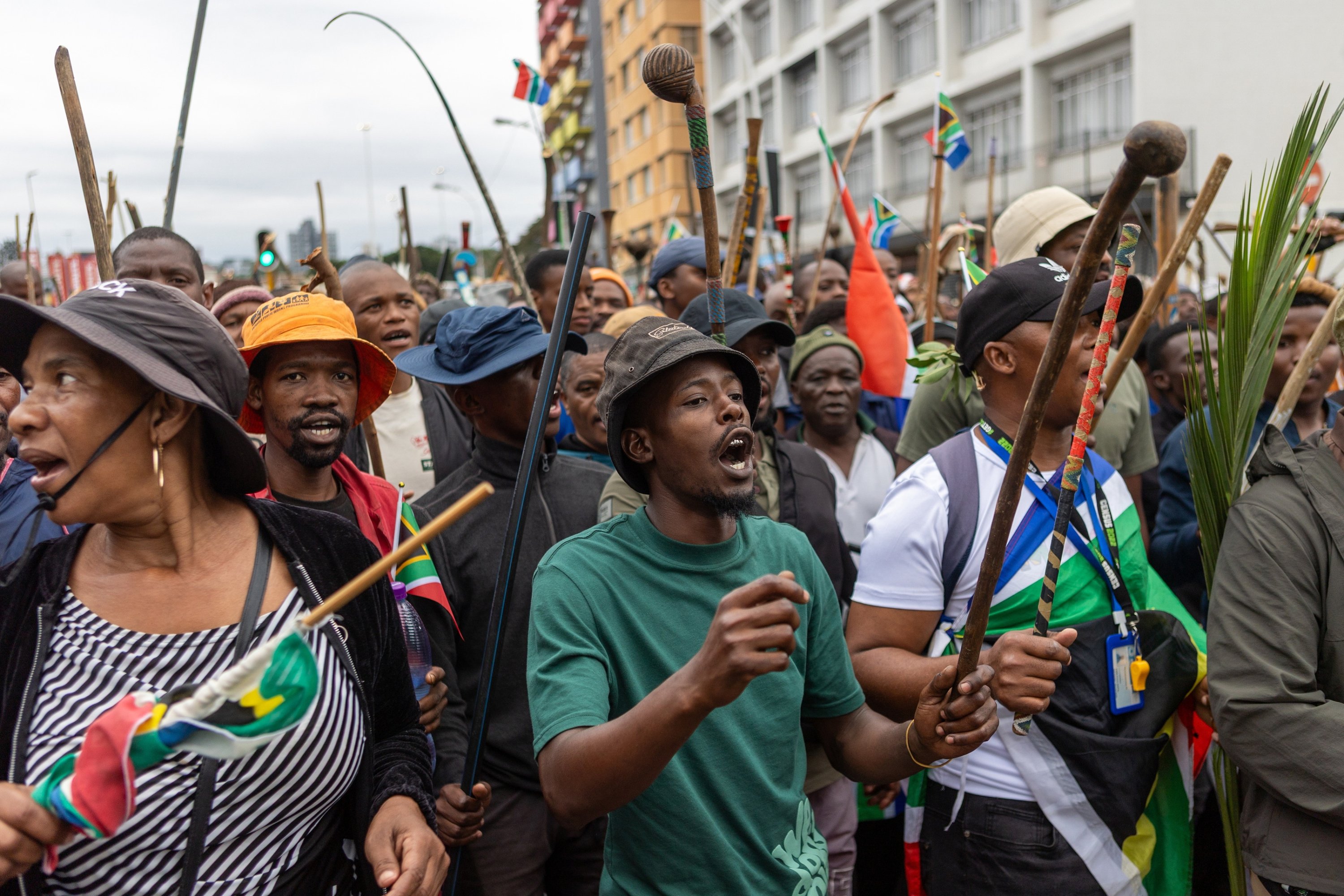
Anti-immigration protests escalated across South Africa on Thursday as demonstrators went door to door in several communities, forcibly removing suspected undocumented migrants from their homes and handing them over to police, deepening fears among foreign nationals and prompting thousands to flee the country.
In Johannesburg's Alexandra township, protesters broke down doors and entered homes where they believed undocumented immigrants were living before escorting those they detained to waiting police vehicles. Among those taken away were a Malawian woman and her young child.
A Zimbabwean national, Total Mhlanga, who was also detained by protesters, insisted he was lawfully residing in South Africa.
"I am a ZEP holder," he told Reuters, referring to the Zimbabwean Exemption Permit, which allows tens of thousands of Zimbabwean nationals to live and work legally in South Africa.
Similar demonstrations unfolded in Soweto, where protesters carrying sticks and South African flags marched through the township with plans to search neighborhoods for undocumented migrants. Organizers had circulated flyers advertising a "peaceful march" followed by a "door-to-door" operation. Another protest took place in the coastal city of Durban.
The demonstrations mark a significant escalation in a growing anti-immigration movement fueled by widespread frustration over unemployment, crime and years of sluggish economic growth.
The movement has gathered pace since nationwide demonstrations on June 30, an informal deadline set by activists demanding that undocumented migrants leave South Africa.
Jacinta Ngobese-Zuma, a former radio presenter who has emerged as the movement's most prominent leader, vowed that protests would continue every Thursday until the group's demands are met.
Her organization, March and March, argues that undocumented migrants are contributing to South Africa's economic hardship and has called for tighter border security, mass deportations and priority access for South African citizens to schools and public health facilities.
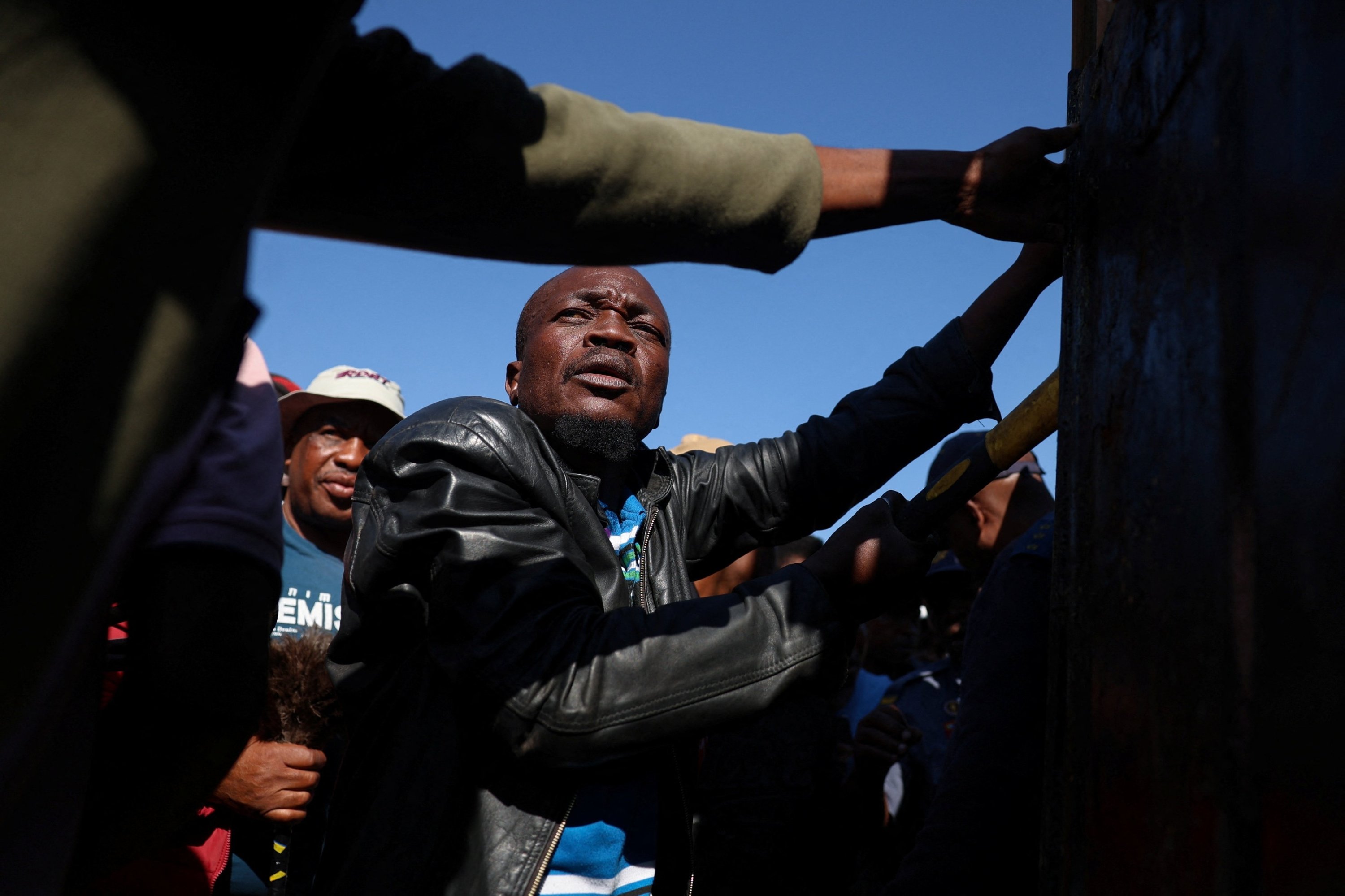
"We are walking around doing door to door removing foreigners," community leader Bongani Msomi said during the Alexandra protest.
President Cyril Ramaphosa has repeatedly rejected attempts to blame immigrants for the country's long-standing economic challenges, warning citizens against taking immigration enforcement into their own hands.
While police have increased arrests of undocumented migrants and deployed additional officers to monitor demonstrations, authorities have also cautioned that immigration enforcement remains the responsibility of the state. Johannesburg police did not immediately comment on protesters detaining migrants before handing them over to officers.
The growing unrest has already triggered a large-scale exodus of migrants.
Malawi's government said Thursday that more than 38,000 of its citizens have returned home from South Africa in recent weeks because of mounting safety concerns. More than 60,000 Zimbabweans have also returned to their home country.
Although the June 30 demonstrations were largely peaceful, fears that protests could become increasingly confrontational have accelerated departures across southern Africa.
While anti-immigration campaigners argue that removing foreign workers will create more opportunities for South Africans, economists warn the opposite may occur.
Foreign workers fill critical labor shortages in industries including agriculture, construction, hospitality, retail, transportation and the country's vast informal economy, where many businesses depend heavily on migrant labor.
"Migrants typically find work in sectors where vacancies are difficult to fill, including farming, construction, hospitality, retail, transport and the informal sector," said Mpho Lenoke, a lecturer at North-West University.
According to United Nations data, approximately 2.6 million migrants lived in South Africa in 2024, accounting for about 5% of the country's population. Earlier OECD-ILO estimates suggested migrants contributed roughly 9% of South Africa's gross domestic product.
Lenoke said many foreign nationals also establish businesses that employ South Africans while increasing competition that benefits consumers.
"International experience suggests that restrictions on migrant labour often have unintended economic consequences," he said.
Research by the International Labour Organization has similarly found that higher immigrant participation in South Africa's workforce is associated with increased employment opportunities for South African-born workers rather than fewer jobs.
The protests are already disrupting parts of the economy.
Foreign-owned spaza shops, the small neighborhood convenience stores that form a backbone of South Africa's informal sector, have faced growing pressure as protests spread. These businesses support local wholesalers, landlords and South African employees while providing affordable goods in many communities.
Shoprite Group's Sixty60 grocery delivery service has also experienced operational disruptions during recent demonstrations. Company figures show that fewer than one-quarter of its delivery drivers are South African nationals, underscoring the industry's dependence on migrant workers.
Beyond labor shortages, analysts warn prolonged unrest could interrupt supply chains, force business closures and reduce access to essential goods and services.
"Supply chains are disrupted, jobs are lost, and access to goods and services is curtailed when tensions escalate," said Susanna Deetlefs of the Armed Conflict Location & Event Data Project (ACLED).
South Africa's fragile economy continues to provide fertile ground for anti-immigration sentiment.
The World Bank recently lowered its 2026 economic growth forecast for the country to 1.0%, down from 1.4%, while official statistics showed unemployment remained close to one-third of the workforce during the first quarter, leaving 8.1 million people without jobs.
Those conditions have intensified public frustration and fueled support for anti-migrant campaigns, even as economic research suggests migrants often complement rather than replace local workers.
The consequences of the protests extend well beyond South Africa's borders.
As the region's largest destination for migrant workers, South Africa is also its biggest source of remittances. A joint report by FinMark Trust and the South African Reserve Bank found that remittance outflows more than tripled between 2016 and 2024, reaching over 19 billion rand ($1.16 billion) last year.
Nearly 90% of those transfers were sent to Lesotho, Malawi, Mozambique and Zimbabwe, with Zimbabwe receiving more than 60% of the total.
Investors have so far remained relatively calm, but some say the protests have introduced a new source of uncertainty.
"It is a significant social problem in South Africa that investors keep hearing about, but they actually haven't seen an actual real-life impact of it," said Kaan Nazli, an emerging markets debt portfolio manager at Neuberger Berman. "Now, with these protests, this is a risk."