The Ebola outbreak in the Democratic Republic of Congo is spreading at an alarming rate, with more than 5,200 cases and nearly 2,500 deaths reported as the virus overwhelms health systems and outpaces efforts to contain it.
Julien Harneis, the U.N. senior coordinator for the Ebola response, warned Friday that the epidemic is growing “exponentially,” with roughly half of the deaths recorded in the past 20 days.
“The epidemic is spreading widely,” Harneis told reporters in Geneva from Bunia, the epicenter of the outbreak. “It is growing faster and wider than the Ebola response.”
The outbreak, which has affected 56 health zones across six provinces, is already the largest in Congo’s history. It has spread across Haut-Uele, Ituri, North Kivu, South Kivu, Bas-Uele and Tshopo, including areas near the border with South Sudan. Cases have also been reported in neighboring Uganda.
The outbreak was officially declared May 15, but health officials believe the virus had been circulating for several weeks before it was detected.
The scale of the crisis has been compounded by years of conflict in eastern Congo, where armed groups operate, state authority is weak and health infrastructure remains severely limited.
Doctors Without Borders, known by its French acronym MSF, also warned Friday that the outbreak was spreading at an “alarming rate.”
“This epidemic continues to spread, moving faster than the response can keep up,” MSF President Javid Abdelmoneim said.
Harneis said the response must be expanded urgently, but efforts have been slowed by insecurity, logistical problems, a lack of resources and widespread mistrust among local communities.
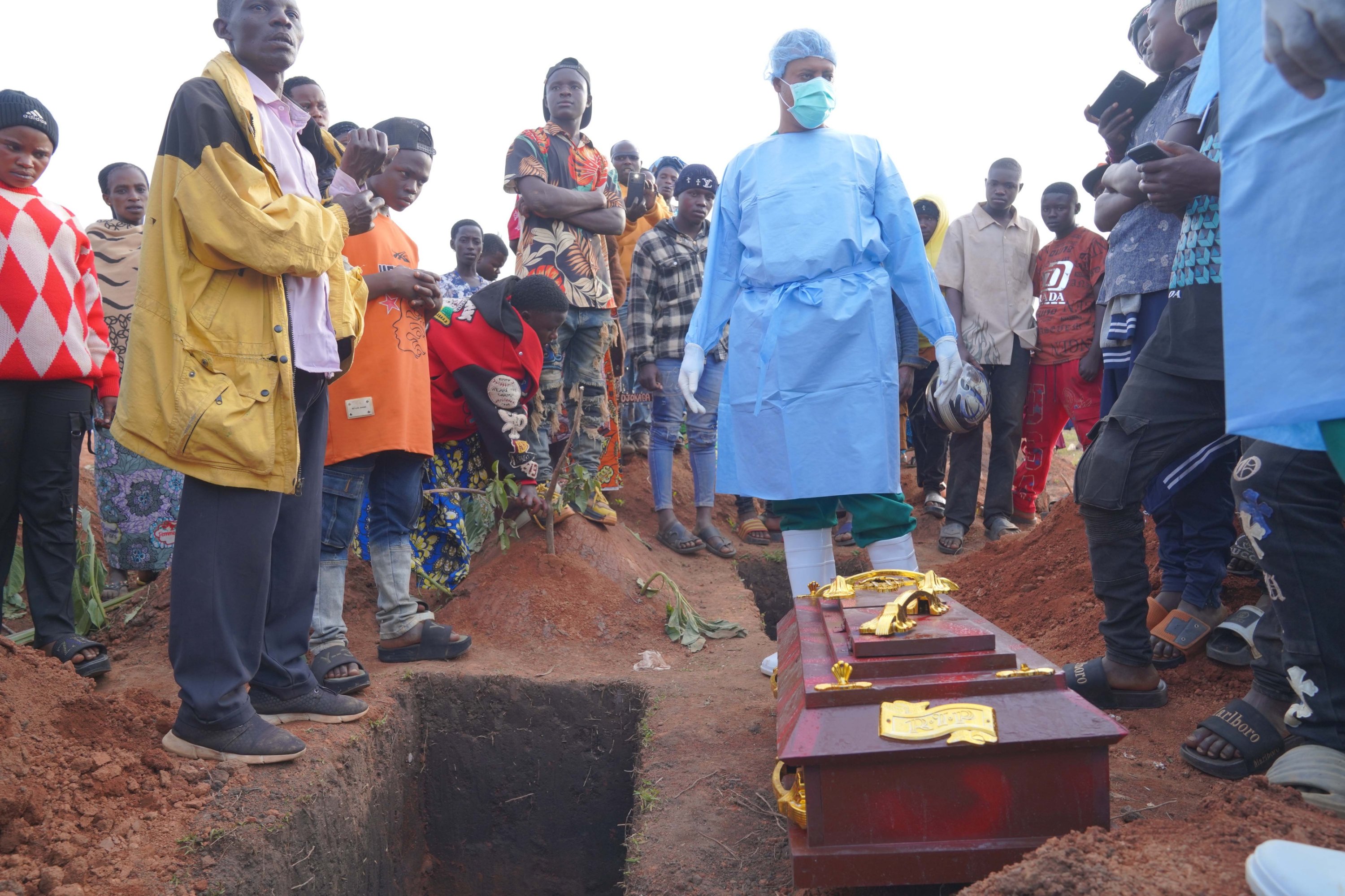
The United Nations said Thursday that humanitarian agencies and Congolese authorities were intensifying efforts around five priorities, including tripling safe-care capacity, strengthening community engagement, doubling the number of safe and dignified burial teams, expanding disease surveillance and providing greater support to vulnerable communities.
The Congolese government also launched the “Congo River Without Ebola” initiative with support from the United Nations and its partners.
The program is designed to strengthen surveillance and preparedness along the Congo River, a major transportation and trade route stretching more than 1,700 kilometers (1,056 miles) and linking communities, markets and several provinces.
The Ebola outbreak is being driven by the Bundibugyo virus strain, for which there is currently no approved vaccine or specific treatment.
The World Health Organization said Thursday that 70,000 doses of Ervebo, the approved vaccine used against the more common Zaire strain, had been allocated to Congo.
Earlier this month, WHO vaccine experts recommended a full-scale human trial to determine whether Ervebo can provide protection against the Bundibugyo strain.
Early findings, including animal studies, suggest the vaccine could offer some protection. But WHO spokesman Christian Lindmeier stressed Friday that it remains unknown whether Ervebo protects humans against Bundibugyo Ebola.
Uganda, which recorded 20 cases and two deaths during the outbreak, declared itself free of the virus last month.
The response has also taken a heavy toll on the people fighting the outbreak.
About 160 health care workers have contracted Ebola since the outbreak began, including 43 who have died, Harneis said.
Ambulances and other frontline workers have also come under repeated attack, further complicating efforts to reach patients and deliver medical supplies.
Harneis described the conditions facing responders in eastern Congo as “brutal,” citing insecurity, a fragmented health system and the breakdown of basic services.
Even paying workers has become a challenge. Harneis said Congo’s barely functioning banking system has made it difficult to deliver wages to people involved in the response.
International funding cuts have further weakened humanitarian operations, reducing the capacity of aid organizations by about a third, he said.
Harneis said the outbreak can still be brought under control, but only if additional staff and resources reach remote areas quickly.
“If we provide more staffing, if we get more resources into remote areas across the east of the Democratic Republic of Congo, within months we can slow the transmission and move to stopping it,” he said.
Without that support, he warned, the epidemic could become even deadlier and spread farther across Congo and into neighboring countries.