Daily Sabah logo

Politics
Diplomacy Legislation War On Terror EU Affairs Elections News Analysis
TÜRKİYE
Istanbul Education Investigations Minorities Expat Corner Diaspora
World
Mid-East Europe Americas Asia Pacific Africa Syrian Crisis Islamophobia
Business
Automotive Economy Energy Finance Tourism Tech Defense Transportation News Analysis
Lifestyle
Health Environment Travel Food Fashion Science Religion History Feature Expat Corner
Arts
Cinema Music Events Portrait Reviews Performing Arts
Sports
Football Basketball Motorsports Tennis
Opinion
Columns Op-Ed Reader's Corner Editorial
PHOTO GALLERY
JOBS ABOUT US RSS PRIVACY CONTACT US
© Turkuvaz Haberleşme ve Yayıncılık 2025

Daily Sabah - Latest & Breaking News from Turkey | Istanbul

  • Politics
    • Diplomacy
    • Legislation
    • War On Terror
    • EU Affairs
    • Elections
    • News Analysis
  • TÜRKİYE
    • Istanbul
    • Education
    • Investigations
    • Minorities
    • Expat Corner
    • Diaspora
  • World
    • Mid-East
    • Europe
    • Americas
    • Asia Pacific
    • Africa
    • Syrian Crisis
    • Islamophobia
  • Business
    • Automotive
    • Economy
    • Energy
    • Finance
    • Tourism
    • Tech
    • Defense
    • Transportation
    • News Analysis
  • Lifestyle
    • Health
    • Environment
    • Travel
    • Food
    • Fashion
    • Science
    • Religion
    • History
    • Feature
    • Expat Corner
  • Arts
    • Cinema
    • Music
    • Events
    • Portrait
    • Reviews
    • Performing Arts
  • Sports
    • Football
    • Basketball
    • Motorsports
    • Tennis
  • Gallery
  • Opinion
    • Columns
    • Op-Ed
    • Reader's Corner
    • Editorial
  • TV
  • World
  • Mid-East
  • Europe
  • Americas
  • Asia Pacific
  • Africa
  • Syrian Crisis
  • Islamophobia

Kenya faces 2nd wave of desert locusts in November, UN reports

by Daily Sabah with AA

ISTANBUL Oct 12, 2020 - 11:33 am GMT+3
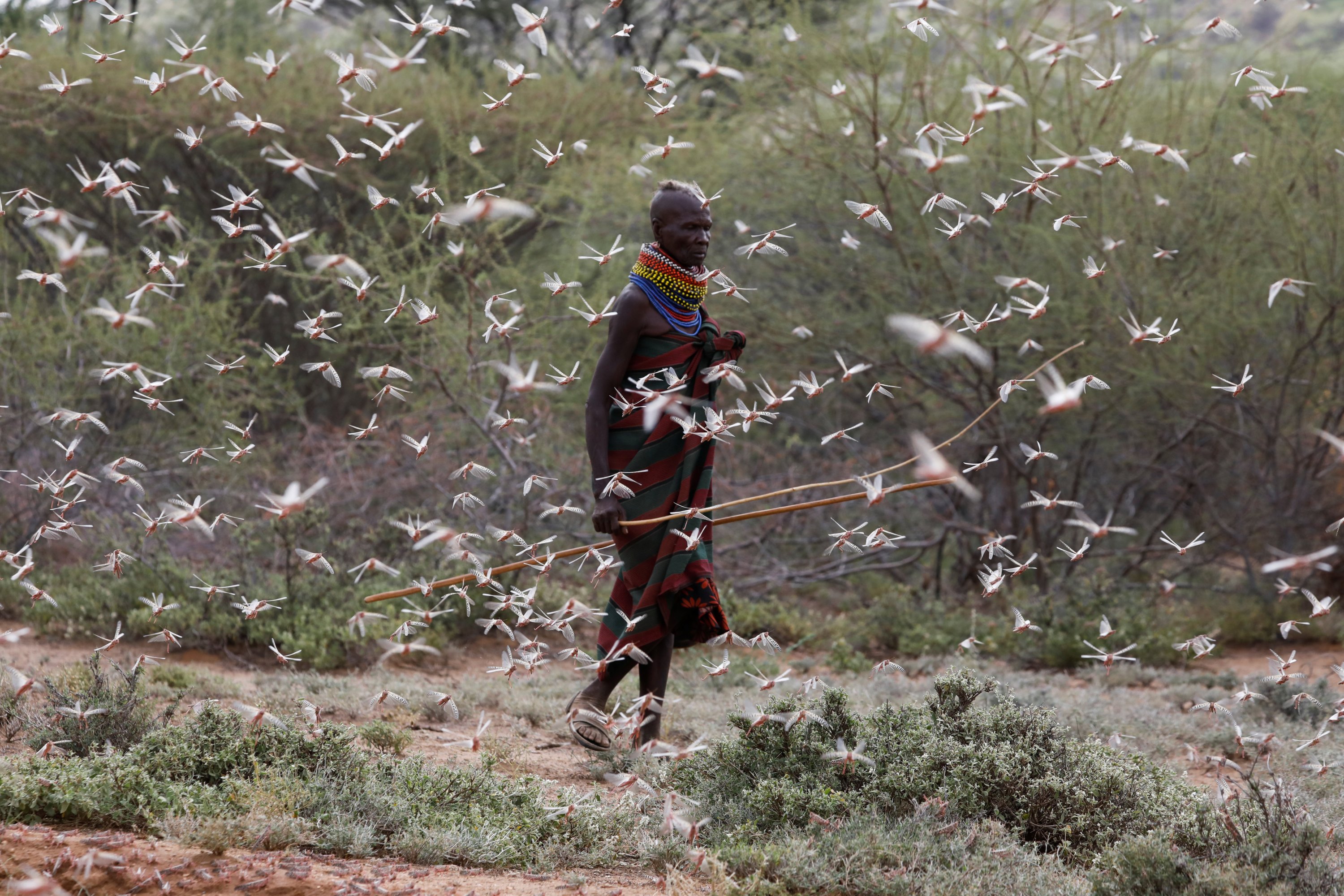
A member of the Turkana tribe walks through a swarm of desert locusts in the village of Lorengippi near the town of Lodwar, Turkana county, Kenya, July 2, 2020. (REUTERS Photo)
by Daily Sabah with AA Oct 12, 2020 11:33 am

Kenya is expected to face a second wave of desert locusts in November after the first hit earlier this year, the United Nations Food and Agriculture Organization (FAO) has warned, underscoring that the situation remains worrisome in the Horn of Africa and could potentially deteriorate further this month because of recent breeding.

In a Desert Locust situational update report released on Oct. 5, the FAO said that there will be an increased threat of swarm migration from Yemen, northeastern Ethiopia and northern Somalia south to eastern Ethiopia and central Somalia in October that could extend to northern Kenya in November, resulting in the second wave for the country.

Locust numbers, the worst in three generations, surged in East Africa and the Red Sea region in late 2019 and early this year, encouraged by unseasonably wet weather and dispersed by a record number of cyclones. The pests could cost East Africa and Yemen $8.5 billion this year, the World Bank has said. Swarms can fly up to 150 kilometers (93 miles) a day with the wind, and a single square kilometer (0.39 square mile) swarm can eat as much food in a day as 35,000 people. Desert locusts feed on nearly all green vegetation and crops including leaves, flowers, bark, fruit, millet and rice.

Aerial spraying is the only effective way to control the locust outbreak. After the locusts crossed into Uganda for the first time since the 1960s, soldiers resorted to using hand-held spray pumps because of difficulties in obtaining the needed aircraft.

The FAO also reported that there are upcoming threats to Central and Eastern African countries. In September, the U.N. agency warned that locusts could endanger up to 7 million people in the southern region, further exasperating food insecurity. The outbreaks of African migratory locusts in Botswana, Namibia, Zambia and Zimbabwe are not related to the billions that have affected East Africa for months, the FAO said.

While far smaller, the southern outbreaks need quick attention to prevent a wider problem as farmers and others are already struggling to recover from last year's drought and the economic effects of the COVID-19 pandemic, the U.N. agency said in a statement. A swarm of the voracious insects “can eat enough food for 2,500 people in a day,” a separate FAO document reported on the southern Africa outbreaks. A single swarm can contain millions of locusts.


  • shortlink copied
  • Last Update: Oct 12, 2020 2:50 pm
    KEYWORDS
    locust swarm kenya africa fao world bank
    The Daily Sabah Newsletter
    Keep up to date with what’s happening in Turkey, it’s region and the world.
    You can unsubscribe at any time. By signing up you are agreeing to our Terms of Use and Privacy Policy. This site is protected by reCAPTCHA and the Google Privacy Policy and Terms of Service apply.
    No Image
    Brooms on fire! Spain celebrates 'Los Escobazos' festival
    PHOTOGALLERY
    • POLITICS
    • Diplomacy
    • Legislation
    • War On Terror
    • EU Affairs
    • News Analysis
    • TÜRKİYE
    • Istanbul
    • Education
    • Investigations
    • Minorities
    • Diaspora
    • World
    • Mid-East
    • Europe
    • Americas
    • Asia Pacific
    • Africa
    • Syrian Crisis
    • İslamophobia
    • Business
    • Automotive
    • Economy
    • Energy
    • Finance
    • Tourism
    • Tech
    • Defense
    • Transportation
    • News Analysis
    • Lifestyle
    • Health
    • Environment
    • Travel
    • Food
    • Fashion
    • Science
    • Religion
    • History
    • Feature
    • Expat Corner
    • Arts
    • Cinema
    • Music
    • Events
    • Portrait
    • Performing Arts
    • Reviews
    • Sports
    • Football
    • Basketball
    • Motorsports
    • Tennis
    • Opinion
    • Columns
    • Op-Ed
    • Reader's Corner
    • Editorial
    • Photo gallery
    • DS TV
    • Jobs
    • privacy
    • about us
    • contact us
    • RSS
    © Turkuvaz Haberleşme ve Yayıncılık 2021