Four days ago, Mozambican immigrant Lado Amido opened his door in the South African coastal town of Kleinmond to find an angry crowd outside. They told him and others like him that foreigners had to leave.
The group moved through the area, going door to door and repeating the same message.
Fearing for his safety, Amido fled into the mountains, where he spent two nights.
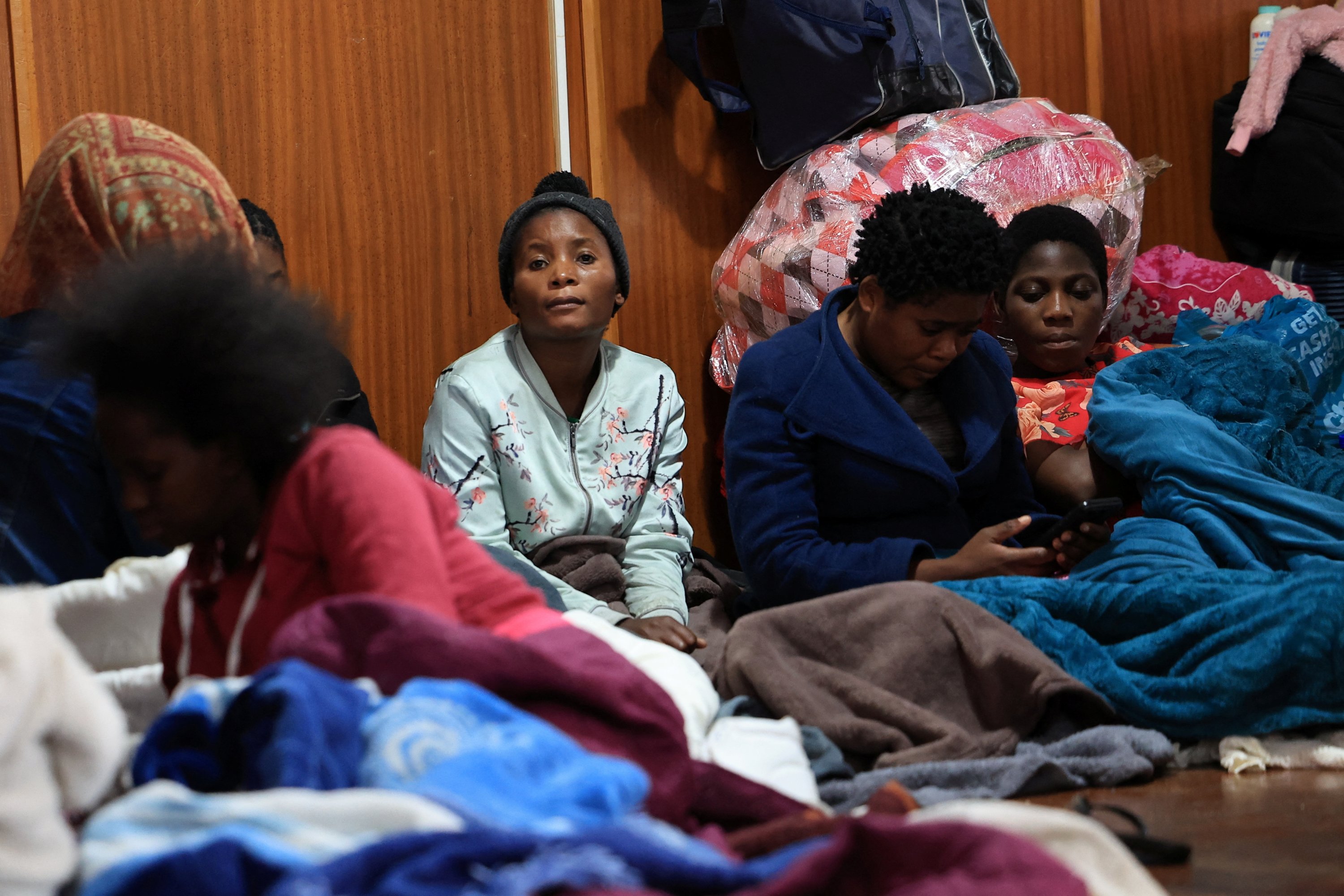
He is now sheltering in a local town hall, alongside other migrants from Malawi and Mozambique who have taken refuge across South Africa’s Western Cape province after being targeted in a wave of anti-immigrant violence in several coastal towns.
South Africa has recently seen a surge in xenophobic protests that have at times turned deadly. Mozambique’s government said five of its citizens were killed in attacks in Mossel Bay over the weekend.

Amido lives in Kleinmond, about 300 kilometers (186 miles) away.
“On the 31st, people came to my house, knocked on the door and took all my belongings,” said the 49-year-old, who has been in South Africa since February seeking work.
In Kleinmond’s town hall, he is with about 100 other immigrants, some of whom are hoping to join voluntary repatriation programs set up by their governments.
Xenophobic attacks are a recurring problem in South Africa, where immigrants are often blamed for economic woes such as high unemployment and crime.
Despite the absence of evidence for this claim, politicians from nearly all parties have tended to lend it credence in an effort to win populist support ahead of elections, including local polls due at year’s end.
“As we work to build a safer and more prosperous society, we need to address the challenge of migration,” President Cyril Ramaphosa told Parliament on Tuesday, while also condemning recent xenophobic violence.
Grant Cohen, a ward councillor for Kleinmond, said immigration authorities had visited the town in recent weeks to check restaurants and other businesses for undocumented workers.
But many of the immigrants sheltering in the town hall are in the country legally, he told Reuters.
“We’ve got children here at the moment who should be in school, who have been in school in Kleinmond, but now want to flee the country out of fear and intimidation,” Cohen said.

“I don’t believe residents should take matters into their own hands.”
Michael Markson, a 31-year-old from Malawi, said he spent one night sleeping in the mountains after fleeing the informal settlement where he had lived for about a year on Saturday.
“My landlord came and told me that I should evacuate because if they find us, they’re going to kill us,” he said.
The next day, one of his friends called his boss, who brought them food as they hid in the woods.
Markson said he was close enough to see a large crowd of protesters in town, some carrying knives and sticks.
He is now waiting for assistance to return home, which he says he cannot afford.
“In our country there’s no good economy, but it’s better than living in a community where your life is under threat,” he said.