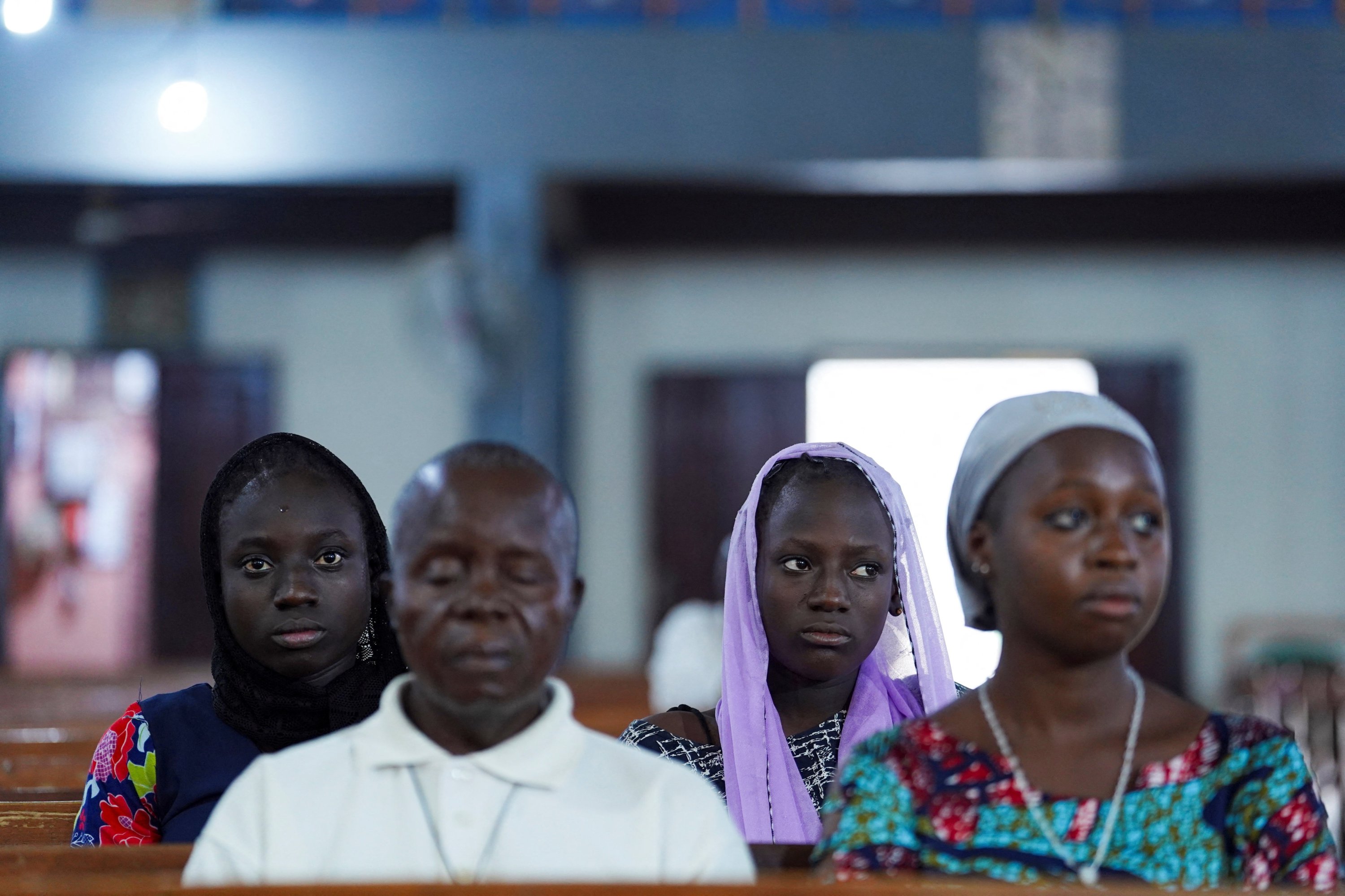
Two weeks after gunmen abducted more than 250 students and 12 staff members from St. Mary’s Catholic boarding school in Papiri, a remote hamlet in Niger state, northern Nigeria, families remain trapped in fear, frustration, and uncertainty.
The attack underscores a growing pattern of school kidnappings that have left communities paralyzed and the nation grappling with a decade-long security crisis.
For parents like Sunday Gbazali, a farmer and father of 12, the trauma is unbearable.
His 14-year-old son was taken on Nov. 21. “I barely sleep,” Gbazali said. “My wife cries constantly. They are just telling us to exercise patience, that they are trying to rescue the children. How can we find peace when we do not know his current condition?” He added, his voice cracking: “I used to hear about abductions in the news, but I never knew the pain until it happened to me.”
The Christian Association of Nigeria (CAN) reported that 303 children and 12 staff members were kidnapped.
Fifty pupils managed to escape the attackers in the immediate aftermath, but the fate of the remaining hostages, some as young as six, remains unknown.
The school had only unarmed volunteer guards, who fled as the gunmen arrived.
This attack is among the most severe since Boko Haram kidnapped 276 schoolgirls in Chibok in 2014, an event that captured global attention but left lasting scars on Nigeria’s northern communities.
While Boko Haram’s ideological insurgency has weakened, its tactics have inspired criminal gangs, who now target schools primarily for ransom, perpetuating a “relentless cycle of terror.”
President Bola Tinubu has faced mounting domestic and international criticism over the government’s handling of security and alleged religious persecution of Christians.
Tinubu denies such claims but has taken steps to address the crisis, declaring a nationwide security emergency and ordering the recruitment of thousands of additional army and police personnel.
National Security Adviser Nuhu Ribadu assured Catholic leaders Monday that “the children are doing fine and will be back soon,” yet no further updates have been provided.
The attackers’ identities remain unknown, and parents report no ransom demands.
“The government says that it’s taking action, but up to now, we haven’t got any information,” said Emmanuel Bala, chair of the school’s parent-teacher association. Families are left in limbo, unable to know whether their children are alive or injured.
Administrative confusion has deepened the anxiety. Parents were asked to register their children a full week after the abduction, after Niger state Governor Mohammed Umar Bago suggested the scale of the kidnapping was exaggerated.
Police documented 215 students as still in captivity, but registration remains incomplete due to poor communication networks in the remote region.
Bishop Bulus Yohanna, CAN chairman for Niger state, noted that many parents had not received the notice to register their children, complicating rescue efforts.
The abduction has broader implications for education in northern Nigeria.
Amnesty International reported that nearly 20,500 schools have closed across seven states following the St. Mary’s attack.
Nigeria already has approximately 20 million children out of school, mostly in the north, where parents fear kidnapping and armed violence. The psychological trauma, uncertainty, and disruption threaten to erode education for an entire generation.
The global “#BringBackOurGirls” advocacy movement framed the incident as part of a systemic failure.
Since the Chibok kidnappings, over 1,800 students have been abducted across Nigeria, often with minimal government response.
“These atrocities are not isolated tragedies – they are part of a pattern spanning over 11 years,” the movement said in an open letter to President Tinubu.
Even children who escaped are grappling with trauma. Thirteen-year-old Stephen Samuel, who fled during the attack, said: “When these people come back, will we be able to go to school again? Which school will we go to? I am thinking maybe school has ended.”
Experts warn that without comprehensive security reforms, Nigeria risks losing an entire generation to fear, trauma, and disrupted education.
Analysts point to a combination of poorly trained local security forces, expansive forests providing cover for armed gangs, and ineffective intelligence networks as key factors fueling the epidemic of school kidnappings.