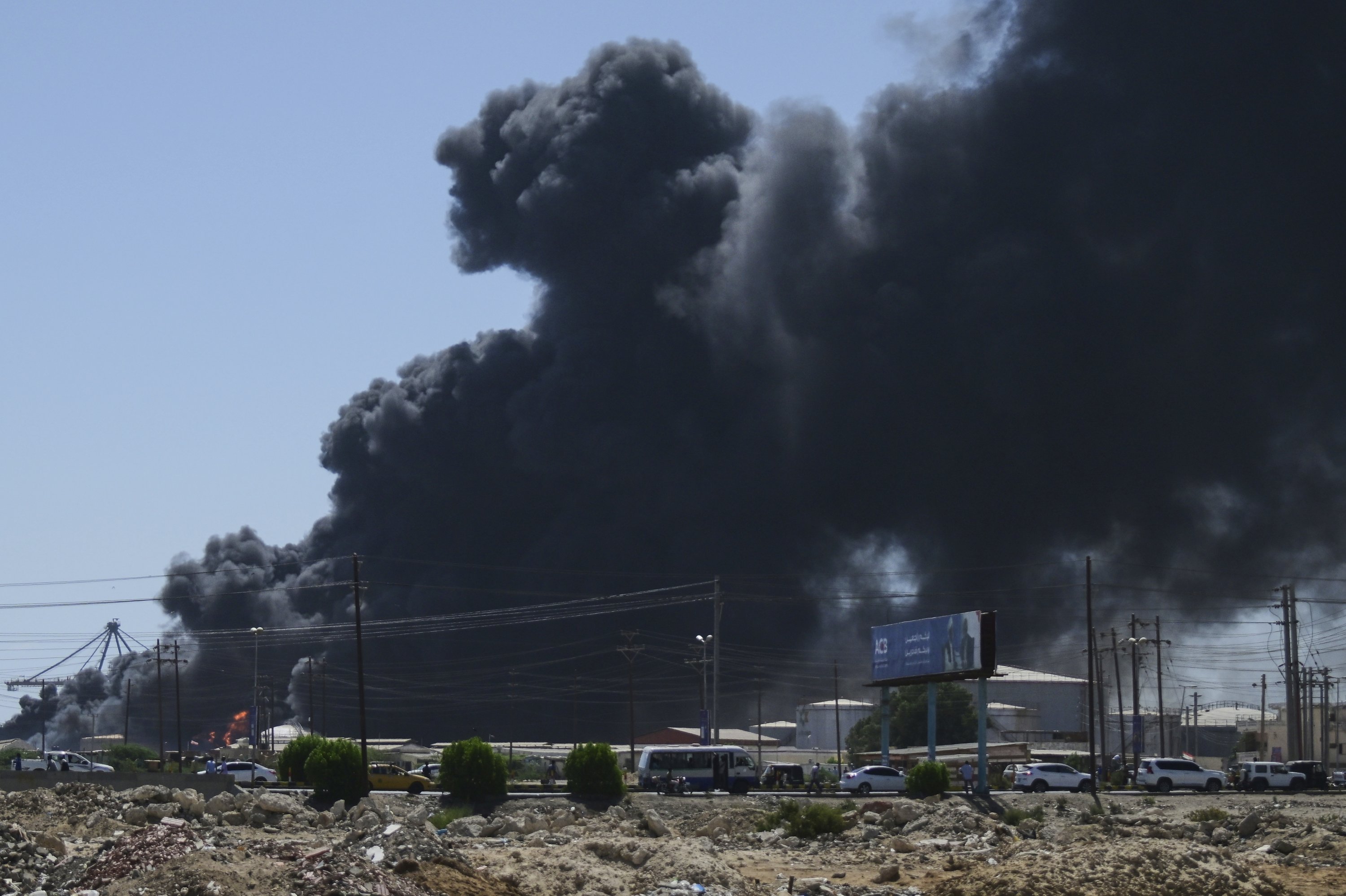
Drone attacks blamed on the Rapid Support Forces ripped through Sudan’s North Kordofan capital for a second straight day, killing and injuring civilians in repeated strikes that hit homes, a funeral gathering and aid routes, according to a Sudanese rights monitoring group and health officials.
The Emergency Lawyers group said RSF drones struck El-Obeid in multiple waves on Wednesday and Thursday, leaving at least 23 civilians dead and 19 wounded, with warnings that the toll could rise as drones continued to fly over the city and access to medical care remained strained.
The first round of strikes late Wednesday killed five civilians and injured 12 others, the group said. A second strike followed shortly after, hitting mourners gathered at Dalil Cemetery during a funeral for earlier victims. Four more people were killed and seven injured in that attack, turning a burial site into another casualty scene in a city already under sustained pressure.
On Thursday, the violence spread deeper into urban neighborhoods. Emergency Lawyers said RSF drones targeted densely populated residential areas, including Al-Muwazzafeen and Al-Matar, as well as locations near the Sudanese army’s 5th Infantry Division headquarters. Thirteen civilians were killed when residents gathered near damaged buildings, apparently during attempts to retrieve bodies and assist the wounded.
Another strike hit a truck carrying food supplies at the southern entrance to the city, killing the driver and further disrupting already fragile supply lines into El-Obeid.
The group described a repeated pattern of strikes on civilian spaces, including rescue scenes and funeral gatherings, calling it a failure to distinguish between military and nonmilitary targets. It said the RSF bears full responsibility and warned the conduct could amount to serious violations of international humanitarian law.
Neither the RSF nor Sudanese authorities issued an immediate response to the allegations.
Local health workers said the situation inside hospitals was deteriorating as casualties arrived in waves. A spokesperson for Sudan Doctors Network said RSF drones also struck a gas station and that it remained unclear how many of the dead were civilians or fighters, given the confusion surrounding multiple impact sites.
Aid workers described a city increasingly under strain from persistent aerial surveillance and sudden strikes. An official with Mercy Corps said schools had closed and commercial activity had slowed sharply, with markets only partially operating as residents stayed indoors or moved cautiously between shelters.
The United Nations has previously warned that drone warfare in Kordofan has intensified sharply, contributing to rising civilian casualties and compounding access restrictions for humanitarian agencies attempting to deliver aid.
El-Obeid sits in a broader conflict zone where control has shifted repeatedly since fighting erupted between Sudan’s army and the RSF in April 2023. The war, now in its fourth year, has fragmented the country, with the army holding much of the north, east and center, while the RSF dominates large parts of Darfur and sections of Kordofan.
The region has become a focal point of escalating drone warfare, which analysts say is increasingly shaping the battlefield and expanding the reach of strikes into urban civilian life. Humanitarian groups warn that the use of drones has made casualty verification more difficult and response operations more dangerous, as attacks often occur without warning and in quick succession.