Daily Sabah logo

Politics
Diplomacy Legislation War On Terror EU Affairs Elections News Analysis
TÜRKİYE
Istanbul Education Investigations Minorities Expat Corner Diaspora
World
Mid-East Europe Americas Asia Pacific Africa Syrian Crisis Islamophobia
Business
Automotive Economy Energy Finance Tourism Tech Defense Transportation News Analysis
Lifestyle
Health Environment Travel Food Fashion Science Religion History Feature Expat Corner
Arts
Cinema Music Events Portrait Reviews Performing Arts
Sports
Football Basketball Motorsports Tennis
Opinion
Columns Op-Ed Reader's Corner Editorial
PHOTO GALLERY
JOBS ABOUT US RSS PRIVACY CONTACT US
© Turkuvaz Haberleşme ve Yayıncılık 2026

Daily Sabah - Latest & Breaking News from Turkey | Istanbul

  • Politics
    • Diplomacy
    • Legislation
    • War On Terror
    • EU Affairs
    • Elections
    • News Analysis
  • TÜRKİYE
    • Istanbul
    • Education
    • Investigations
    • Minorities
    • Expat Corner
    • Diaspora
  • World
    • Mid-East
    • Europe
    • Americas
    • Asia Pacific
    • Africa
    • Syrian Crisis
    • Islamophobia
  • Business
    • Automotive
    • Economy
    • Energy
    • Finance
    • Tourism
    • Tech
    • Defense
    • Transportation
    • News Analysis
  • Lifestyle
    • Health
    • Environment
    • Travel
    • Food
    • Fashion
    • Science
    • Religion
    • History
    • Feature
    • Expat Corner
  • Arts
    • Cinema
    • Music
    • Events
    • Portrait
    • Reviews
    • Performing Arts
  • Sports
    • Football
    • Basketball
    • Motorsports
    • Tennis
  • Gallery
  • Opinion
    • Columns
    • Op-Ed
    • Reader's Corner
    • Editorial
  • TV
  • World
  • Mid-East
  • Europe
  • Americas
  • Asia Pacific
  • Africa
  • Syrian Crisis
  • Islamophobia

WHO sees gains against Ebola outbreak, but warns crisis far from over

by Daily Sabah with Agencies

ISTANBUL Sep 18, 2026 - 3:04 pm GMT+3
Edited By Kelvin Ndunga
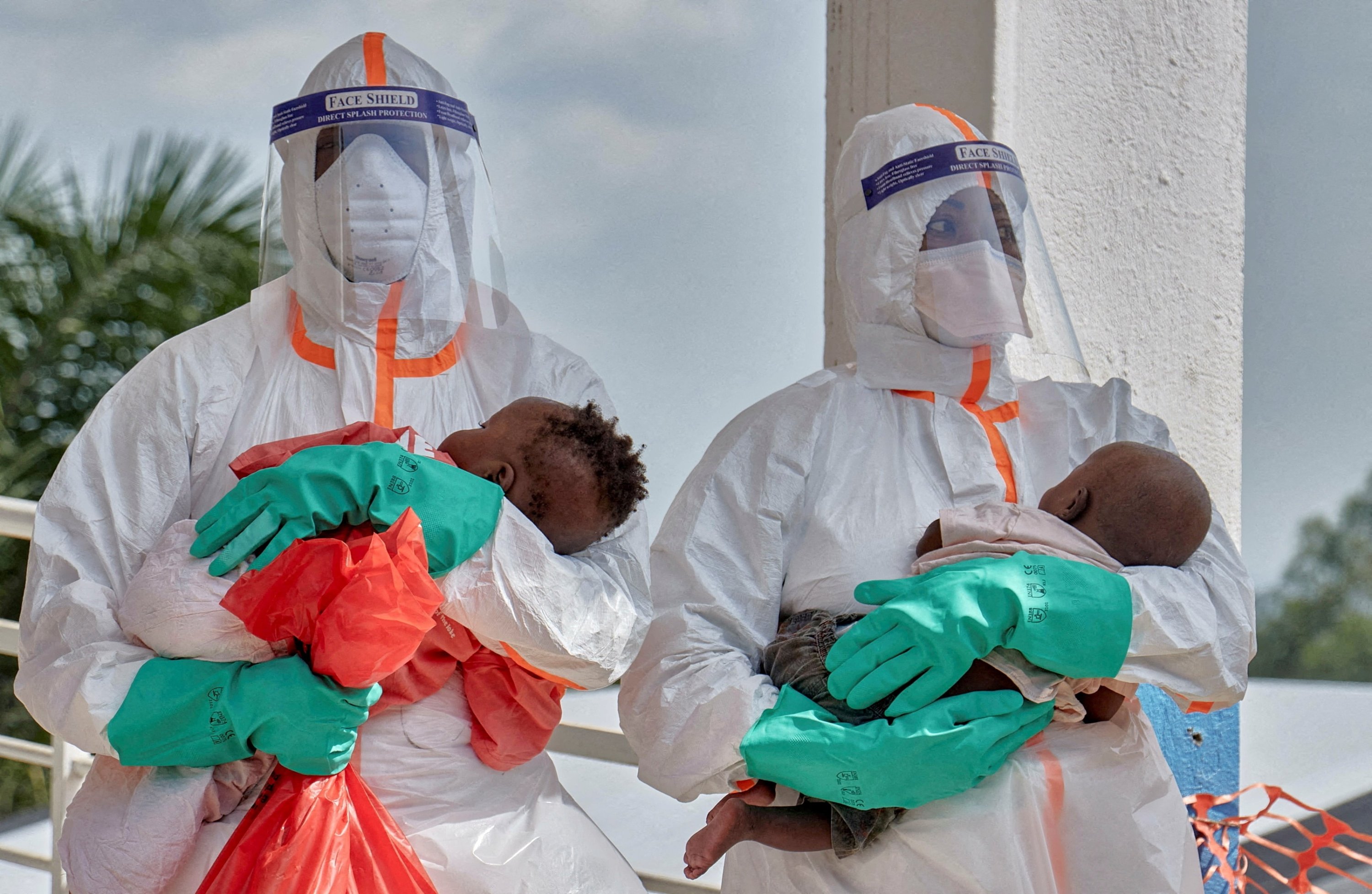
DRC medical workers dressed in personal protective equipment (PPE) carry children tested and cleared of Ebola from Saint Nicholas Orphanage, Bunia, DRC, June 9, 2026. (Reuters Photo)
by Daily Sabah with Agencies Sep 18, 2026 3:04 pm
Edited By Kelvin Ndunga

An Ebola outbreak in eastern Democratic Republic of Congo is showing signs of slowing in some of the hardest-hit areas, but health officials warn that the virus remains far from under control as cases continue to rise sharply in parts of the country.

World Health Organization Director-General Tedros Adhanom Ghebreyesus said Wednesday that health workers were beginning to gain ground against the Bundibugyo virus, the rare Ebola species responsible for the outbreak, particularly in Ituri province.

"We are now starting to see encouraging signs that we are gaining ground. In the most affected parts of Ituri province, transmission is going down," Tedros told reporters at the WHO headquarters in Geneva.

South Kivu province has reported no new cases since May, he said, offering another sign that transmission has been contained in some areas.

But Tedros cautioned against interpreting those developments as evidence that the wider outbreak is under control.

"Make no mistake, the epidemic continues to grow and continues to kill," he said.

More than 7,200 cases and more than 3,500 deaths have been reported across seven provinces, according to figures cited by health authorities. The African Union has put the cumulative total at 7,404 cases and 3,577 deaths.

The situation is particularly concerning in North Kivu, where Tedros said weekly cases had nearly doubled in two weeks, rising from about 100 to more than 200.

"The area is so vast that it's hard to speak of a single epidemic. It's many outbreaks in many places," Tedros said.

Maria Van Kerkhove, the WHO's director for epidemic and pandemic management, said the latest trends offered grounds for cautious optimism but warned that it was too early to draw firm conclusions.

"We can be cautiously optimistic about what is happening, but I think we need to be realistic about the road that's ahead of us. Looking at trends takes time," she said.

Africa's top public health agency also urged caution, saying Thursday that the outbreak remained serious and that data showed gaps in infection prevention and control.

Jean Kaseya, director-general of the Africa Centres for Disease Control and Prevention, acknowledged a plateau and a slight decrease in cases in some areas, particularly Ituri. But he said the decline was not yet broad or sustained enough to conclude that the outbreak had peaked.

"And no one can come and say the outbreak is under control. No one," Kaseya said.

His assessment came a day after Tedros said health authorities were beginning to gain ground against the virus.

Congo's Health Minister Samuel Roger Kamba had earlier said there were "encouraging signs" following what he described as a peak in mid-August, with transmission gradually slowing. Government spokesman Patrick Muyaya also said the peak had been reached in the third week of August.

Kaseya, however, said some of those conclusions were based on incomplete data and that health authorities would need to see a sustained decline in infections before confirming that the outbreak had passed its peak.

"We saw a decrease in some areas, but we say the situation is still" serious, he said, stressing the need for continued surveillance and response efforts.

The outbreak began in northeastern Congo and has spread across seven provinces, including areas affected by conflict and difficult access for health workers. The scale and geographic spread of the outbreak have complicated efforts to trace infections, isolate patients and strengthen infection prevention measures.

Ebola spreads through contact with the bodily fluids of infected people and can cause severe illness, including bleeding, organ failure and death. The disease has killed more than 15,000 people in Africa over the past five decades.

The current outbreak is caused by the Bundibugyo species of Ebola, for which there is no approved vaccine or treatment specifically licensed for the strain.


  • shortlink copied
  • KEYWORDS
    ebola outbreak democratic republic of congo world health organization (who) tedros adhanom ghebreyesus
    The Daily Sabah Newsletter
    Keep up to date with what’s happening in Turkey, it’s region and the world.
    You can unsubscribe at any time. By signing up you are agreeing to our Terms of Use and Privacy Policy. This site is protected by reCAPTCHA and the Google Privacy Policy and Terms of Service apply.
    No Image
    In photos: Bosnian Muslim miners break fast underground
    PHOTOGALLERY
    • POLITICS
    • Diplomacy
    • Legislation
    • War On Terror
    • EU Affairs
    • News Analysis
    • TÜRKİYE
    • Istanbul
    • Education
    • Investigations
    • Minorities
    • Diaspora
    • World
    • Mid-East
    • Europe
    • Americas
    • Asia Pacific
    • Africa
    • Syrian Crisis
    • İslamophobia
    • Business
    • Automotive
    • Economy
    • Energy
    • Finance
    • Tourism
    • Tech
    • Defense
    • Transportation
    • News Analysis
    • Lifestyle
    • Health
    • Environment
    • Travel
    • Food
    • Fashion
    • Science
    • Religion
    • History
    • Feature
    • Expat Corner
    • Arts
    • Cinema
    • Music
    • Events
    • Portrait
    • Performing Arts
    • Reviews
    • Sports
    • Football
    • Basketball
    • Motorsports
    • Tennis
    • Opinion
    • Columns
    • Op-Ed
    • Reader's Corner
    • Editorial
    • Photo gallery
    • DS TV
    • Jobs
    • privacy
    • about us
    • contact us
    • RSS
    © Turkuvaz Haberleşme ve Yayıncılık 2021