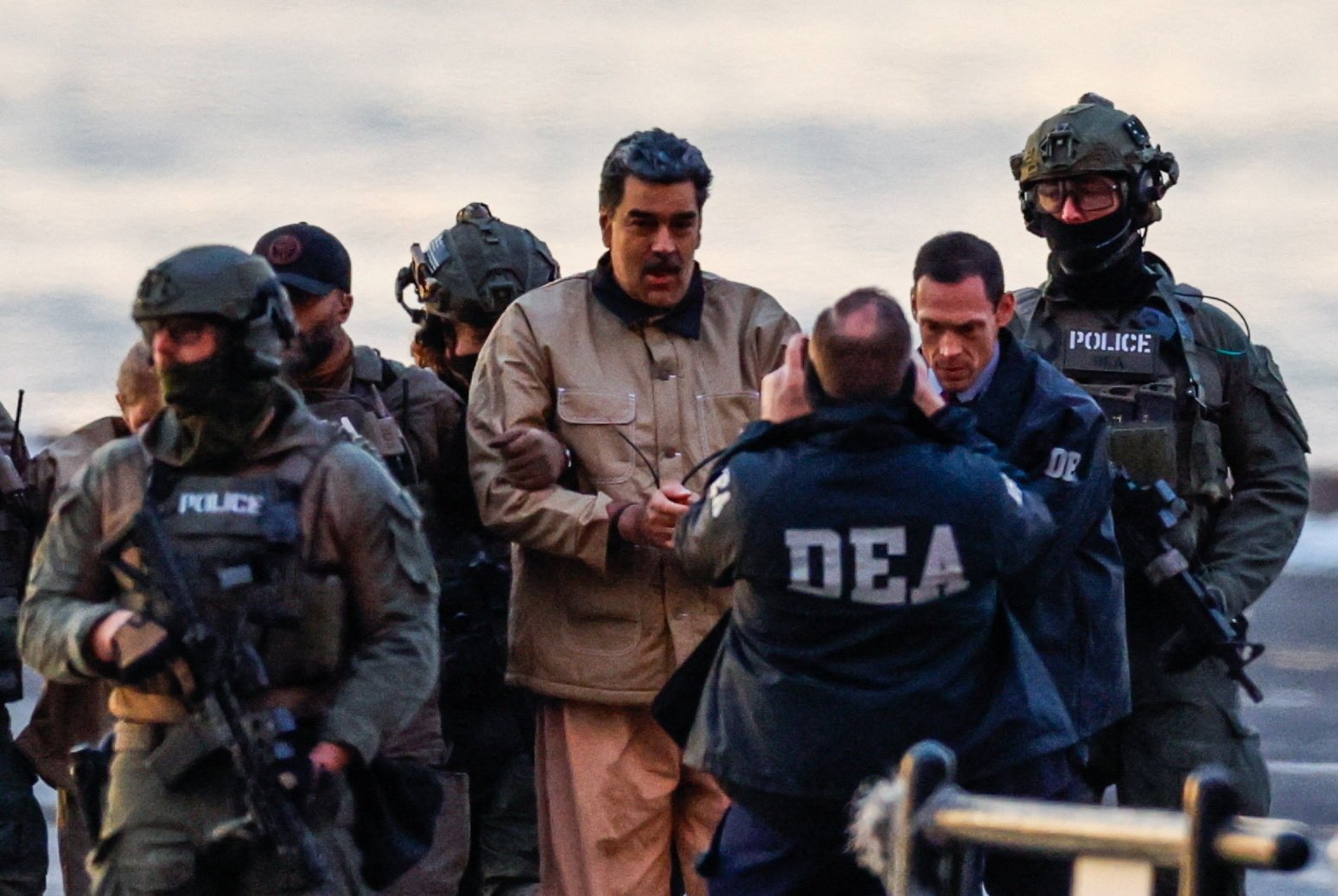
Nicolas Maduro, Venezuela’s embattled president, is facing a far-reaching criminal case in Manhattan after being captured in a U.S. military raid, reviving and expanding an indictment that federal prosecutors have pursued for years.
An indictment unsealed Saturday by the U.S. Attorney’s Office for the Southern District of New York accuses Maduro, his wife, his son and several close allies of running what prosecutors describe as a state-backed narco-trafficking enterprise that funneled tons of cocaine into the United States over more than two decades.
Prosecutors allege that Maduro and senior Venezuelan officials “abused their positions of public trust,” corrupting government institutions to protect and partner with major criminal organizations, including Mexico’s Sinaloa Cartel and Venezuela-based Tren de Aragua.
In return, the indictment says, traffickers paid bribes and shared profits with officials who provided law enforcement cover and logistical support.
The charging document lays out a series of specific allegations, including claims that Maduro authorized the sale of Venezuelan diplomatic passports to known drug traffickers and facilitated flights under diplomatic cover to move drug proceeds from Mexico back to Venezuela.
Maduro is charged with four counts: narco-terrorism conspiracy, conspiracy to import cocaine into the United States, possession of machine guns and destructive devices, and conspiracy to possess machine guns and destructive devices.
The case is being prosecuted by the Southern District of New York, a Justice Department office known for its aggressive, high-profile cases.
The same office indicted Maduro in 2020 on identical core charges. The newly unsealed indictment adds details and names additional defendants, most notably first lady Cilia Flores.
Flores is accused of ordering kidnappings and murders and of accepting bribes in 2007 to arrange a meeting between drug traffickers and the head of Venezuela’s National Anti-Drug Office, according to prosecutors.
Maduro is expected to make his initial court appearance Monday, when a judge will formally advise him of the charges and ensure he has legal representation.
A trial is unlikely to begin for months, and possibly more than a year, as pretrial motions unfold. Prosecutors could also seek to resolve the case through a plea agreement, though no such discussions have been disclosed.
The case is expected to be overseen by U.S. District Judge Alvin Hellerstein, who handled the 2020 indictment.
The 92-year-old judge has recently drawn attention for rejecting efforts by President Donald Trump’s administration to deport alleged Venezuelan gang members under the Alien Enemies Act, ruling that the wartime law had been improperly invoked.
As his defense takes shape, Maduro is expected to argue that he is immune from prosecution as a sitting foreign head of state. U.S. courts have at times recognized such immunity, but legal experts say Maduro faces a steep challenge.
Prosecutors are likely to point to the precedent set by the 1989 U.S. invasion of Panama, when leader Manuel Noriega was captured, prosecuted in the United States and ultimately convicted on drug-trafficking charges. Courts rejected Noriega’s immunity claims, deferring to the U.S. government’s position that he was not Panama’s legitimate leader.
Maduro may also argue that the case amounts to selective or vindictive prosecution, or that some allegations are too old to be tried. Federal conspiracy charges generally carry a five-year statute of limitations, though prosecutors argue the alleged criminal conduct continued well within that window.
For now, the unsealing of the indictment marks the most dramatic escalation yet in a long-running U.S. effort to hold Venezuela’s leadership criminally accountable.