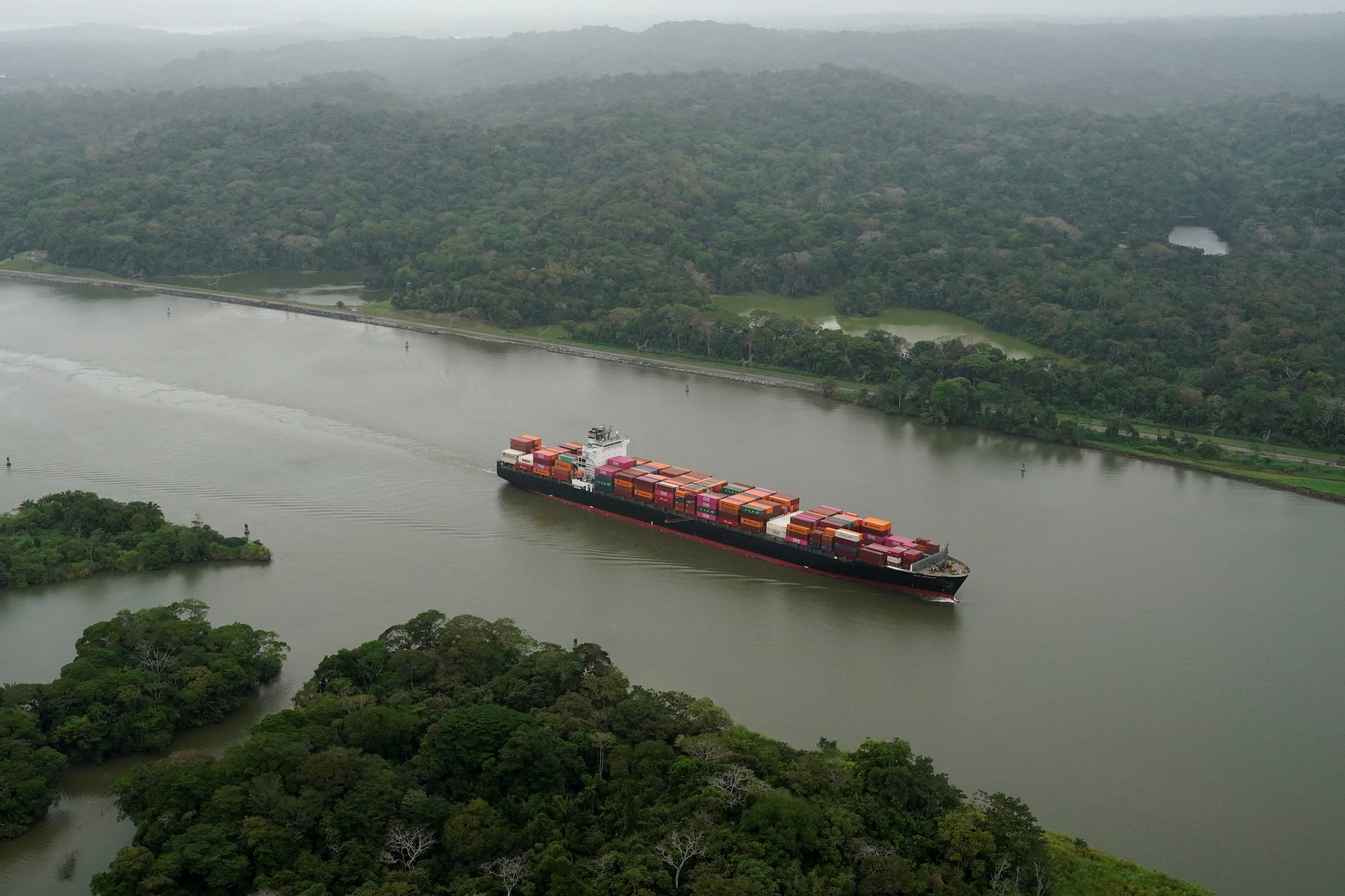
China's Foreign Ministry said Wednesday it had formally complained to the U.S. over what it called "irresponsible" remarks and "attacks" on China's cooperation with Panama regarding the canal.
"Currently, the cooperation between China and Panama under the framework of the Belt and Road Initiative is proceeding normally," ministry spokesperson Lin Jian told a press briefing when asked about Panama's decision to let its involvement in the infrastructure plan expire.
"We hope that the relevant parties will remain confident, not be influenced by external interference, and make the right decisions based on the overall bilateral relationship and the long-term interests of the people of both countries," Lin said.
However, Panama dismissed President Donald Trump's statement that the United States would "take back" the Panama Canal, asserting that the vital interoceanic waterway would remain under its control.
"The canal is and will remain Panama's," President Jose Raul Mulino said in a statement published on social media.
"Above all, China is operating the Panama Canal, and we didn't give it to China, we gave it to Panama. And we're taking it back," Trump said after being sworn in inside the U.S. Capitol.
Panama maintains control of the canal but Chinese companies have been steadily increasing their presence around the vital shipping link between the Atlantic and Pacific oceans.
Panama denies that China has any role in running the canal and has repeatedly asserted its sovereignty over the waterway since Trump first threatened to take it over after he was elected in November.
At his inauguration, Trump said that the United States has been "treated very badly from this foolish gift that should have never been made."
"The purpose of our deal and the spirit of our treaty has been violated. American ships are being severely overcharged and not treated fairly in any way, shape or form, and that includes the United States Navy," he said.
Earlier Sunday, U.S. Secretary of State Marco Rubio warned of potential action against Panama over Chinese influence on the canal, while the country's leader dismissed invasion fears and invited talks.
On his first trip overseas as the top U.S. diplomat, Rubio took a guided tour of the canal accompanied by its Panamanian administrator.
He reportedly told Panama that President Donald Trump had determined that the country had violated the terms of the treaty that handed over the canal in 1999 and pointed to the "influence and control" of China over the canal, through which some 40% of U.S. container traffic passes.
Meeting President Jose Raul Mulino, Rubio "made clear that this status quo is unacceptable and that absent immediate changes, it would require the United States to take measures necessary to protect its rights under the treaty," State Department spokesperson Tammy Bruce said.