The Federal Aviation Administration (FAA) lifted a nationwide ground stop Friday after a communications failure at air traffic control centers disrupted operations at airports across the United States, triggering the longest shutdown of U.S. airspace since the Sept. 11, 2001, attacks.
Transportation Secretary Sean Duffy said U.S. airspace reopened at 8:15 p.m. Eastern time (1:15 a.m. GMT), although he warned that flights would resume gradually as airlines worked to restore normal operations.
"It's going to be slow," Duffy told reporters at the White House.
By 11:30 p.m., nearly 10,000 flights had been canceled, including more than 2,200 each at Delta Air Lines and American Airlines and 1,800 at United Airlines, according to flight-tracking website Flightradar24. Some aircraft at major airports had also spent more than five hours waiting for a gate, underscoring the scale of the disruption.
The four-hour nationwide grounding could disrupt airline schedules for days, aviation analysts said.
Duffy said tens of thousands of passengers were stranded at airports across the country. He also said he and Homeland Security Secretary Markwayne Mullin had met with President Donald Trump in the Oval Office to discuss the outage.
The failure was the latest and most dramatic sign of strain on a U.S. air traffic control system beset by aging technology, equipment and communications problems, as well as a shortage of several thousand controllers.
Duffy said the trouble began at 3:36 p.m., when air traffic control centers experienced instability in their radar and communications systems.
"Our switches, our routers actually got overloaded with data and they started to give us inconsistencies in the data from those routers and because of that we shut the system down," Duffy said, adding that radar and communications were never completely lost and controllers were able to land thousands of aircraft safely.
Duffy said the immediate problem had been fixed and that flying was safe, but warned that a broader overhaul of the aging air traffic control system was needed to prevent similar failures.
Duffy blamed Congress for failing to fund a new system that he said could prevent such outages and called for $50 billion to modernize the infrastructure.
Earlier Friday, before the outage, the White House and the Department of Transportation had urged Congress to approve $30.1 billion to upgrade the nation's aging airports and air traffic control infrastructure.
"What we have is an incredibly old air traffic control system," Duffy said. "Give us the money to fix it."
Mullin said there was "zero evidence" so far that the outage resulted from a cyberattack or a rogue artificial intelligence system, although investigators had not ruled out either possibility.
"It appears this was mechanically driven. However, we're still looking," Mullin said.
The National Security Agency was working with the Department of Homeland Security on the investigation, he added.
The outage appeared to affect a telecommunications network overseen by L3Harris Technologies, according to two airline officials. The network handles critical radio frequencies used by air traffic controllers to communicate with pilots. L3Harris did not respond to a request for comment.
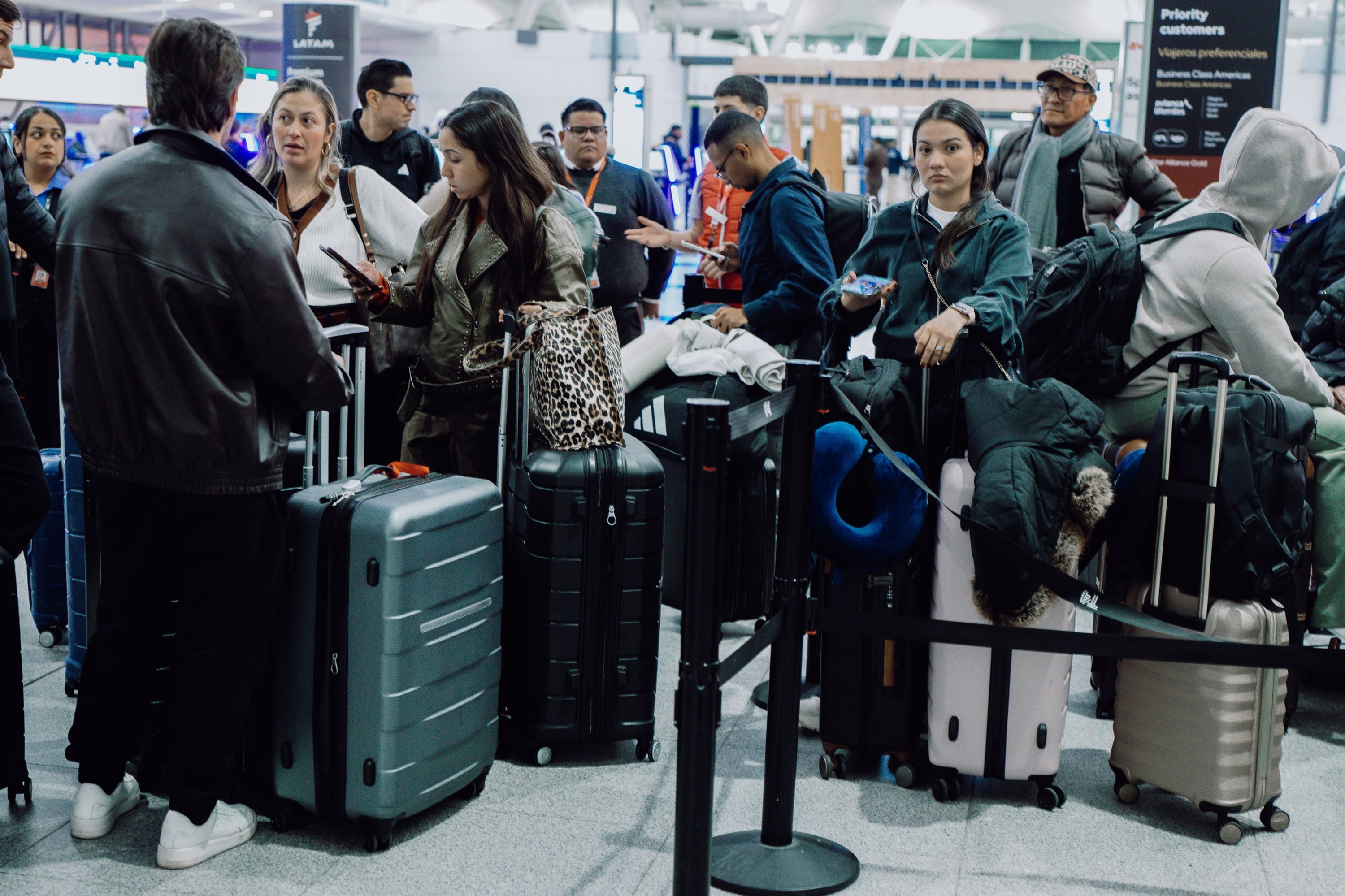
Although the ground stop was lifted, the disruption for passengers was far from over. From Boston to Seattle and New York to Los Angeles, passengers crowded departure halls and airline desks as delays and cancellations mounted and aircraft remained parked at gates.
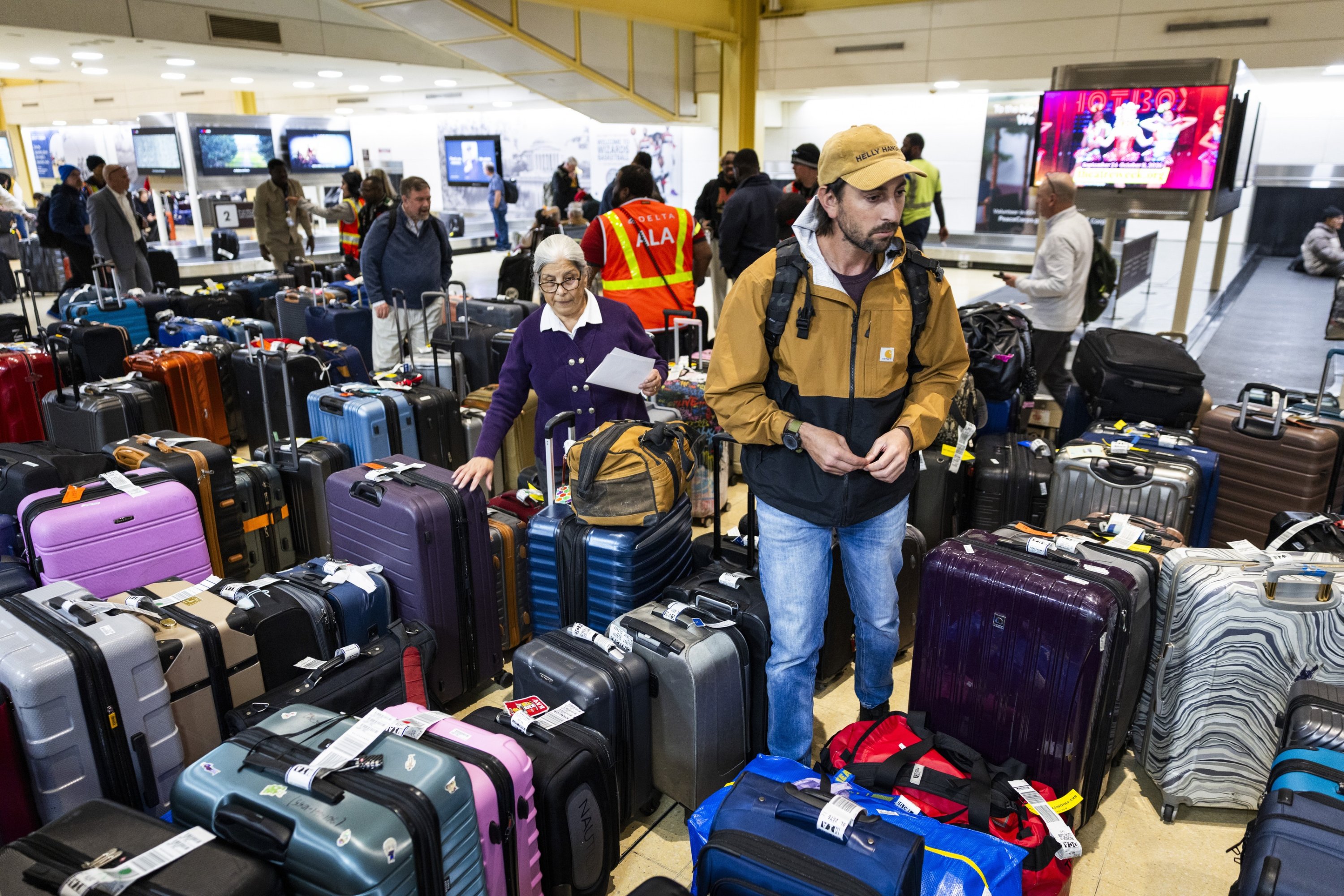
Thousands of passengers faced the prospect of spending the night at airports. Edward Kargbo, 50, of West Chester, Pennsylvania, had been scheduled to take a 9 p.m. Ethiopian Airlines flight to Lomé, Togo. Instead, he planned to spend the night at the airport before boarding a rescheduled flight at 6 a.m. Saturday.
"I have to squat the night here," he said. "I'm stranded."
Louise Maher, 47, was also caught up in the disruption at Newark after her British Airways flight to London was affected by the aviation meltdown.
"I might cry at some point but not yet," she said.
U.S. airlines will not be required to compensate stranded passengers because the carriers were not responsible for the FAA system failures.
The only other nationwide ground stop since the Sept. 11 attacks came in January 2023, when the FAA halted domestic departures for about 90 minutes.
Investors were already pricing in a financial hit to airlines. Shares of American, United and Delta fell between 1% and 2% in after-hours trading, while JetBlue Airways dropped about 3%.
American Airlines said it was prioritizing flights to international destinations and smaller cities outside its major hubs to position aircraft and crews for a faster recovery.