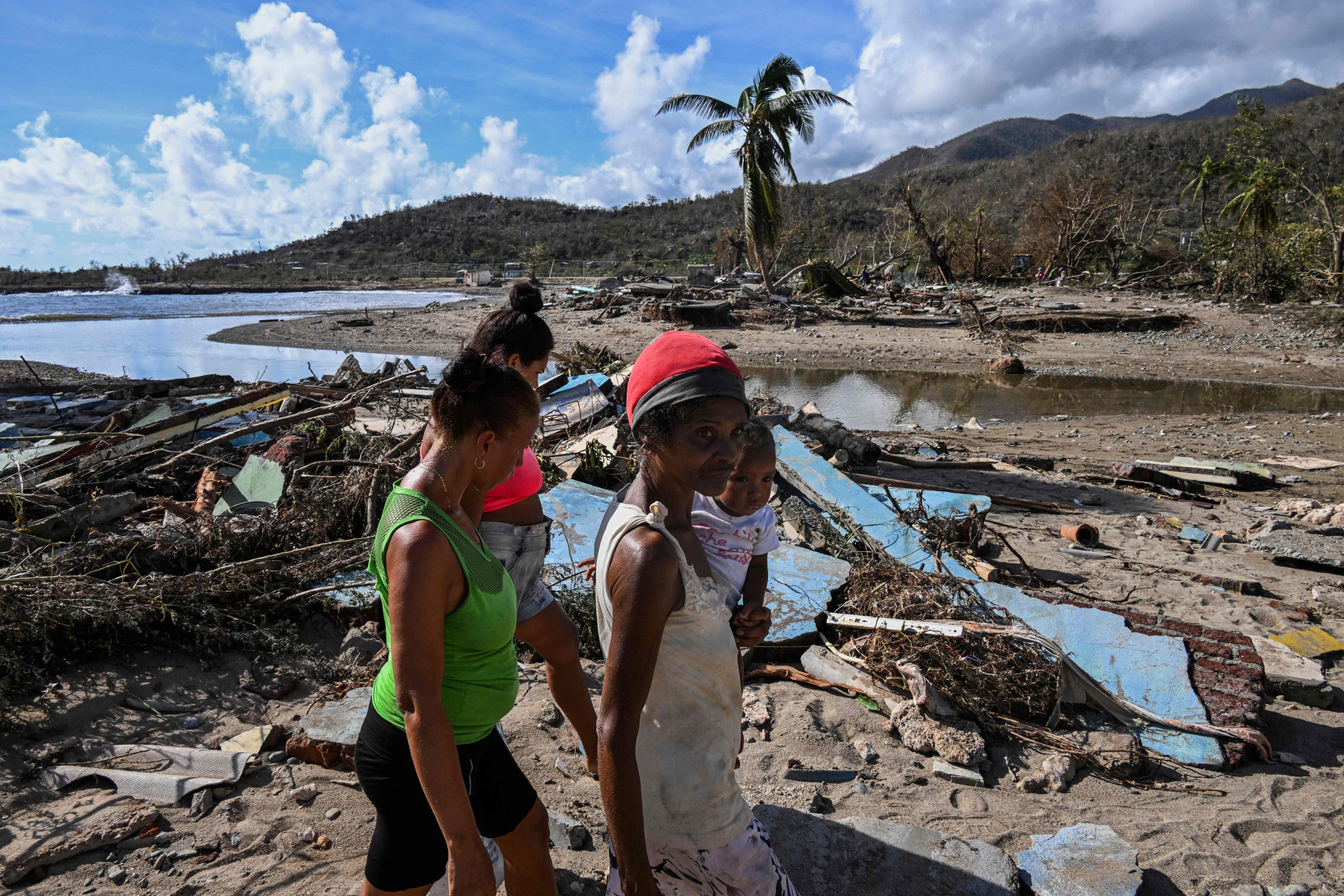
Hurricane Melissa, once a roaring Category 5 storm and among the strongest ever recorded in the Atlantic, has weakened into open waters, but its deadly legacy lingers across the Caribbean – with at least 50 people dead, thousands displaced and damages topping tens of billions of dollars.
The storm carved a catastrophic path through Jamaica, Haiti and parts of Cuba and the Bahamas earlier this week before moving north of Bermuda late Thursday as a Category 2 hurricane, the U.S. National Hurricane Center (NHC) said.
Sustained winds of up to 155 kilometers per hour battered the British territory, but the island escaped major damage as the storm’s core stayed offshore.
Jamaica bore the brunt of Melissa’s fury when it made landfall Tuesday on the island’s southwest coast with winds peaking at 295 km/h.
The government confirmed at least 19 deaths, mostly in the parishes of Westmoreland and St. Elizabeth and warned the toll was likely to rise as rescue crews reached isolated communities.
“Many towns remain cut off, roads are impassable and hundreds of thousands are still without power,” Information Minister Dana Morris Dixon said. “Our priority now is to deliver food, restore access and treat the injured.”
Homes collapsed, trees and power lines were ripped down and more than 100 roads remain blocked. Desperate residents in the coastal town of Black River gathered outside shuttered stores in search of food and water.
Thirteen aid flights landed Thursday as U.S. search-and-rescue teams joined relief efforts.
The government also warned of fraudulent fundraising campaigns and urged donations through official channels only.
In neighboring Haiti, relentless rain triggered floods and landslides, killing at least 30 people and leaving 20 others missing, according to the country’s civil defense agency.
More than 1,000 homes were flooded, forcing 16,000 people into shelters.
To the west, Cuba evacuated more than 735,000 people before the storm’s arrival. Eastern provinces such as Santiago de Cuba and Holguin suffered extensive flooding and infrastructure collapse.
“Melissa killed us, because it left us destroyed,” said Felicia Correa, a resident of La Trampa near El Cobre. “We were already struggling – now, we have nothing.”
The United States dispatched disaster response and urban search-and-rescue teams to Jamaica, the Bahamas and the Dominican Republic, with more en route to Haiti.
Secretary of State Marco Rubio said Washington was prepared to offer humanitarian aid to Cuba as well.
The U.K. pledged 2.5 million pounds ($3.3 million) in emergency relief and announced charter flights for British nationals stranded in the region.
UN officials described the devastation in Jamaica as “tremendous and unprecedented,” with major losses to infrastructure, communications and property.
AccuWeather estimated total damages and economic losses from Hurricane Melissa between $48 billion and $52 billion.
The storm tied the 1935 record for the most intense hurricane ever to hit land in the Atlantic basin, according to the U.S. National Oceanic and Atmospheric Administration.
Climate scientists say global warming is making such extreme events more frequent and severe.
Researchers at Imperial College London found that human-driven climate change made a storm of Melissa’s magnitude about four times more likely, with winds roughly 7% stronger than in a pre-industrial climate.