U.S. Secretary of State Marco Rubio on Sunday sharply criticized Cuba’s government, calling it a “huge problem” a day after U.S. forces captured Venezuelan President Nicolás Maduro and removed him from the country.
Asked whether Cuba could be next following the dramatic U.S. military operation in Caracas, Rubio said in an interview with NBC News that he did not want to speculate about "future steps."
"But I don't think it's any mystery that we are not big fans of the Cuban regime, who, by the way, are the ones that were propping up Maduro."
Rubio's parents emigrated from Cuba to the United States in 1956 during the dictatorship of Fulgencio Batista. His father later worked as a bartender and his mother as a hotel maid.
Rubio has long pushed for Washington to take a tough line on Havana, including when he was senator from Florida.
The U.S. military carried out a large-scale strike on Venezuela early Saturday. During an operation dubbed Absolute Determination, elite units captured Maduro and his wife, Cilia Flores, and took them out of the country.
Maduro is now being held in a detention facility in New York, where he is due to stand trial on charges including conspiracy to commit narco-terrorism and conspiracy to import cocaine.
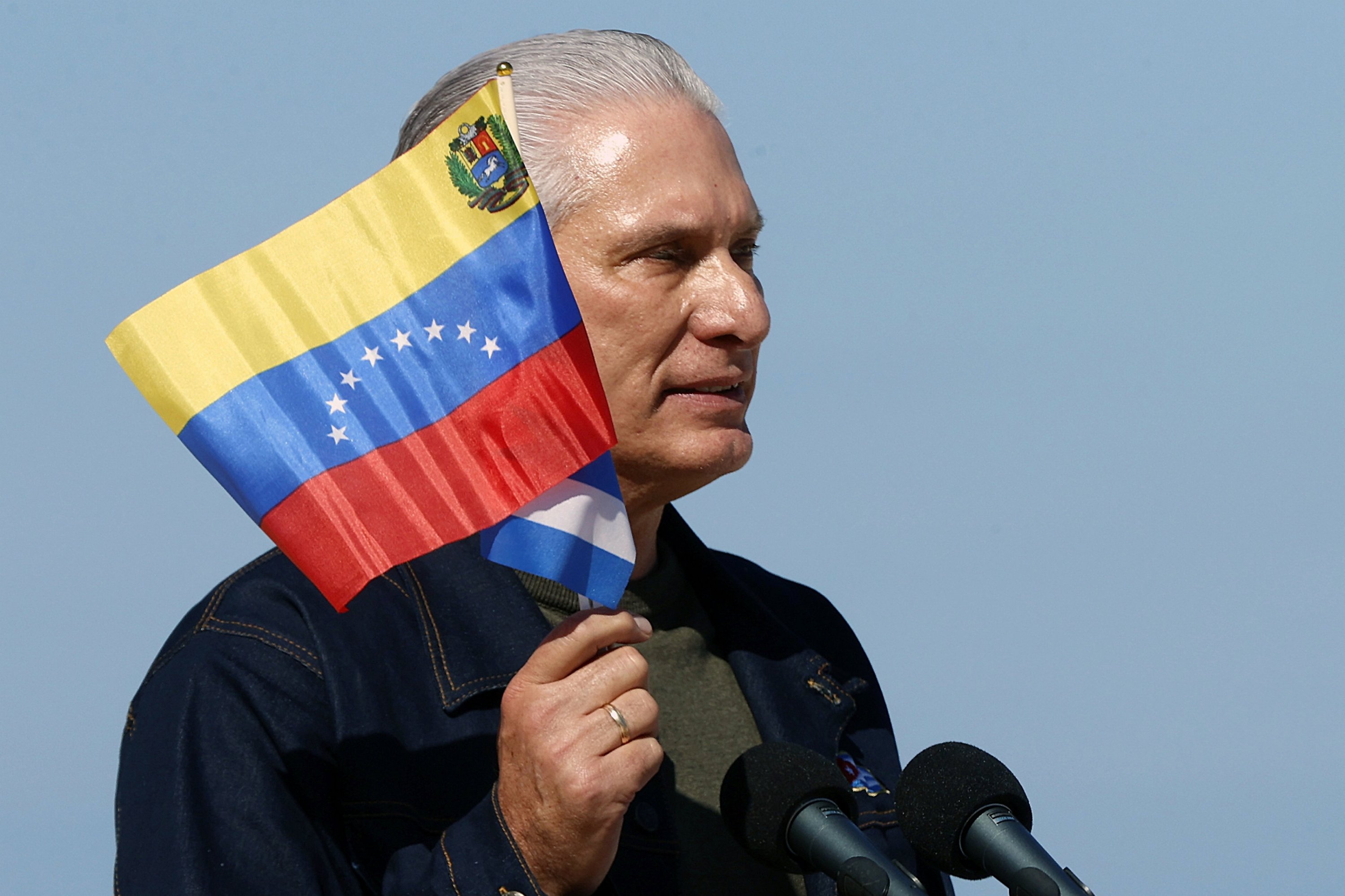
Cuban President Miguel Diaz-Canel on Saturday condemned the United States for attacking Venezuela and capturing its president at a rally of thousands of Havana residents in front of the U.S. Embassy in the Cuban capital.
"Cuba condemns and denounces these actions as an act of state terrorism," Diaz-Canel said.
"It is a shocking violation of the norms of international law - the military aggression against a peaceful nation that poses no threat to the United States," he added.
Venezuela supplies around 30% of Cuba's already scarce oil imports in exchange for thousands of medical personnel who work in the South American country.
In Cuba, the Communist Party controls the state, economy and society, and no other political parties are permitted. According to human rights activists, more than 1,000 political prisoners are currently being held there.
Relations between Havana and Washington have been tense for decades. Steps toward a cautious rapprochement under former U.S. president Barack Obama were later reversed by his successor, Donald Trump.
In an interview Trump gave to the New York Post on Saturday, he said he is not considering additional military action against Cuba.
"No, Cuba is going to fall of its own volition. Cuba is doing very poorly," Trump said.
"Cuba was always very reliant on Venezuela. That's where they got their money, and they protected Venezuela, but that didn't work out too well in this case," the president said.
Cuba is suffering through a six-year crisis which has seen economic growth fall at least 15%, according to the government, causing shortages of basic goods, soaring inflation, crumbling services and widespread power outages.
The government largely blames tougher U.S. sanctions imposed during the first Trump administration, on top of the decades-old trade embargo, for the crisis.