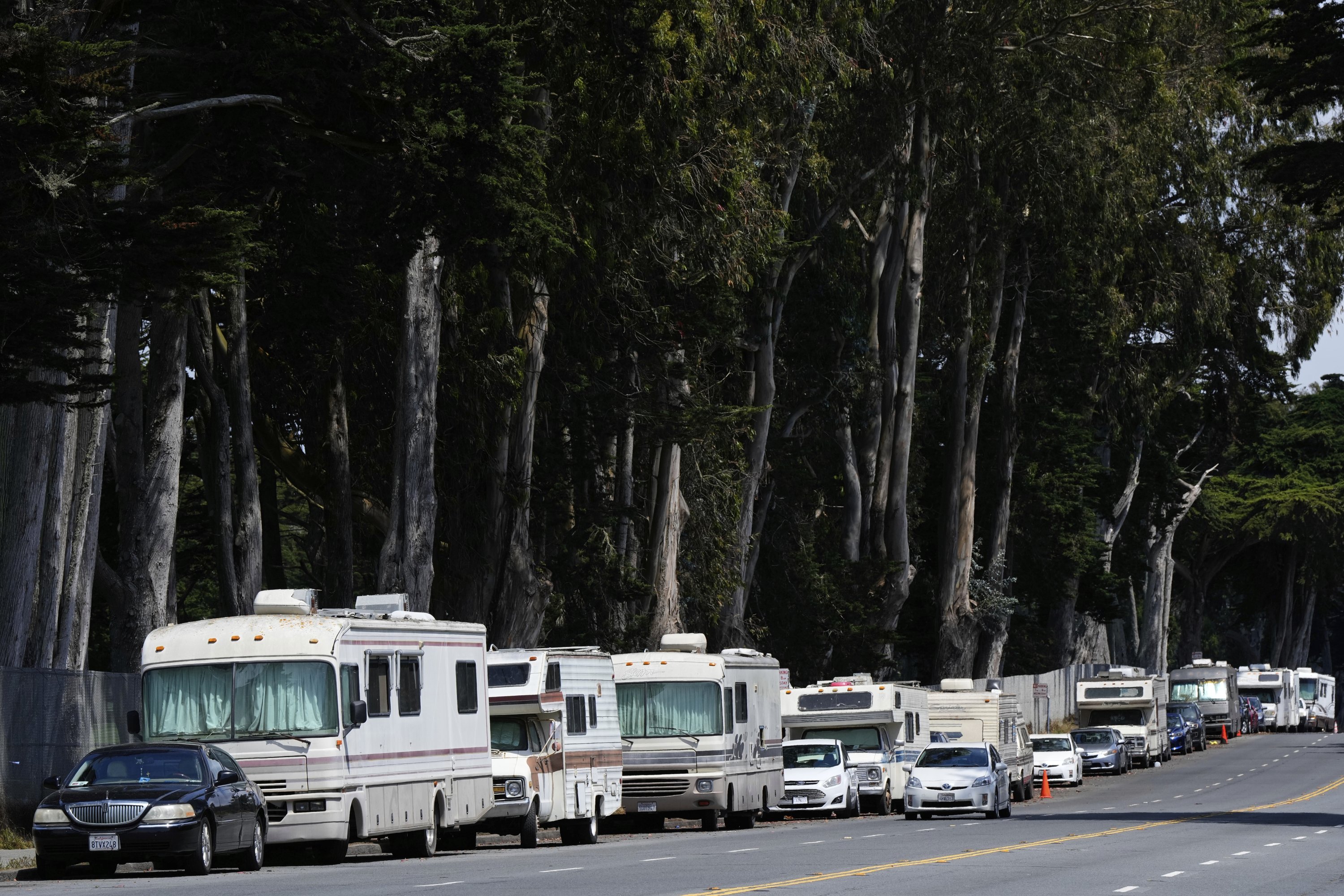
San Francisco is poised to outlaw long-term RV parking on city streets, a move Mayor Daniel Lurie defends as necessary to clear sidewalks and reduce trash – even as hundreds of homeless residents, many of them immigrant families, use the vehicles as makeshift homes.
The new restrictions, expected to win final approval Tuesday, would affect more than 400 RVs across the city of 800,000, where sky-high rents have left many priced out of housing.
Lurie argues RVs aren’t a safe or sustainable housing solution and says the city has a dual responsibility to help those in need while restoring order to public spaces.
“We absolutely want to serve those families in crisis,” said Kunal Modi, the mayor’s adviser on homelessness. “But that stability must be indoors – not on public roads.”
Critics call the move cruel, noting the city is offering funds to help only about 65 households – far short of the number affected – and argue that evicting people from their only shelter, without guaranteed alternatives, will worsen the crisis.
Jennifer Friedenbach, executive director of the Coalition on Homelessness, said city officials are far behind on establishing details of an accompanying permit program, which would exempt RV residents from parking limits if they are working with homeless outreach staff to find housing.
“I think that there’s going to be people who lose their RVs. I think there’s going to be people who are able to get into shelter, but at the expense of people with higher needs, like those sleeping on the sidewalk," she said.
San Francisco, like other U.S. cities, has seen a sharp increase in people living out of vehicles and RVs as the cost of living has risen. Banning oversized vehicles is part of Lurie’s pledge to clean up the streets and part of a broader trend requiring homeless people to accept shelter offers or risk arrest or towing.
The proposal sets a two-hour parking limit citywide for all RVs and oversized vehicles longer than 22 feet (7 meters) or taller than 7 feet (2 meters), regardless of whether they are used as housing.
Under the permit program, RV residents registered with the city as of May would be exempt from the parking limits. In exchange, they must accept the city’s offer of temporary or longer-term housing and relinquish their RVs when they move. The city has budgeted more than $500,000 to buy RVs from residents at $175 per foot.
Permits would last for six months. People in RVs who arrived after May would not be eligible for the program and must follow the two-hour limit, making it effectively impossible to live in an RV within city limits.
The measure passed the Board of Supervisors last week with two of 11 supervisors voting no.
Carlos Perez, 55, was among RV residents who told supervisors this month that they could not afford the city’s high rents. Perez works full time as a produce deliveryman and supports his brother, who is disabled.
“We don’t do nothing wrong. We try to keep this street clean,” he said, as he showed his RV to an Associated Press journalist. “It’s not easy to be in a place like this.”
Still, Perez said he loves where he lives. His green-colored RV is decorated with a houseplant and includes a sink and a small stove, where he simmered bean soup on a recent afternoon.
He has lived in San Francisco for more than 30 years, including about a decade in the RV in the working-class Bayview neighborhood. He can walk to work, and it’s close to the hospital where his brother receives dialysis multiple times a week.
Zach, another RV resident who requested his first name only to avoid jeopardizing job prospects, began living in a vehicle 12 years ago after struggling to afford rent despite working full time.
Now a ride-hail driver, he also pursues photography and parks near Lake Merced. He pays $35 every two to four weeks to properly dispose of waste and refill the vehicle with fresh water.
He called Lurie’s plan shortsighted, arguing there isn’t enough housing and many prefer RVs over shelters, which often have restrictive rules. For Zach, who is able-bodied, tidy, and without dependents, a shelter would be a step down. Still, he expects to qualify for a permit.
“If housing were affordable, there’s a very good chance I wouldn’t be out here,” he said.
RV residents say the city should open a safe parking lot with trash disposal and electricity. But officials shuttered a city-run RV lot in April, citing a $4 million annual cost to serve three dozen large vehicles and poor results in transitioning people to stable housing.
Lurie’s proposal includes more money for RV parking enforcement – and $11 million in new funds, mostly to support a small number of households moving into subsidized housing for several years.
Officials acknowledge that’s not enough to house all RV dwellers but note the city also offers hotel vouchers and other housing subsidies.
Erica Kisch, CEO of Compass Family Services, which assists homeless families, said her organization doesn’t support the punitive aspects of the policy but welcomes the added resources.
“It’s recognition that households should not be living in vehicles, that we need to do better for families, and for seniors and for anyone else who’s living in a vehicle,” she said. “San Francisco can do better, certainly.”