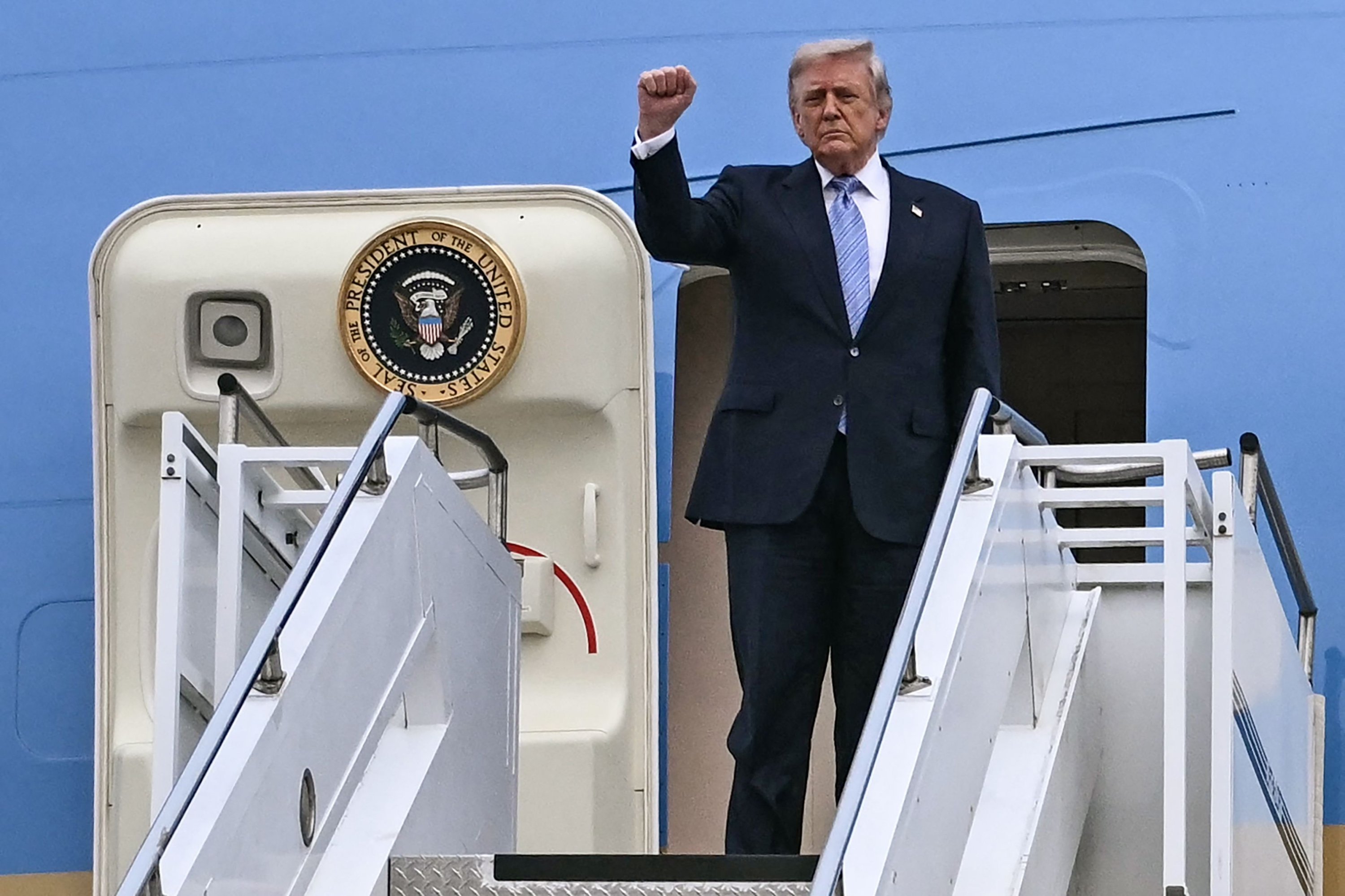
U.S. President Donald Trump departed Beijing on Friday after two days of tightly choreographed diplomacy with Chinese President Xi Jinping, closing a summit that projected cooperation on managing U.S.-China tensions while exposing deep rifts over Taiwan, trade policy and the war involving Iran.
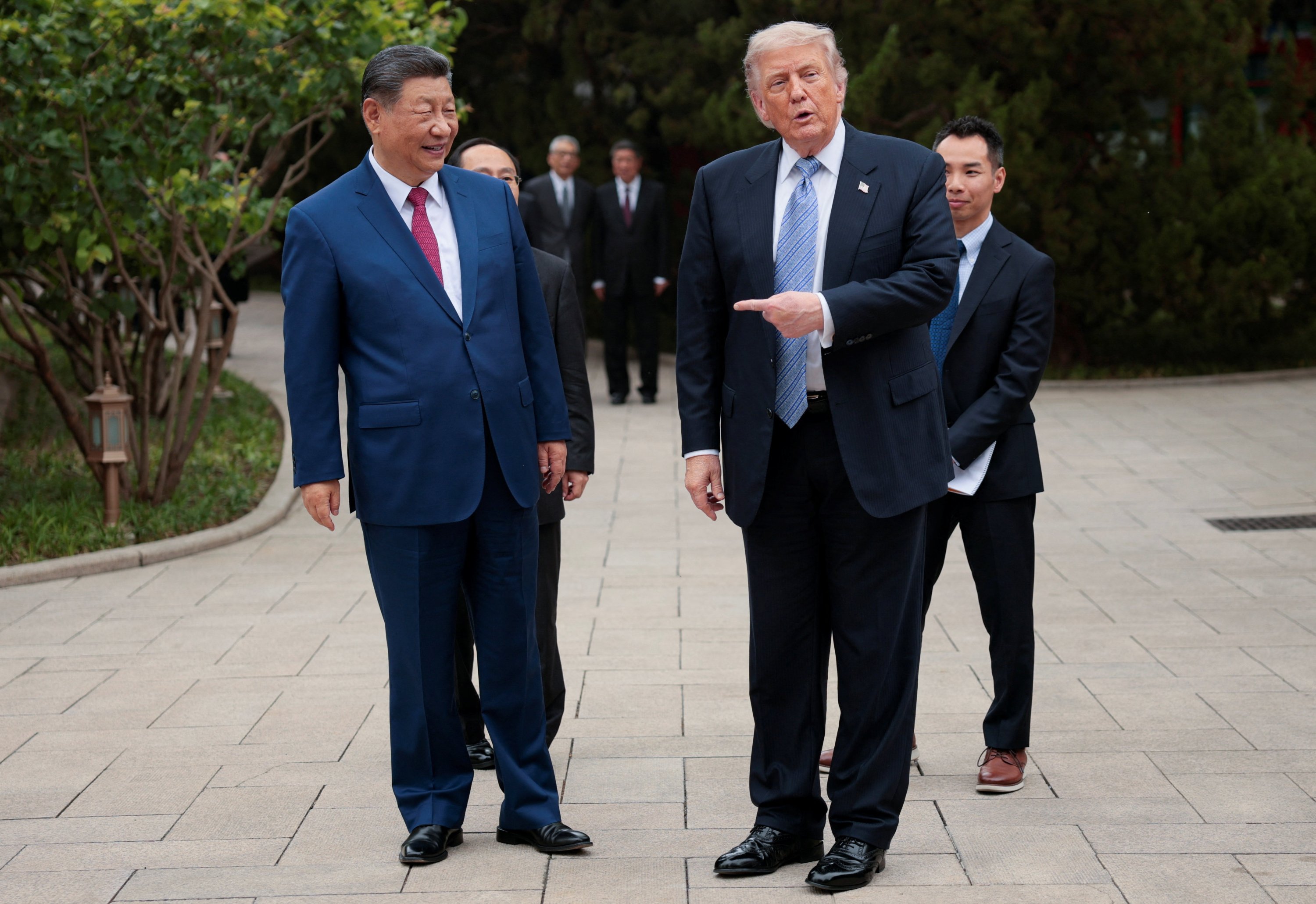
The final act of the visit unfolded inside Zhongnanhai, the guarded compound at the heart of China’s political power, where Trump and Xi held a working tea and private lunch after walking through manicured gardens lined with centuries-old trees.
Chinese officials framed the setting as symbolic of continuity and stability, while the U.S. side emphasized the possibility of practical deals emerging from the talks.
Across Thursday and Friday, the two leaders spent hours together in multiple formats, including a formal meeting at the Great Hall of the People, a state banquet, a tour of the Temple of Heaven and the final closed-door session at Zhongnanhai.
The carefully staged itinerary reflected an effort to project warmth, even as negotiators grappled with disputes that have defined the relationship for years.
Public statements from both capitals described progress in stabilizing ties, but neither side announced major breakthroughs. Instead, the summit ended with broad language about improved communication and a commitment to avoid further escalation in an already strained relationship.
Taiwan emerged as the most sensitive fault line. Xi warned that continued disagreement over the self-governed island, which Beijing claims as its territory, could push the two powers toward confrontation.
The United States maintains a policy of strategic ambiguity while continuing arms sales to Taipei, including a previously authorized package that has not yet been fully delivered.
Washington officials reiterated that any attempt to alter the status quo by force would be unacceptable.
Trade tensions also dominated discussions.
Trump pushed for expanded Chinese purchases of U.S. agricultural products and aircraft, while seeking to reduce tariff pressure that has repeatedly disrupted global markets.
Chinese officials indicated willingness to continue buying select goods, particularly soybeans and aviation equipment, but there was no comprehensive agreement to unwind existing trade barriers or resolve tariff disputes.
On global security issues, Trump said Xi signaled openness to helping address the war involving Iran, including discussions around stabilizing the Strait of Hormuz, a critical energy shipping route.
China, the largest buyer of Iranian oil, has publicly called for de-escalation but stopped short of confirming any operational role in negotiations or pressure on Tehran.
Beijing’s official messaging struck a cautious tone.
While describing the visit as constructive and emphasizing improved mutual understanding, Chinese statements also reiterated core positions on sovereignty, regional security and opposition to external pressure.
A foreign ministry spokesperson said both sides had agreed to strengthen coordination, but offered no detail on binding commitments.
The optics of the visit underscored the contrast between ceremony and substance.
Trump was greeted with choreographed displays of flags and chanting schoolchildren as he departed, while inside Zhongnanhai the atmosphere was restrained and tightly controlled.
At one point, Xi guided Trump through landscaped gardens, pointing out historic trees and referencing the site’s imperial past, a gesture framed as hospitality but also as subtle signaling of state authority.
Despite the formal warmth, the substance of the talks remained limited.
U.S. officials suggested progress on sector-specific deals, including agriculture and aviation, but did not confirm major commercial agreements.
Earlier expectations of large-scale Boeing aircraft purchases or sweeping tariff reductions were not fully realized in public announcements.
The summit also reflected the growing complexity of economic interdependence between the two countries.
China remains a critical market for U.S. exports, particularly soybeans, while the United States continues to rely on Chinese manufacturing supply chains and rare earth inputs. Both sides signaled interest in stabilizing trade flows without reversing broader strategic competition.
Trump, who had taken an optimistic tone throughout the visit, described the talks as productive and said both sides had made progress on “fantastic trade deals,” though details remained unclear at the time of departure.
Xi, in turn, characterized the visit as a step toward building what he called a more stable and constructive relationship, grounded in dialogue rather than confrontation.
The final image of the summit was tightly staged. Trump waved from the top of the aircraft stairs before boarding Air Force One, while Chinese officials, including Foreign Minister Wang Yi, saw him off.
He did not take questions from reporters, marking a rare period of limited media engagement during a high-profile diplomatic trip.