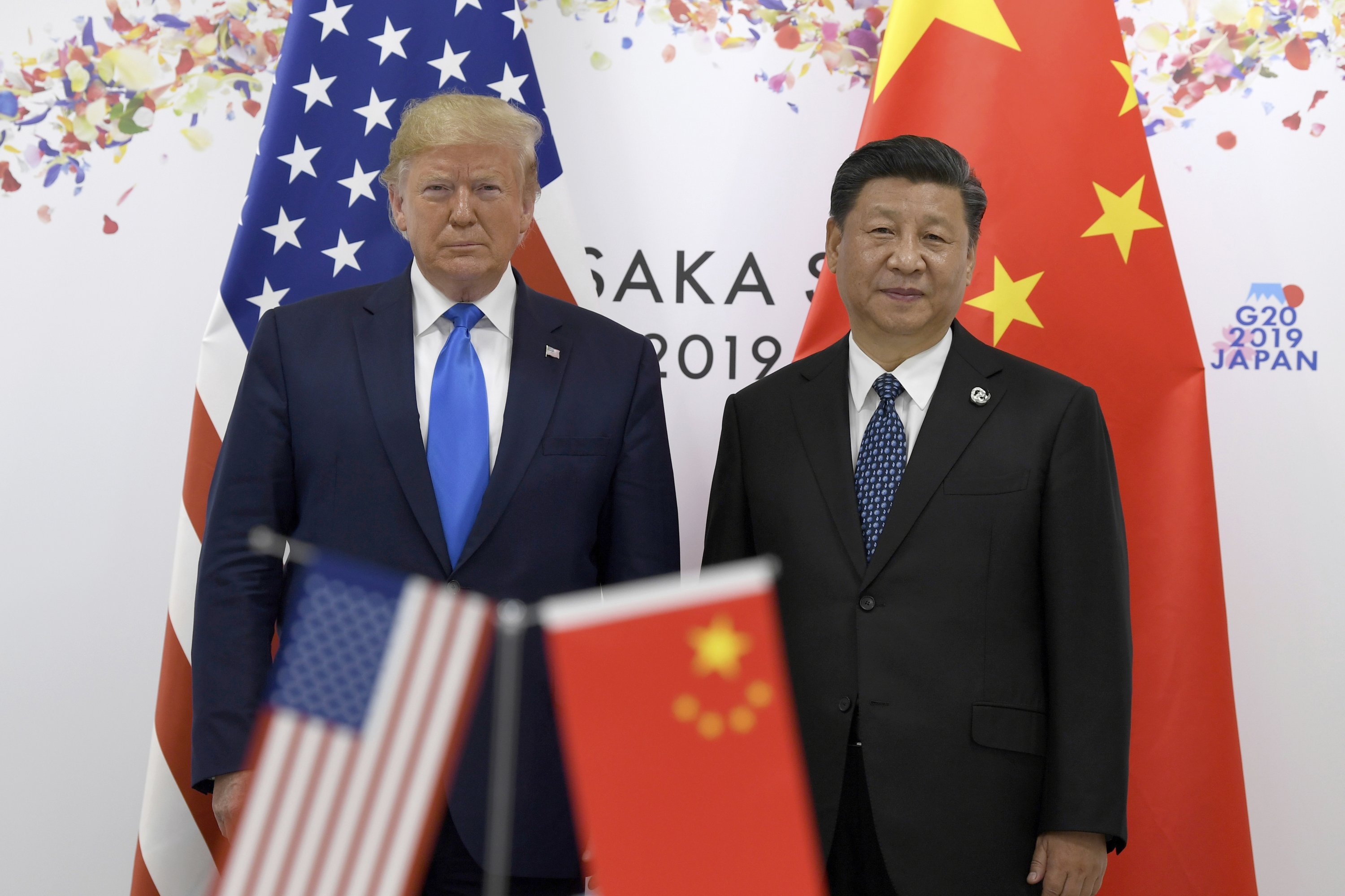
U.S. President Donald Trump said Tuesday he may soon travel to China for a high-stakes meeting with President Xi Jinping, aiming to ease escalating trade and security tensions between Washington and Beijing.
“President Xi has invited me to China, and we’ll probably be doing that in the not-too-distant future,” Trump told reporters in the Oval Office. “A little bit out, but not too distant.”
While no date has been set, officials on both sides are exploring the possibility of Trump visiting Asia later this year, with a potential meeting taking place around the Asia-Pacific Economic Cooperation summit in South Korea or during its sidelines between Oct. 30 and Nov. 1, according to people familiar with the discussions.
Another possible trip could include a Sept. 3 ceremony in Beijing commemorating the 80th anniversary of the end of World War II, which Russian President Vladimir Putin also plans to attend.
Meetings between Trump and Xi or Putin would mark the first face-to-face encounters between the leaders since Trump’s inauguration on Jan. 20 for his second term in office. The White House and the Chinese Foreign Affairs Ministry declined to comment on the Reuters report.
Trump made the comment about meeting Xi during talks with Philippine President Ferdinand Marcos Jr., a key Pacific ally whom Trump said he had nudged away from China.
“The country was maybe tilting toward China for a period of time, but we un-tilted it very, very quickly,” Trump said. He added, “I don’t mind if he gets along with China because we’re getting along with China very well.”
Marcos, who took office in 2022, has sought U.S. support as his country’s maritime disputes with China intensify. Manila has tried to avoid direct confrontation with its larger neighbor, which claims most of the South China Sea as its own territory.
The United States and the Philippines have a seven-decade-old mutual defense treaty, potentially implicating Washington in a clash between China and the Philippines.
Washington views Beijing as its primary strategic rival. Upon taking office, Trump launched a tit-for-tat tariff war with China that disrupted global trade and supply chains.
Other points of friction between the two countries include China’s support for Russia, the illicit opioid trade, growing pressure on Taiwan, and exit bans imposed on some American residents.
In recent weeks, Trump has sought to reduce tensions, describing his personal relationship with Xi as healthy.
He has also pushed to impose tariffs on virtually all foreign goods – including imports from China and U.S. allies such as the Philippines – arguing it will stimulate domestic manufacturing. Critics say the result will be higher prices for consumers.
Trump has proposed a universal base tariff rate of 10% on all imported goods, with higher rates for certain countries. Imports from China currently face the highest rate at 55%.
He has set a deadline of Aug. 12 for the U.S. and China to reach a durable tariff agreement.