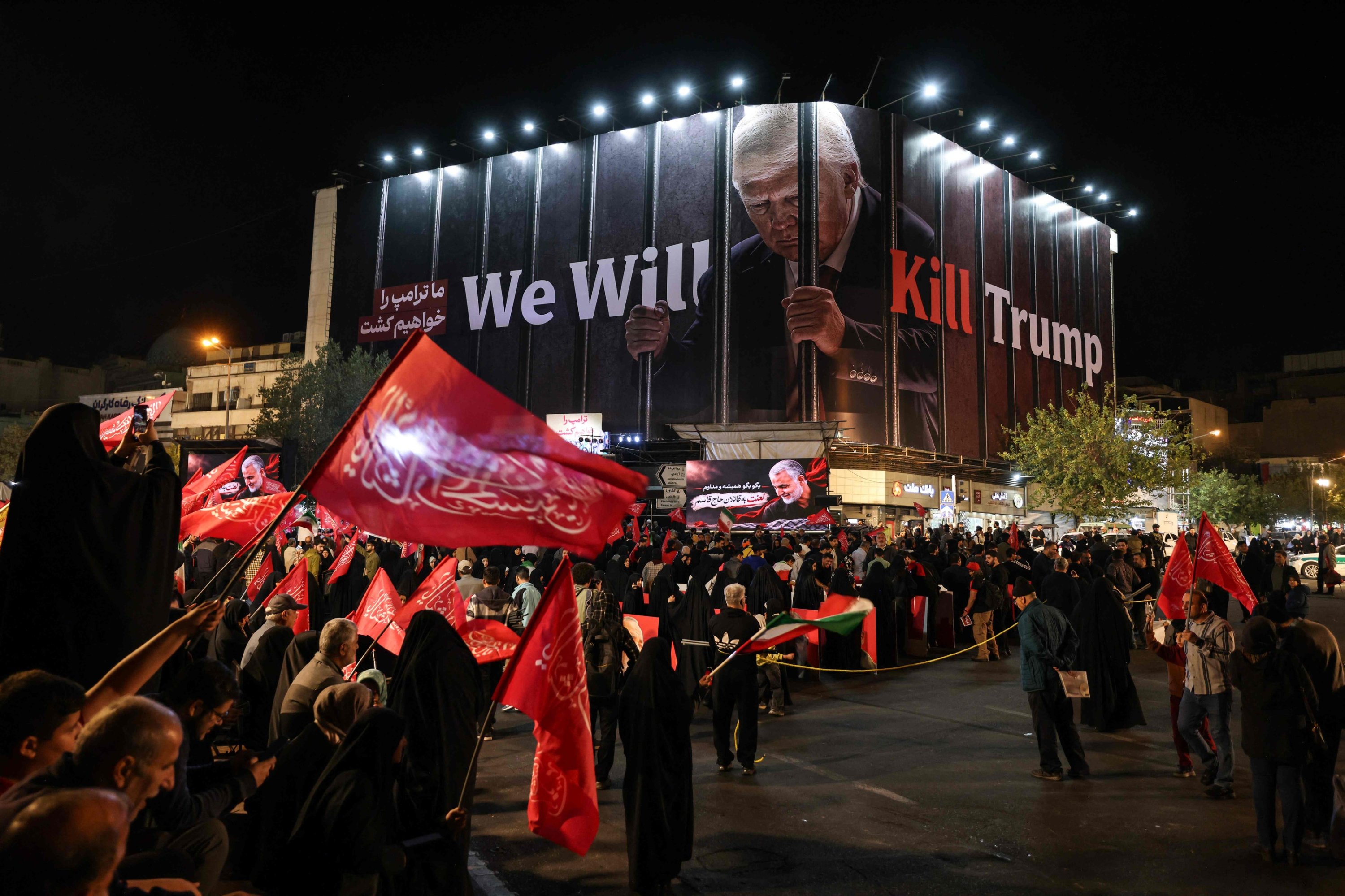
U.S. President Donald Trump went to war seeking regime change in Iran but faces a choice between a negotiated exit and a riskier escalation after voters weary of the war and hit by soaring fuel prices handed Democrats control of Congress, weakening his grip on Washington.
In Tehran and among U.S. allies the result was swiftly cast as a verdict on the conflict. Across the Gulf, officials wondered which way U.S. President Donald Trump would turn.
One source close to a U.S. Gulf ally offered a first reaction: "Iran succeeded in regime change in America." The scale of the Democratic sweep in Tuesday's U.S. midterm elections stunned officials in the Gulf states into silence, the source said.
The war that began with U.S.-Israeli strikes on Feb. 28 spread across the region as Tehran fired missiles and drones at Gulf targets and shipping in the Strait of Hormuz, disrupting global energy supplies.
The U.S.-Israeli campaign badly damaged Iran's military capabilities but failed to deliver a decisive outcome, leaving the issue of Iran's nuclear program unresolved.
A weakened U.S. President Donald Trump, facing a Democratic Congress able to constrain his military options, has greater incentive to seek a deal, said two sources close to Gulf government circles.
A full-scale assault on Iran now looks less likely, they said. Further limited strikes on nuclear facilities may offer the U.S. a way to claim its objectives were met and draw a line under the conflict, as China steps up efforts to broker a settlement.
Yet an agreement that allows Iran to claim clear victory and leaves U.S. President Donald Trump looking defeated can provoke recklessness as readily as restraint, Gulf analysts said.
The rebuke from the U.S. electorate came a week after Israeli voters delivered their own blow to the war's other architect, Israeli Prime Minister Benjamin Netanyahu.
His right-wing bloc won 53 of the Knesset's 120 seats in the October 27 election, eight short of a majority, leaving him fighting to retain power.
Two beleaguered leaders, each with his political future increasingly tied to the war's outcome, may come to see escalation not as a risk but as a way out of their political predicament. Such a calculation may be irrational, but no less dangerous.
"The U.S. election results make a settlement more urgent for U.S. President Donald Trump, but no easier for Iran," said Ebtesam al-Ketbi, president of the Emirates Policy Center in Abu Dhabi.
Much hinges, she said, on how Tehran reads the moment. "If Tehran recognizes that U.S. President Donald Trump needs a deal, but not just any deal, a genuine opportunity could emerge to end the war."
"But if it interprets the results as evidence that U.S. resolve has weakened, it could instead encourage him to launch a new military escalation," he added.
Gulf states want the election to open a path to ending the war, but not at any cost, al-Ketbi said.
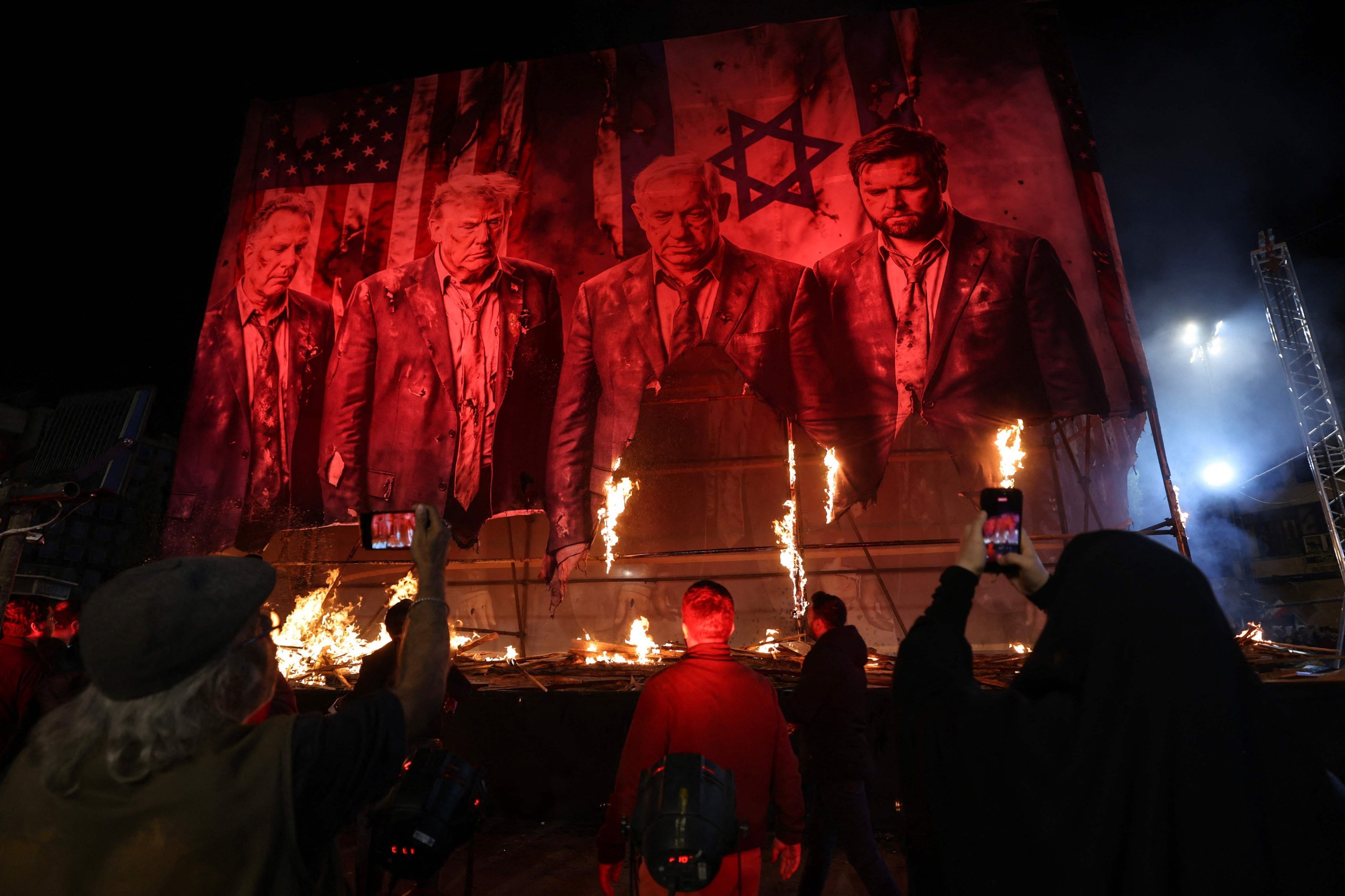
Any settlement that disregards freedom of navigation through Hormuz, allows Iran to impose tolls or political conditions on shipping, or leaves Gulf states exposed to military threats would be a temporary arrangement that lays the groundwork for another crisis.
In Tehran, leaders savored U.S. President Donald Trump's humiliation but did not lower their guard, with Iran's chief negotiator hailing a "No to War" result.
Two senior Iranian sources said Tehran remained on high alert, fearing U.S. President Donald Trump could try to make up for his defeat with a military strike.
Supreme Leader Mojtaba Khamenei warned against "even the slightest inclination toward submission," a signal that Iran has no intention of softening its demands over the Strait of Hormuz.
Abdulaziz Sager, chairman of the Saudi-based Gulf Research Center, warned that defeat could make U.S. President Donald Trump more willing to strike, not less.
With the midterms behind him and no third term ahead, the electoral considerations that once encouraged restraint have diminished. That leaves a president with less to lose and a legacy to secure.
U.S. President Donald Trump, he said, may see confrontation with Iran as a chance to "finish the job" before leaving office.
"If Iran continues to resist ... and emerges claiming victory, U.S. President Donald Trump may feel compelled to act to prevent that outcome and claim a clear success for his presidency," he added.
Lebanese political commentator Sarkis Naoum said U.S. President Donald Trump's defeat had weakened his hand with Iran, leaving him with diminished leverage at the negotiating table and fewer options to secure a deal.
An official from Iran-backed Hezbollah said the threat of war had not necessarily receded and that "reckless moves" remained a possibility.
"At this moment, the chances of escalation and deescalation may be equal," he said.
Once seated in Congress in January, Democrats are expected to use their power to investigate U.S. President Donald Trump's administration, family and allies and demand concessions on major legislation.
For U.S. allies in the Gulf, the political shift in Washington carries risks that extend well beyond the war itself.
One source said Gulf states were wary of expected probes into business dealings between their entities and the U.S. President Donald Trump family.