The uneasy peace between the United States and Iran is facing its first major test just days after a landmark framework agreement halted months of escalating conflict, with both sides publicly contradicting each other on key provisions ranging from nuclear inspections to frozen assets and regional security.
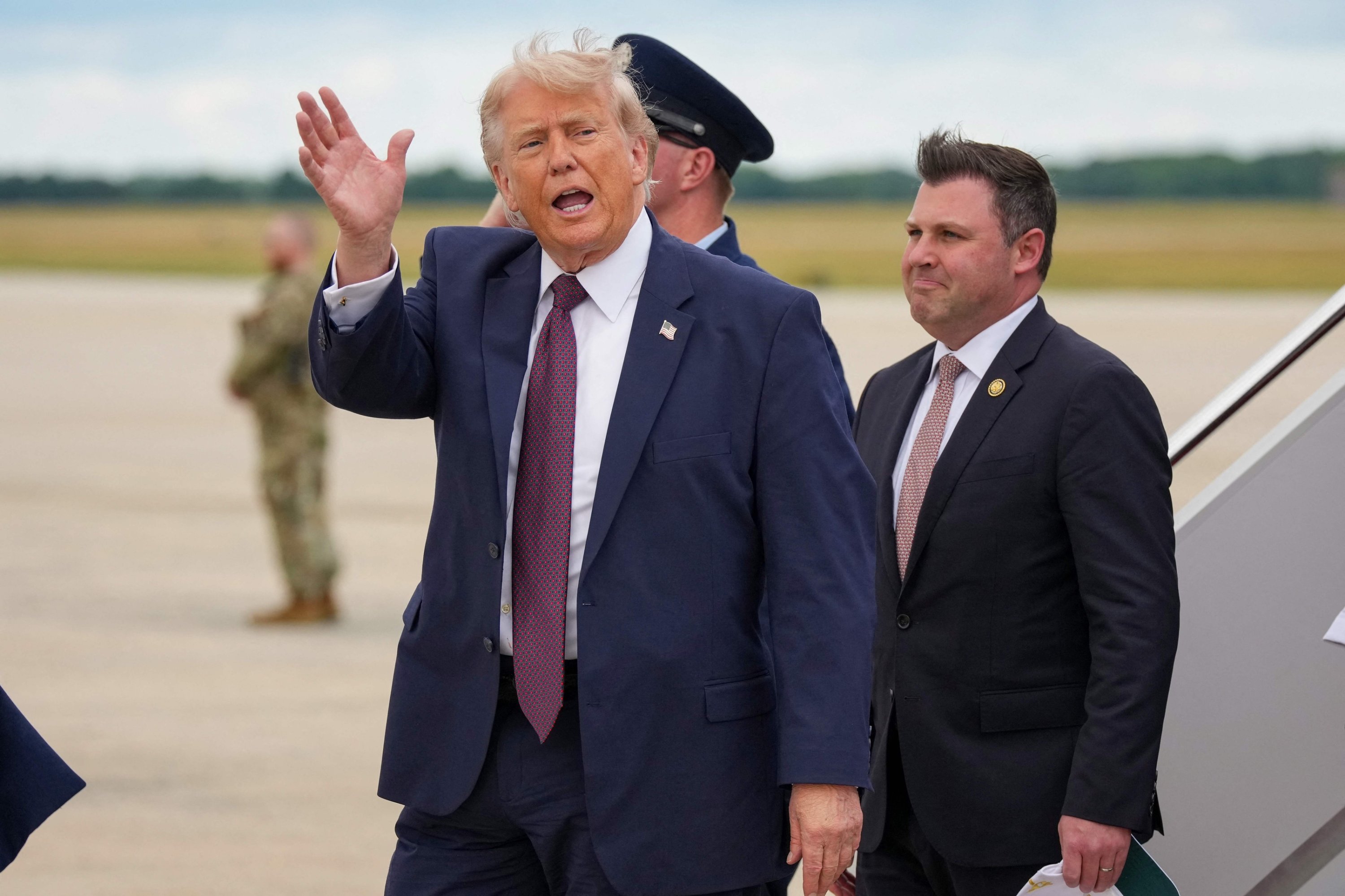
Speaking at a rally in Pennsylvania, U.S. President Donald Trump projected confidence about the negotiations, insisting relations with Tehran were improving and claiming Iran had agreed to unlimited international inspections of its nuclear facilities.
"We're getting along quite well," Trump said, portraying the talks as a significant diplomatic breakthrough.
Iran quickly pushed back.
Tehran denied that its nuclear program had even been discussed during the latest round of negotiations in Switzerland and rejected suggestions that it had agreed to grant inspectors unrestricted access to nuclear sites damaged during last year's conflict.
The conflicting statements have cast doubt on the durability of a framework agreement designed to end hostilities between the longtime adversaries and stabilize a region shaken by war.
At the center of the disagreement is Iran's nuclear program, arguably the most sensitive issue left unresolved by the agreement.
Trump declared on social media that Iran had accepted the "highest level" of nuclear inspections indefinitely, describing the arrangement as lasting into "Infinity."
Iranian officials offered a starkly different account.
Foreign Ministry spokesperson Esmail Baghaei said no inspections of bombed nuclear facilities were scheduled, while officials denied agreeing to readmit inspectors from the International Atomic Energy Agency (IAEA).
Despite Tehran's objections, IAEA Director General Rafael Mariano Grossi expressed confidence that inspections would eventually take place.
Speaking in Japan, Grossi pointed to the memorandum signed by Washington and Tehran, arguing that international monitoring was explicitly written into the agreement.
"The nuclear activities that are going to be carried out with regard to nuclear material and facilities will be supervised by the IAEA," Grossi said.
He added that inspections were not a question of if, but when.
Those inspections are considered essential because the agreement requires Iran's stockpile of highly enriched uranium to be diluted. International inspectors must verify both the uranium inventory and the status of enrichment equipment before broader nuclear arrangements can move forward.
The issue carries significant weight. Since the 2025 war between Israel and Iran, IAEA inspectors have been unable to access key enrichment facilities believed to contain enough highly enriched uranium to potentially support multiple nuclear weapons if Tehran chose to pursue them. Iran continues to insist its nuclear program remains exclusively peaceful.
The agreement has produced one immediate economic benefit: the reopening of the Strait of Hormuz.
The strategic waterway handles roughly one-fifth of global energy shipments and had become a focal point of global concern after Iran restricted maritime traffic during the conflict.
Its reopening has helped ease fears of a prolonged supply disruption and contributed to a sharp decline in oil prices.
Oil prices fell again Wednesday, extending weekly losses and dropping to levels not seen since before the war erupted on Feb. 28.
The easing pressure on energy markets prompted Trump to publicly urge oil companies to pass lower crude prices on to consumers.
"Gasoline prices better start going down a lot faster than what I'm seeing!" he wrote on social media.
Yet the future of the waterway remains uncertain.
Iran has pledged to keep shipping lanes open for 60 days under the agreement but has also suggested it may impose fees or tolls afterward. In a joint statement with Oman, which shares control of the strait, Tehran emphasized its sovereign rights over the passage and said both countries would cooperate in managing maritime traffic and associated costs.
The United States opposes that position.
Secretary of State Marco Rubio, speaking during a regional tour of Gulf allies, said Iran would not be permitted to charge tolls as part of any final settlement.
Meanwhile, the reopening has allowed international authorities to begin addressing a humanitarian challenge created by the conflict. The United Nations' maritime agency is working to evacuate approximately 11,000 seafarers stranded when the strait was closed.
The two governments also remain far apart on how sanctions relief and frozen Iranian assets will be handled.
Trump said money released under the agreement would be directed toward purchasing food and medical supplies from the United States.
Iranian Ambassador Ali Bahreini rejected that interpretation, insisting Tehran alone would decide how any recovered funds are spent.
Washington has already granted Iran a 60-day sanctions waiver, allowing the country to export oil and receive payments while broader negotiations continue.
The framework also calls for the lifting of U.S. sanctions, the release of frozen Iranian assets and the creation of a $300 billion reconstruction fund intended to help rebuild Iran's economy after the conflict.
Another unresolved issue involves the parallel conflict in Lebanon.
Iran maintains that the agreement requires Israel to withdraw its forces from Lebanese territory. Israel disputes that interpretation and says it will continue maintaining a security zone in southern Lebanon while acting against perceived threats from the Iran-backed Hezbollah movement.
The disagreement quickly spilled into renewed violence.
Lebanese authorities reported that Israeli gunfire killed two people in southern Lebanon on Tuesday. Hezbollah accused Israel of violating the ceasefire that has largely held since Sunday.
The incident occurred even as Israeli and Lebanese officials resumed talks in Washington, highlighting how fragile regional stability remains despite the broader diplomatic breakthrough.
While negotiators attempt to preserve momentum abroad, Trump faces mounting political challenges at home.
A Reuters/Ipsos poll found that 35% of Americans believe the United States is now in a weaker position with Iran than before the conflict, while only 23% believe Washington emerged stronger.
Those concerns were reflected on Capitol Hill, where the Republican-controlled Senate voted 50-48 in favor of a resolution calling for an end to U.S. military involvement in the conflict.
The measure followed a similar House vote earlier this month, marking the first time both chambers of Congress have approved a War Powers Act resolution directing a president to remove U.S. forces from hostilities.
Although largely symbolic and unlikely to immediately alter policy, the vote exposed growing divisions within Trump's own party and underscored public fatigue with a conflict that many Americans increasingly view with skepticism.
A deal still searching for certainty
The framework agreement has lowered tensions, reopened critical shipping routes and created a path toward broader negotiations.
Yet nearly every major component remains contested.