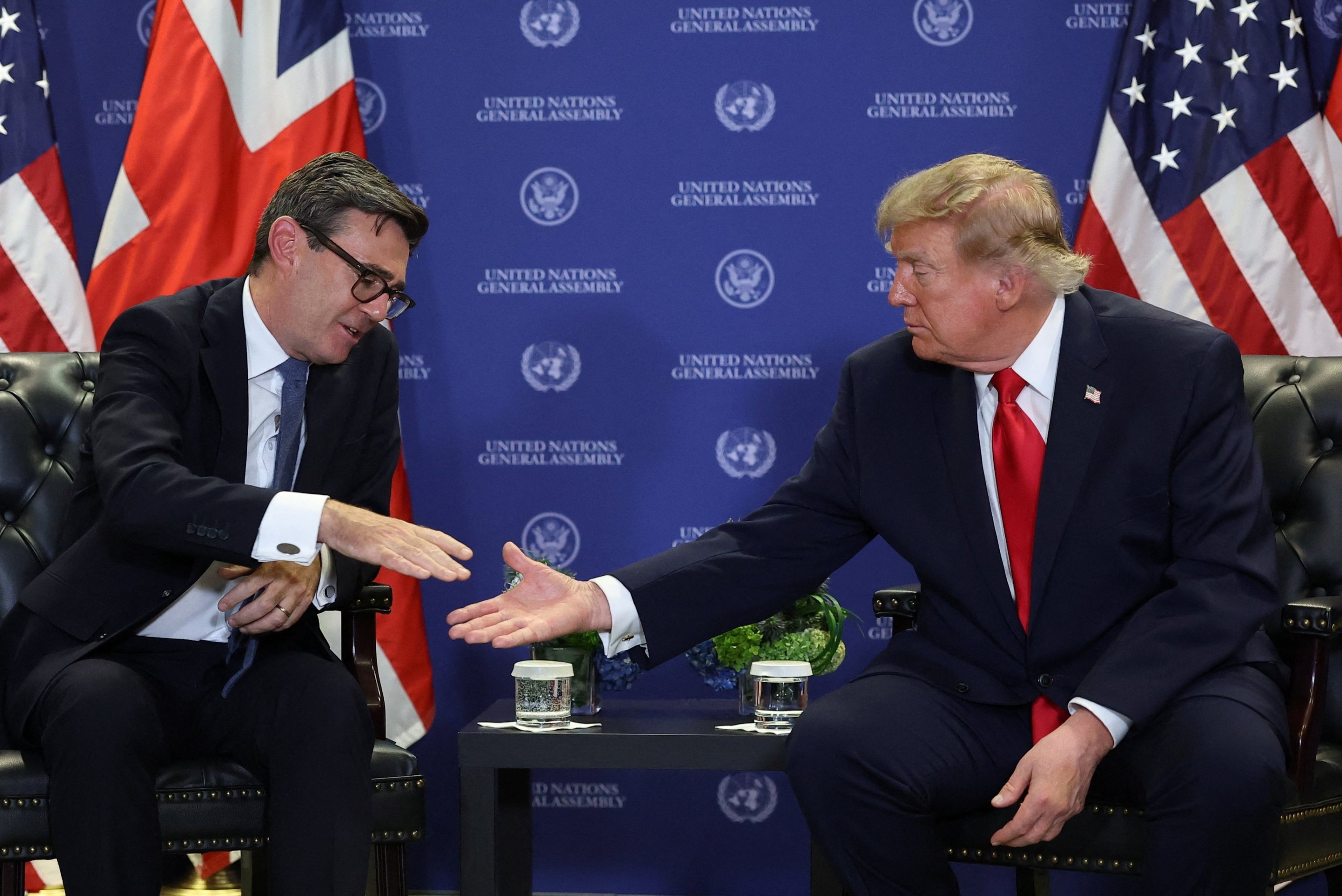
British Prime Minister Andy Burnham told U.S. President Donald Trump on Tuesday that the U.K. was prepared to “play our part” in the Middle East conflict as the two leaders held their first meeting in New York.
Speaking to reporters after the meeting, Burnham said the U.K. was prepared to help with efforts to stop the conflict and "open the Strait [of Hormuz]."
"We're with you that Iran must never be a nuclear power," he told Trump.
Burnham said the two discussed "issues on trade" and "the Falklands," as well as immigration. He said he had spoken about his "commitment to get [immigration] to a controlled approach."
The prime minister also welcomed Trump's earlier statement that progress was possible on peace in Ukraine.
Asked whether Burnham was "a man you can do business with" despite their political differences, Trump replied: "Yeah, I do."
"I think he's a natural business person, we've had a lot of discussions, even before this meeting we were talking with each other numerous times on the phone," Trump said. "He gets it. He understands what he has to do."
Trump also spoke about immigration under his administration, while Burnham said it had been a "very big issue" at the Makerfield by-election that he won.
"Progress is being made," the prime minister said.
Trump said there was "tremendous patriotism in Britain" but that the country was "waiting for good leadership, waiting for success."
"It has been great to be with you and the team today," Burnham said. "This relationship matters so much to us. And we will build on that relationship. You and I have established a good connection in our early discussions, and we’ve taken that further today."
The two politicians have previously clashed sharply over policy, but are now seeking to establish a pragmatic working relationship.
In 2017, Burnham, then mayor of Greater Manchester, said the president would not be welcome in the city. Two years later, he said he would refuse to meet Trump if he visited.
Since becoming prime minister in July, however, Burnham has stressed the importance of finding areas of agreement with political opponents, saying he always tries to find "common ground."