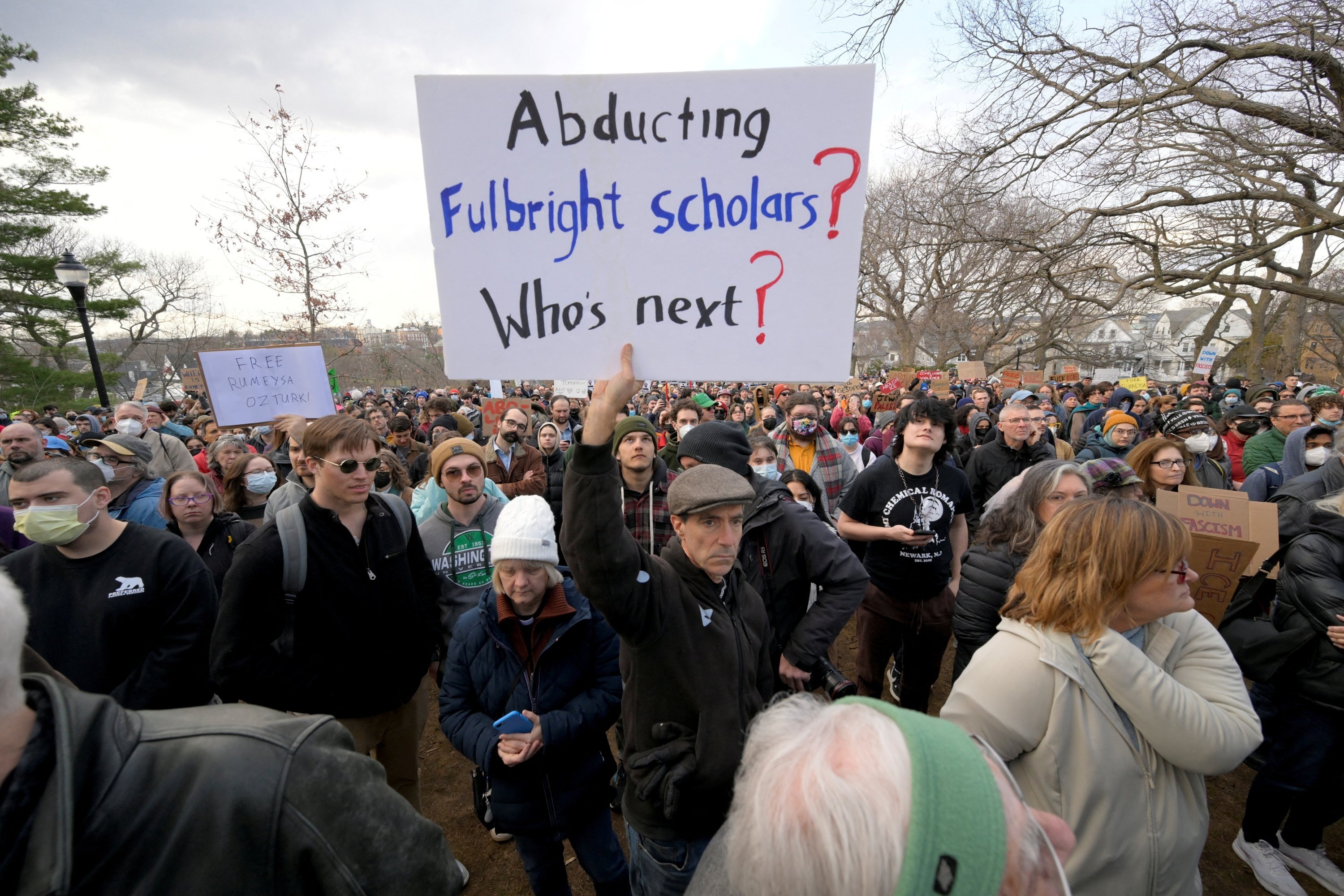
U.S. university groups opposed the Trump administration’s deportation push against pro-Palestinian activists, as Homeland Security admitted in federal court to using a controversial website to track student protesters, media reports say.
Senior DHS investigations official Peter Hatch testified on the third day of a trial in the city of Boston that the majority of student protester names flagged for agency review were sourced from Canary Mission, NBC News reported. The anonymous organization known as Canary Mission operates a detailed online database that names students, professors and others it accuses of holding anti-Israel or antisemitic views.
Canary Mission said in an email to NBC News that it has not collaborated with the DHS, emphasizing that its database is publicly accessible.
"We have had no contact with this administration or the previous administration,” it said.
The plaintiffs in the trial, including the Harvard chapter of the American Association of University Professors, the Middle East Studies Association and three other academic organizations, argue that the deportations infringed on First Amendment rights of the US Constitution.
U.S. District Judge William Young pressed Hatch on how student names were provided to the agency.
Hatch explained that a "tiger team” of analysts was formed, pulling personnel from the counterterrorism unit, to assess student protesters for potential national security risks.
He said the team was directed to examine the website’s database, but "Canary Mission is not part of the U.S. government” and "we do not work with the individuals who create the website.”
The Middle East Studies Association of North America stated that, beyond accusations of doxxing and harassment, the site has also been accused of making personal attacks that portray pro-Palestinian activists as being in "support of terrorism.”