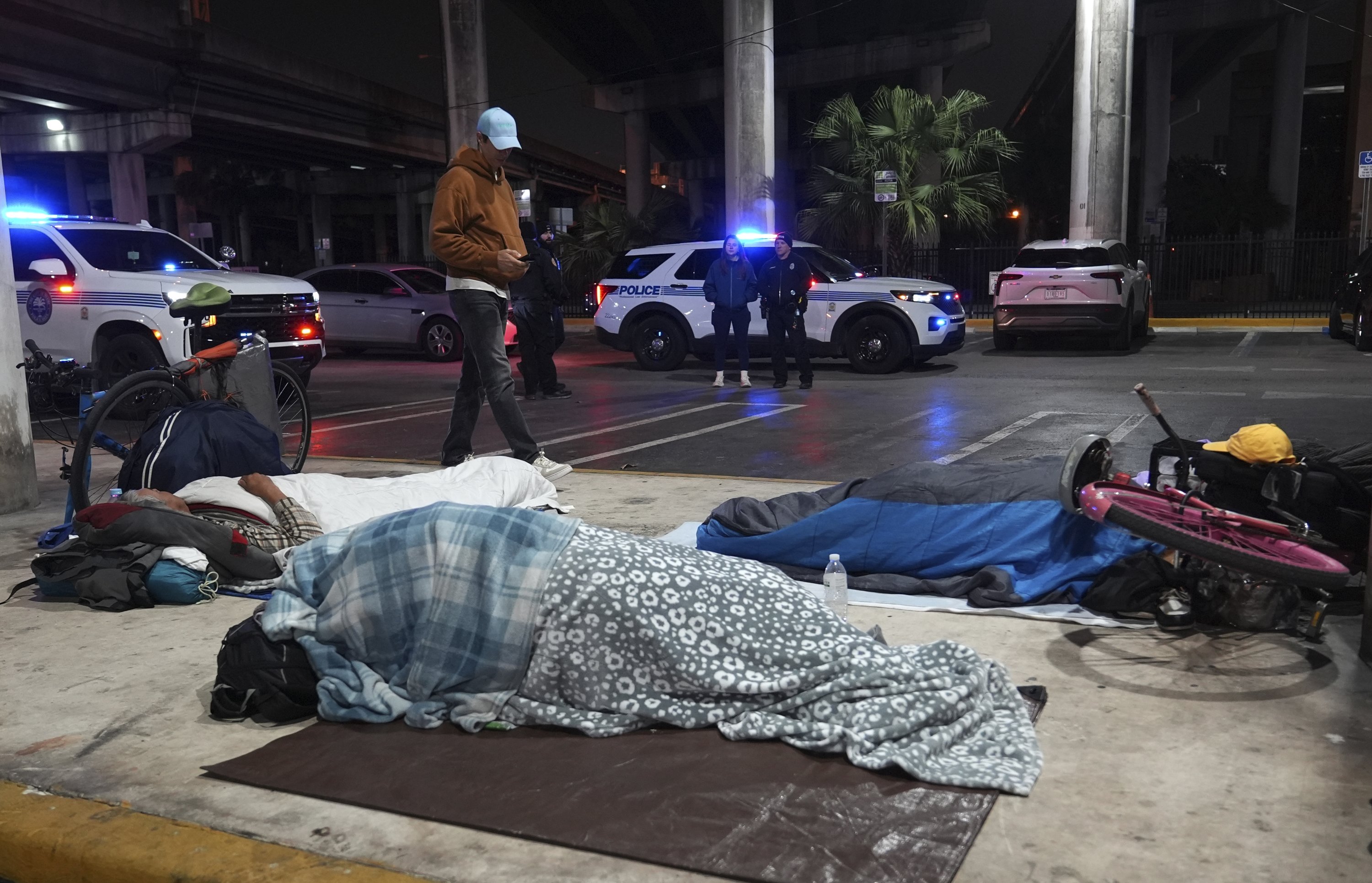
The U.S. Justice Department are soliciting ideas on how to address homelessness and mental illness in a likely shift in the Trump administration’s approach to clearing public spaces and expanding involuntary hospitalizations, according to The Washington Post.
The department's Office of Justice Programs sent an eight-question survey to employees Thursday, asking for input on ways to direct resources toward homelessness and mental health issues.
Among the questions: how to move “chronic vagrants” out of public spaces and how to increase involuntary commitments for individuals with serious mental illnesses. Responses are due by next Wednesday.
The email emphasized that the effort was prompted by a White House directive for agencies to propose legislative and funding solutions, according to the Post.
Justice Department spokesman Chad Gilmartin said the initiative is unrelated to the department’s recent decision to cancel, and later partially reinstate, over $800 million in grants initially awarded during the Biden administration.
Earlier this week, the Justice Department abruptly rescinded grant funding for programs tackling gun violence, opioid addiction, and crime victim services.
Some grants, including those supporting VictimConnect and Survivors.org, were later restored without explanation, though other groups continue to appeal the cancellations.
The administration’s new focus represents a break from the "Housing First" model, a bipartisan strategy prioritizing stable housing before treatment.
The internal survey asked staff whether federal programs should continue following the Housing First approach, and how to reallocate mental health resources to prioritize severe mental illnesses.
President Donald Trump has frequently criticized the visibility of homeless and mentally ill populations in urban centers.
Last month, he signed an executive order directing the National Park Service to remove homeless encampments from federal lands in Washington, D.C., as part of an initiative to make the city "safe and beautiful."
Homelessness advocates have raised alarms about the Justice Department’s involvement. Donald Whitehead, executive director of the National Coalition for the Homeless, warned that relying on criminal justice strategies could criminalize homelessness rather than solve it. “The real solution is housing,” Whitehead said.
The questionnaire also sought ideas to decrease panhandling, boost resources for incarcerated individuals struggling with mental illness and addiction, and prioritize treatment for the most severe cases, given limited federal resources.