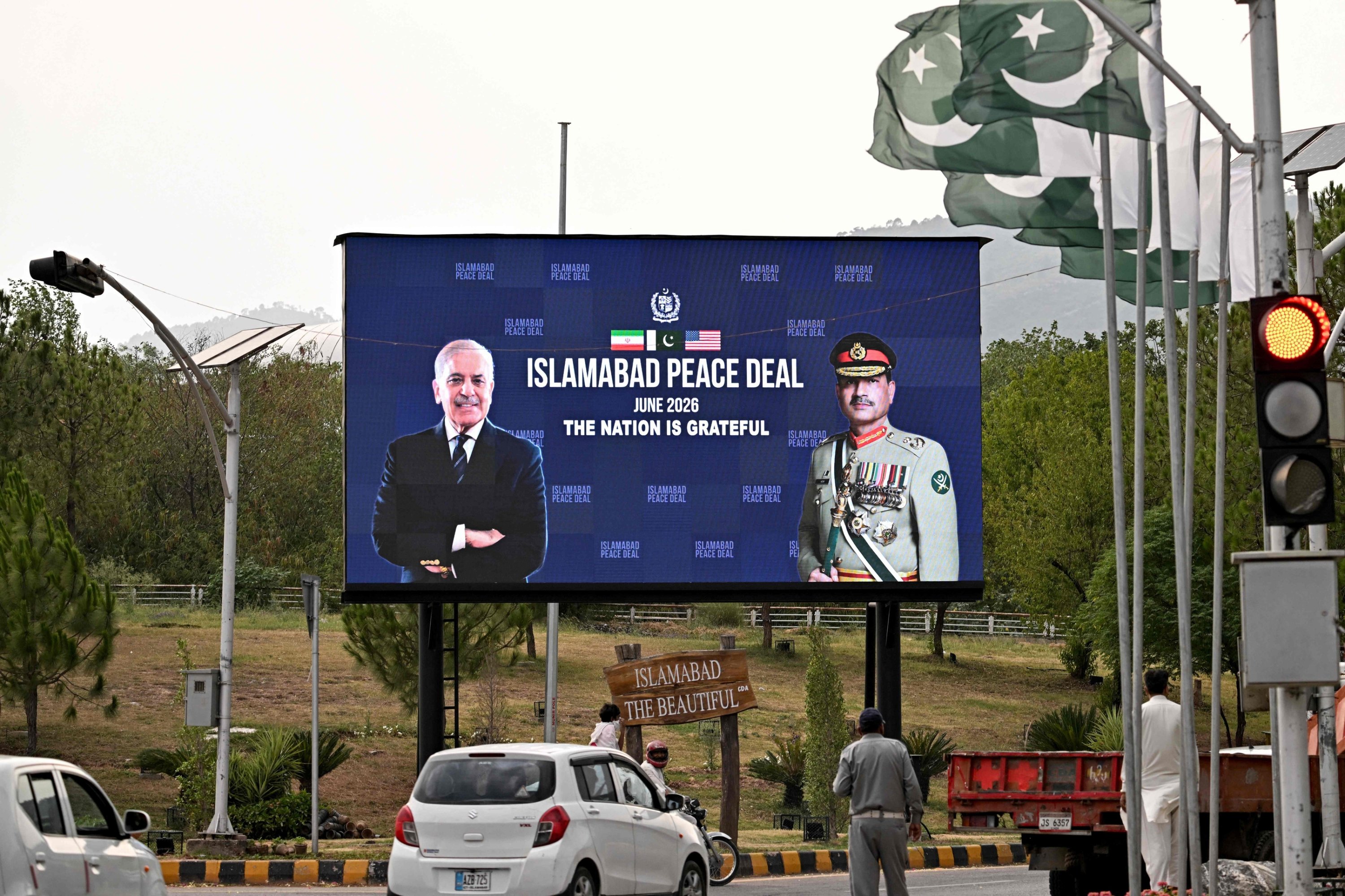
After keeping the details under wraps for several days, senior U.S. officials on Wednesday briefed journalists on a proposed understanding with Iran, offering the clearest picture yet of Washington’s approach to easing tensions and advancing diplomatic engagement with Tehran.
The officials spoke on condition of anonymity to read the draft, which Iran has not released, ahead of a formal signing ceremony set for Friday.
According to the officials, the draft agreement includes a new "minimum” standard for downblending of highly enriched Iranian uranium and has provisions to ensure the "territorial integrity” of Lebanon after Israel’s latest attacks against Hezbollah in Lebanese territory.
In return, the U.S. will move to waive, but not eliminate, some wide-ranging sanctions against Iran once the deal is signed.
The U.S. draft of the agreement also secures toll-free passage of the Strait of Hormuz for only 60 days, and it does not preclude fees in future, the officials said.
The accord, due to be signed Friday in Switzerland, also envisions Iran receiving at least $300 billion to rebuild after the war and says the U.S. would work to end all American and United Nations sanctions imposed on Tehran - if a final agreement addressing Iran’s nuclear program is reached.
The U.S. agreement to immediately allow Iran to sell its oil freely and the offer to eventually lift all sanctions, for instance, represent major concessions that go beyond the terms of Iran’s 2015 nuclear deal with world powers. Trump withdrew America from that pact in his first term, declaring it the "worst deal ever.”
The accord likely will draw intense opposition in Washington, and it appears to be a major setback for Israeli Prime Minister Benjamin Netanyahu, who has come under criticism at home from the media, his opponents and even some allies as details emerge.
Much of the agreement would restore the status quo before the war, including ending hostilities, restarting negotiations between the U.S. and Iran over Tehran's nuclear program, and reopening the strait, which is a crucial passage for the world’s oil and natural gas and whose closure created a historic energy crisis.
The deal includes an end to the fighting in Lebanon between Israel and the Iranian-backed militia Hezbollah. That is one of the most delicate parts of the agreement because Israel has maintained it will continue to defend itself and to occupy vast swaths of Lebanon. Iran has said Israel must withdraw under the deal, although the leaked versions make no mention of withdrawal.
A person who was briefed on the memorandum of understanding after it was signed and another who viewed a copy beforehand said it largely matched the text of what was published by the Saudi-owned broadcaster Al Arabiya, which reported details of the deal Tuesday. The two people spoke on condition of anonymity because of the sensitivity of the discussions.
Another two officials in the Mideast, who spoke on condition of anonymity for the same reason, also said the versions published by Al Arabiya and Bloomberg broadly matched the final agreement.
The document sets out commitments on security, maritime navigation, sanctions relief, nuclear issues and economic cooperation.
According to the draft text, the agreement contains the following provisions:
1. End of military operations: The U.S., Iran and their allies would immediately and permanently end military operations on all fronts, including Lebanon, and refrain from future threats or use of force.
2. Respect for sovereignty: Both sides would respect each other's sovereignty and territorial integrity and avoid interference in internal affairs.
3. Final agreement timetable: Washington and Tehran would seek to conclude a final agreement within up to 60 days, with the possibility of extension by mutual consent.
4. End of naval blockade: The U.S. would begin removing its naval blockade and other restrictions on Iran immediately and complete the process within 30 days. U.S. forces would also withdraw from areas near Iran within 30 days after a final deal.
5. Strait of Hormuz arrangements: Iran would facilitate the safe passage of commercial vessels through the Persian Gulf and the Sea of Oman and undertake demining and restoration efforts. Tehran would also discuss the future administration of the Strait of Hormuz with Oman and other Gulf states.
6. Reconstruction package: The U.S., in coordination with regional partners, undertakes to develop a definitive, mutually agreed reconstruction and economic development plan for the Islamic Republic of Iran valued at a minimum of $300 billion. The implementation mechanism for this plan shall be finalized as part of the final deal within 60 days. The U.S. shall grant all required licenses, waivers, and permissions necessary for the relevant financial transactions.
7. Lifting sanctions: The U.S. would terminate sanctions against Iran, including UN-related measures, IAEA Board resolutions and U.S. primary and secondary sanctions, under an agreed timetable.
8. Nuclear commitments: Iran would reaffirm that it will not develop nuclear weapons. The two sides would negotiate the future of Iran's enriched uranium stockpile, enrichment activities and other nuclear-related issues.
9. Status quo during talks: Until a final agreement is reached, Iran would maintain the current status of its nuclear program, while the U.S. would refrain from imposing new sanctions or deploying additional military forces.
10. Oil export waivers: The U.S. Treasury Department would immediately issue waivers allowing exports of Iranian crude oil, petroleum products and related services, including banking, insurance and transportation.
11. Release of frozen assets: Washington would release Iran's frozen and restricted funds and assets, with procedures to be determined during negotiations.
12. Monitoring mechanism: A joint executive mechanism would be established to oversee implementation of the memorandum and compliance with a future agreement.
13. Final negotiations: Negotiations on remaining issues would begin after implementation starts on key provisions related to the ceasefire, maritime security, oil exports and frozen assets.
14. U.N. endorsement: The final agreement would be endorsed through a binding resolution of the U.N. Security Council.
The draft agreement is intended to serve as the framework for a broader settlement between the two countries following months of conflict and tensions across the region.