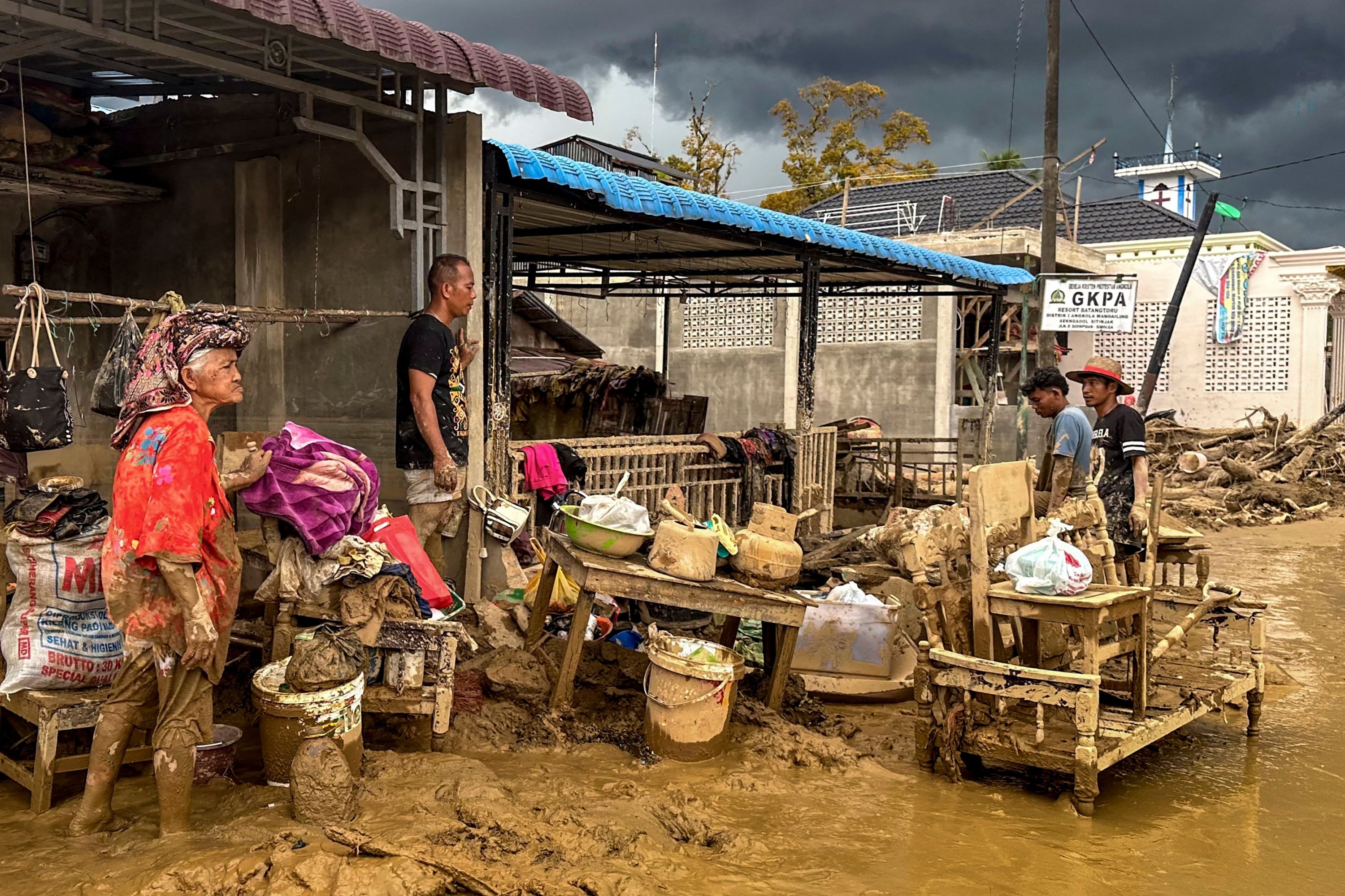
Entire communities across Southeast Asia were clawing through mud and wreckage Friday as the region confronted one of its deadliest climate-driven disasters in years, with more than 1,600 people killed across five countries and warnings of even more destructive rain on the horizon.
Indonesia remains the epicenter of the catastrophe.
National disaster officials say at least 846 people are confirmed dead and 547 others remain missing, most of them in Aceh and Sumatra’s mountainous districts where flash floods roared through valleys with little warning and landslides buried homes before residents could flee.
More than 800,000 Indonesians have now been displaced – a massive humanitarian emergency stretching from village mosques to overcrowded school shelters.
Other countries swallowed by the same chain of storm systems are still counting casualties: Sri Lanka has recorded 486 deaths, Thailand 276, Malaysia two and Vietnam two after rain-triggered landslides slammed into the country’s northern highlands.
Thousands more across the region remain unaccounted for and aid groups fear final death tolls may rise sharply as rescuers reach isolated pockets.
In Sumatra’s most battered districts, survivors describe the disaster as a sudden, violent wall of earth and water.
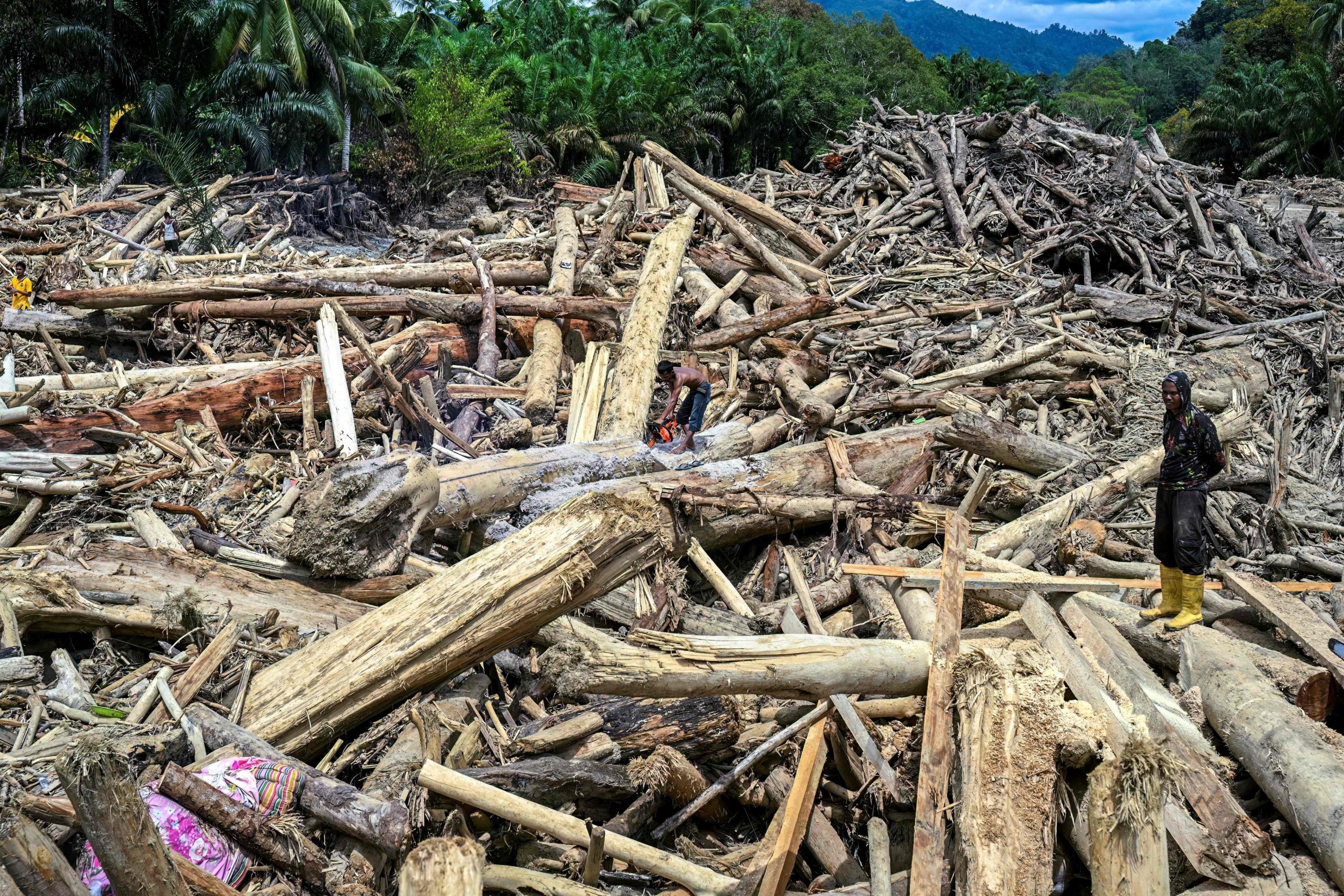
Rumita Laurasibuea, 42, said the landslide that devoured her home struck so fast her family barely escaped.
“Our house was covered by soil up to the ceiling,” she said from a school where hundreds are now sheltering. “Around us were piles of wood. It could take more than a year before any of this feels normal again.”
Others are bracing for a fight to survive.
Hendra Vramenia, 37, who fled his submerged village in Kampung Dalam, warned that remote settlements remain cut off by collapsed bridges and washed-out roads. “People in the interior have no food,” he said. “This is a calamity we must face.”
Indonesia’s meteorological agency says Aceh, North Sumatra and West Sumatra are facing “very heavy rain” through Saturday – a dire forecast for a region already overwhelmed.
In Banda Aceh, the provincial capital, an AFP correspondent watched dark clouds settle again over neighborhoods still caked in mud.
“We are still worried,” Rumita said. “If the rain comes again, where can we go? Where can we evacuate?”
Aid workers share that fear. Islamic Relief Indonesia said several stricken areas remain unreachable, with rescuers navigating broken roads, unstable hillsides, fallen power lines and weak cell signals.
“The situation is very dire and heartbreaking,” said the group’s chief executive, Nanang Subana Dirja. “In many places the water hasn’t receded at all.”
Across the Indian Ocean, Sri Lanka’s floodwaters have begun to drop, revealing neighborhoods drowned in mud, garbage and broken masonry.
In the central town of Gampola, Muslim cleric Faleeldeen Qadiri oversaw volunteers clearing sludge from the Gate Jumma Mosque.
“It takes 10 men an entire day to clean one house,” said Rinas, a volunteer. “No family can do this alone.”
The catastrophe was triggered by two powerful weather systems that stalled over Sumatra and Sri Lanka, pushing torrents over southern Thailand and northern Malaysia as well.
Vietnam, battered again this week, called 2025 “the most unusual year of natural disasters in history.”
Meteorologists say monsoon rains – once predictable – have grown erratic, brutal and lethally intense across Asia.
Environmentalists say that while the storms were natural, their devastation was man-made, accelerated by rampant deforestation.
Indonesia, home to one of the world’s largest rainforest losses, has seen vast swaths of land cleared for mining, palm oil and timber.
Without tree roots to anchor hillsides, water and mud cascaded into villages with unstoppable force.
Jakarta has revoked several corporate permits and launched an investigation that could lead to criminal prosecution for illegal logging and land clearing.
“If evidence shows corporate involvement, investigations could escalate,” warned Environment Minister Hanif Faisol Nurofiq.
In Aceh, the disaster has opened old wounds. Fisherman Effendi Basyaruddin, 64, stood on a shoreline eerily similar to where he watched the 2004 tsunami swallow his village.
“I saw the wave rise 20 meters high,” he said. “But this flooding was greater – villages became a river.”
Aceh’s governor, Muzakir Manaf, broke down while addressing reporters. “Aceh right now is like experiencing a second tsunami,” he said, pleading for faster intervention.
Across the province, excavators churn through debris as families search for missing relatives and possessions. “The settlement was completely destroyed,” said Adi Hermawan in Aceh Tamiang. “It looks like a tsunami hit – except the victims are harder to find.”
Local officials across Aceh are calling on Jakarta to declare a national disaster – a move that would unlock greater funding, military support and airlift capacity.
“The amount of victims is extraordinary,” said North Aceh leader Ismail A. Jalil, visibly distraught. “People’s houses are gone. There is no attention from the central government.”
Indonesia’s central government insists it has the crisis under control.
Officials say the 500 billion rupiah ($30 million) disaster fund is sufficient for now and can be increased if needed.
President Prabowo Subianto said conditions are “improving,” a statement that drew strong criticism from regional leaders who say the situation is worsening, not stabilizing.