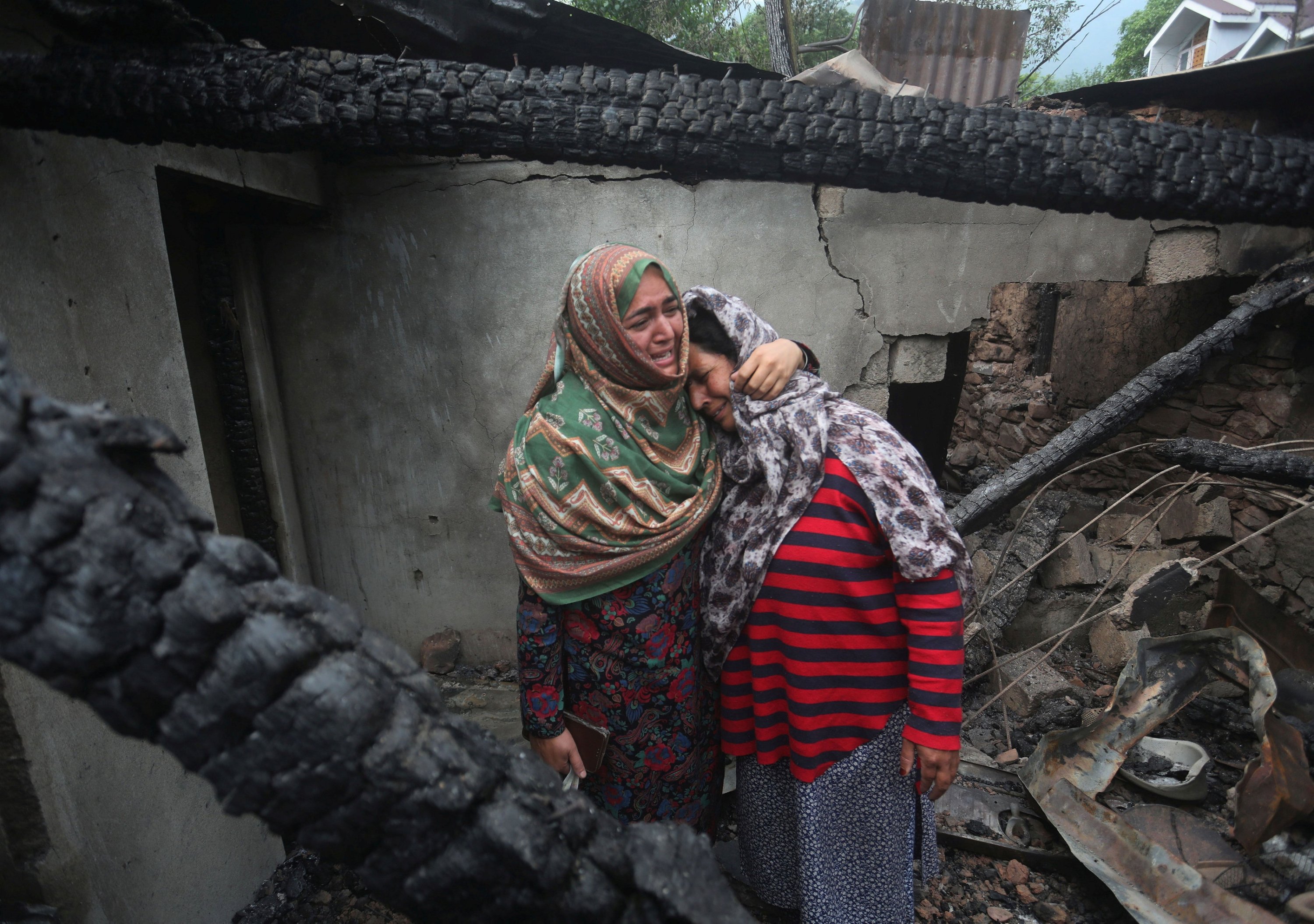
At least 51 people – including 40 civilians and 11 military personnel – were killed and nearly 200 others wounded amid the latest surge in hostilities with India, Pakistan's military said.
The dead civilians included seven women and 15 children, while 121 others were injured.
Among the military casualties were seven soldiers and four Pakistan Air Force personnel, with 78 others reported wounded, according to a statement from Inter-Services Public Relations, the army’s media wing.
“The nation remains resolute in the face of aggression,” ISPR said. “Let there be no ambiguity: Any attempt to challenge Pakistan’s sovereignty or territorial integrity will be met with a swift, full-spectrum and decisive response.”
Tensions between the nuclear-armed rivals soared after India launched Operation Sindoor during the night of May 6-7, claiming to have struck “nine terror locations” across Pakistan and Pakistan-administered Kashmir.
Asserting that the operation achieved its aim, India said five of its military personnel were killed during the offensive.
The two sides also exchanged heavy fire, resulting in several deaths along both sides of the Line of Control, a de facto border that divides the disputed Kashmir Valley between the two neighbors.
On Saturday, Pakistan launched a counteroffensive under the banner of "Marka-e-Haq,” firing Al-Fatah missiles as part of Operation Bunyanum Marsoos, or “Iron Wall,” targeting 26 Indian military and air force sites in Jammu and Kashmir as well as in mainland India.
Pakistan said it shot down five Indian aircraft, though India had yet to officially respond.
The latest hostilities ended after the United States brokered a cease-fire between the two South Asian neighbors. The truce has held since the weekend.
India’s Operation Sindoor followed the deaths of 26 people, mostly Indian tourists, on April 22 at the Pahalgam tourist site in Indian-administered Kashmir.
New Delhi blamed Islamabad, which denied involvement and offered to support a neutral investigation.
The two countries also took reciprocal diplomatic steps, including India’s unilateral suspension of the Indus Waters Treaty – a decades-old water-sharing pact.