Daily Sabah logo

Politics
Diplomacy Legislation War On Terror EU Affairs Elections News Analysis
TÜRKİYE
Istanbul Education Investigations Minorities Expat Corner Diaspora
World
Mid-East Europe Americas Asia Pacific Africa Syrian Crisis Islamophobia
Business
Automotive Economy Energy Finance Tourism Tech Defense Transportation News Analysis
Lifestyle
Health Environment Travel Food Fashion Science Religion History Feature Expat Corner
Arts
Cinema Music Events Portrait Reviews Performing Arts
Sports
Football Basketball Motorsports Tennis
Opinion
Columns Op-Ed Reader's Corner Editorial
PHOTO GALLERY
JOBS ABOUT US RSS PRIVACY CONTACT US
© Turkuvaz Haberleşme ve Yayıncılık 2025

Daily Sabah - Latest & Breaking News from Turkey | Istanbul

  • Politics
    • Diplomacy
    • Legislation
    • War On Terror
    • EU Affairs
    • Elections
    • News Analysis
  • TÜRKİYE
    • Istanbul
    • Education
    • Investigations
    • Minorities
    • Expat Corner
    • Diaspora
  • World
    • Mid-East
    • Europe
    • Americas
    • Asia Pacific
    • Africa
    • Syrian Crisis
    • Islamophobia
  • Business
    • Automotive
    • Economy
    • Energy
    • Finance
    • Tourism
    • Tech
    • Defense
    • Transportation
    • News Analysis
  • Lifestyle
    • Health
    • Environment
    • Travel
    • Food
    • Fashion
    • Science
    • Religion
    • History
    • Feature
    • Expat Corner
  • Arts
    • Cinema
    • Music
    • Events
    • Portrait
    • Reviews
    • Performing Arts
  • Sports
    • Football
    • Basketball
    • Motorsports
    • Tennis
  • Gallery
  • Opinion
    • Columns
    • Op-Ed
    • Reader's Corner
    • Editorial
  • TV
  • World
  • Mid-East
  • Europe
  • Americas
  • Asia Pacific
  • Africa
  • Syrian Crisis
  • Islamophobia

Indian state OKs civil code objected by Muslims

by Reuters

NEW DELHI Feb 07, 2024 - 7:20 pm GMT+3
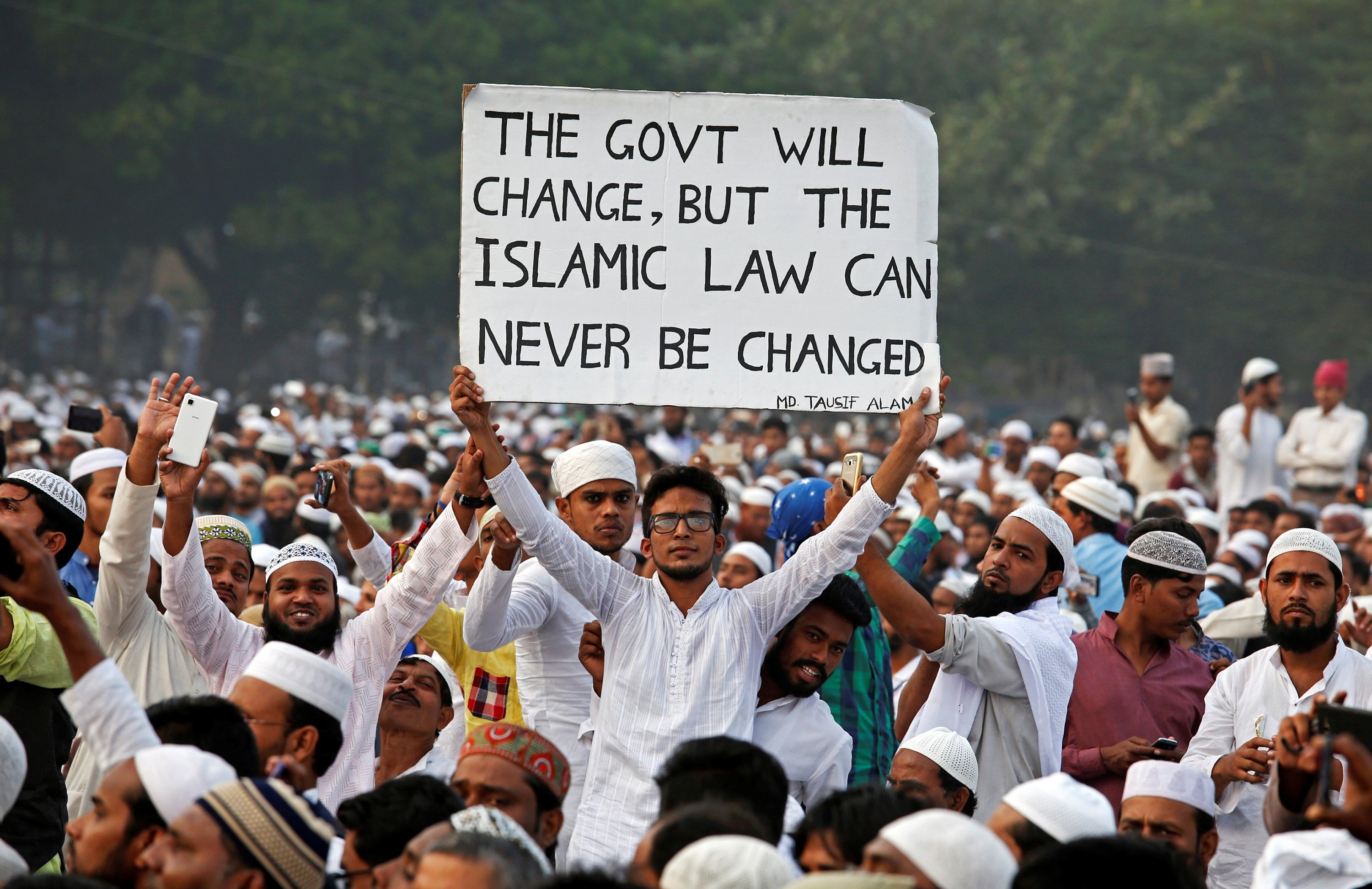
A man holds a banner during a rally organized by All India Muslim Personal Law Board (AIMPLB), in support of the Muslim Personal Law against what they say is the central government's move to change it and impose the Uniform Civil Code across the country, in Kolkata, India, Nov. 20, 2016. (Reuters File Photo)
by Reuters Feb 07, 2024 7:20 pm

Legislators in India's Uttarakhand state passed a law to merge personal laws of different religions, in a move opposed by the state's Muslim community, amid rising anti-Muslim hatred in the country.

Lawmakers in a small Indian state ruled by Prime Minister Narendra Modi's Hindu nationalist Bharatiya Janata Party (BJP) on Wednesday approved landmark legislation to unify personal laws across religions, a move opposed by many minority Muslims.

Approval by the Himalayan state of Uttarakhand, ruled by Prime Minister Narendra Modi's Hindu nationalist Bharatiya Janata Party (BJP), makes it the first in the country since independence from Britain in 1947 to implement a Uniform Civil Code, a contentious decades-old BJP promise, months before national elections.

Currently, India's Hindus, Muslims, Christians and other minority groups follow their own personal laws and customs, or an optional secular code for marriage, divorce, adoption and inheritance.

The move by Uttarakhand banning polygamy and other Muslim practices is expected to pave the way for other BJP-ruled states to follow suit despite angry opposition from some leaders of India's 200-million-strong Muslim minority.

"The Uniform Civil Code will give the right to equality to everyone without any discrimination. ... We must make history by clearing it," said Pushkar Singh Dhami, the state's chief minister, just before BJP lawmakers and some others voted in favor of the bill.

A political aide to Dhami confirmed that the state assembly, where the BJP enjoys a majority, passed the bill.

Rooted in the framework of the Indian Constitution, the code puts an end to the religious interpretation of laws guiding marriage, divorce, maintenance, inheritance, adoption and succession.

Dhami said it "provides security to women and empowers them."

The code sets a minimum marriageable age for both genders. It guarantees equal rights to men and women on issues pertaining to divorce, share in ancestral property and offers rights to adopted children, those born out of wedlock or were conceived through surrogate births.

India is around 80% Hindu and about 14% Muslim and is the world's third-largest Muslim country. Muslims accuse Modi's right-wing nationalist party of pursuing a Hindu agenda that discriminates against them and directly imposes laws interfering with their faith. Modi denies this but the situation has led to sporadic violence between members of the two communities.

A regional Muslim politician from south India, Asaduddin Owaisi, said the code was nothing but a "Hindu code of conduct."

"I have a right to practice my religion and culture but UCC stops us from exercising our fundamental rights," he told Reuters.

The new code makes it mandatory for a man and a woman to register their marriages and also submit a notice if they are in a live-in relationship to a government office. Terminations of live-in relationships should also be reported to the police.

"The Uttarakhand UCC is patriarchal to the core," Subhashini Ali, a senior member of the Communist party of India(Marxist), said on X.

It "denies women the right to choice. An inter caste couple going to register their marriage is inviting death," she said.

Many young Indians on social media said the move to register live-in relationships was a direct assault on privacy but the BJP rejected the criticism.

"As society evolves, you (government) need to regulate new practices," Uttarakhand Child and Women Welfare Minister Rekha Arya told NDTV news channel. "It's a modern move and not an attempt to invade anyone's privacy."

Many BJP-ruled states such as Gujarat, Uttar Pradesh, Assam and Rajasthan have decided to introduce the UCC, a national civil code that is one of the three core promises of Modi' BJP political manifesto.

The other two were removing the autonomy of the only Muslim-majority region of Jammu and Kashmir in 2019 and building a contested temple, replacing a centuries-old mosque razed by hardline Hindus in 1992.


  • shortlink copied
  • KEYWORDS
    india narendra modi hindu nationalism bjp
    The Daily Sabah Newsletter
    Keep up to date with what’s happening in Turkey, it’s region and the world.
    You can unsubscribe at any time. By signing up you are agreeing to our Terms of Use and Privacy Policy. This site is protected by reCAPTCHA and the Google Privacy Policy and Terms of Service apply.
    Yedigöller
    10 gorgeous fall destinations in Turkey
    PHOTOGALLERY
    • POLITICS
    • Diplomacy
    • Legislation
    • War On Terror
    • EU Affairs
    • News Analysis
    • TÜRKİYE
    • Istanbul
    • Education
    • Investigations
    • Minorities
    • Diaspora
    • World
    • Mid-East
    • Europe
    • Americas
    • Asia Pacific
    • Africa
    • Syrian Crisis
    • İslamophobia
    • Business
    • Automotive
    • Economy
    • Energy
    • Finance
    • Tourism
    • Tech
    • Defense
    • Transportation
    • News Analysis
    • Lifestyle
    • Health
    • Environment
    • Travel
    • Food
    • Fashion
    • Science
    • Religion
    • History
    • Feature
    • Expat Corner
    • Arts
    • Cinema
    • Music
    • Events
    • Portrait
    • Performing Arts
    • Reviews
    • Sports
    • Football
    • Basketball
    • Motorsports
    • Tennis
    • Opinion
    • Columns
    • Op-Ed
    • Reader's Corner
    • Editorial
    • Photo gallery
    • DS TV
    • Jobs
    • privacy
    • about us
    • contact us
    • RSS
    © Turkuvaz Haberleşme ve Yayıncılık 2021