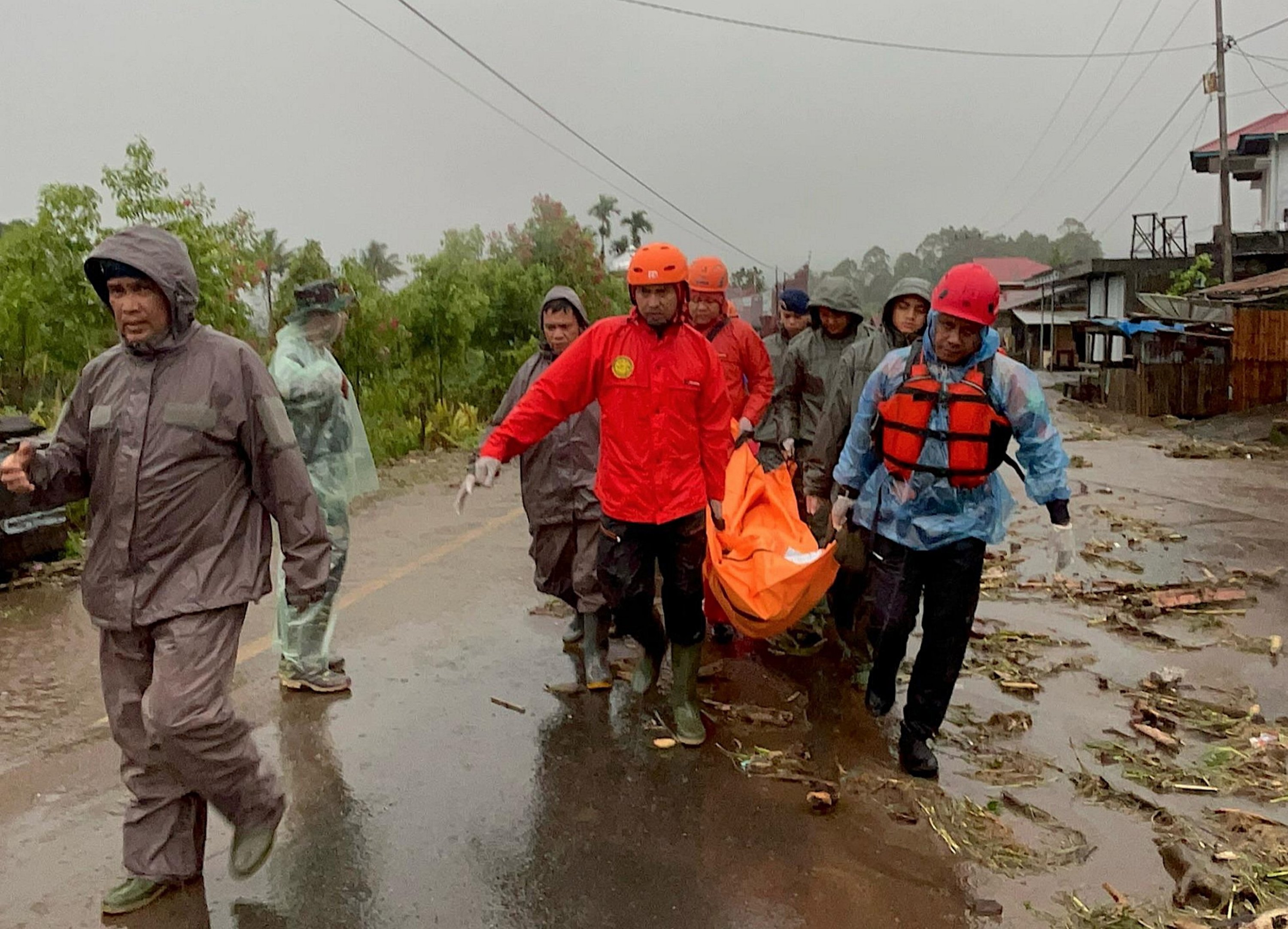
Relentless flooding and landslides have left Southeast Asia grappling with one of the deadliest natural disasters in recent years.
Authorities reported more than 250 fatalities across Indonesia, Thailand, and Malaysia on Friday, as torrential monsoon rains, intensified by a tropical storm system, submerged cities, isolated villages, and trapped thousands on rooftops.
In Indonesia, Sumatra has been hardest hit. Floods and landslides have claimed at least 111 lives, with nearly 100 more missing, according to local authorities.
North Sumatra police spokesman Ferry Walintukan said rescue efforts remain focused on evacuating residents and delivering essential aid, though damaged roads and downed communication lines hamper access.
“Hopefully, the weather will clear so helicopters can reach the worst-hit areas,” he said.
In West Sumatra, 53-year-old Misniati described a terrifying fight against rising waters to reach her husband.
Returning from early morning prayers at a mosque, she found streets already waist-deep.
Battling currents that nearly knocked her off her feet, she arrived home to see water at chest level. “We didn’t sleep at all last night; we just monitored the water,” she said.
Aceh province bore witness to similar devastation.
Recurring floods left vehicles buried in mud and abandoned trucks stranded in streets, while more rainfall is forecast in Sumatra, albeit at reduced intensity.
Conservationists warn that deforestation and land conversion for palm oil plantations and mining have worsened the disaster’s impact.
“If forest cover continues to decrease, our ecological system loses its ability to regulate water systems,” said Uli Arta Siagian of Indonesian environmental group WALHI.
Southern Thailand has also faced catastrophic losses.
At least 145 people have died in the region, particularly in Songkhla province, as waters began to recede and rescuers reached previously submerged neighborhoods.
Songklanagarind Hospital in Hat Yai has exceeded morgue capacity, relying on refrigerated trucks to store bodies.
Residents recounted harrowing rescues by boat, with water reaching second-floor ceilings. Shop owner Chayaphol Promkleng described returning to his business to find it submerged waist-deep: “There was nothing I could do. I left the shop to save my life.”
Public criticism of the response has grown, leading to the suspension of two local officials.
Malaysia’s northern Perlis state reported two deaths and widespread flooding, as the same storm system, now downgraded to a tropical depression, continued to batter already-saturated regions.
Across affected areas, millions have been displaced, streets are impassable, and low-rise buildings, vehicles, and household belongings have been swept away by powerful currents.
Experts link the worsening intensity of these floods to climate change.
Warmer oceans and air hold more moisture, producing heavier rainfall, while storm systems are strengthened by elevated ocean temperatures.
Renard Siew, climate change advisor at Malaysia’s Centre for Governance and Political Studies, noted: “Extreme weather events will continue to worsen as temperatures increase. That is exactly what we have been seeing.”
The monsoon season, typically running from June to September, has been further exacerbated by tropical storms, with the combination triggering deadly flash floods and landslides. Authorities continue to race against time to deliver aid, evacuate residents, and restore access to isolated communities.
For families like Misniati’s and countless others across the region, the ordeal is far from over.
Homes are submerged, communities cut off, and the recovery process will be long and arduous.