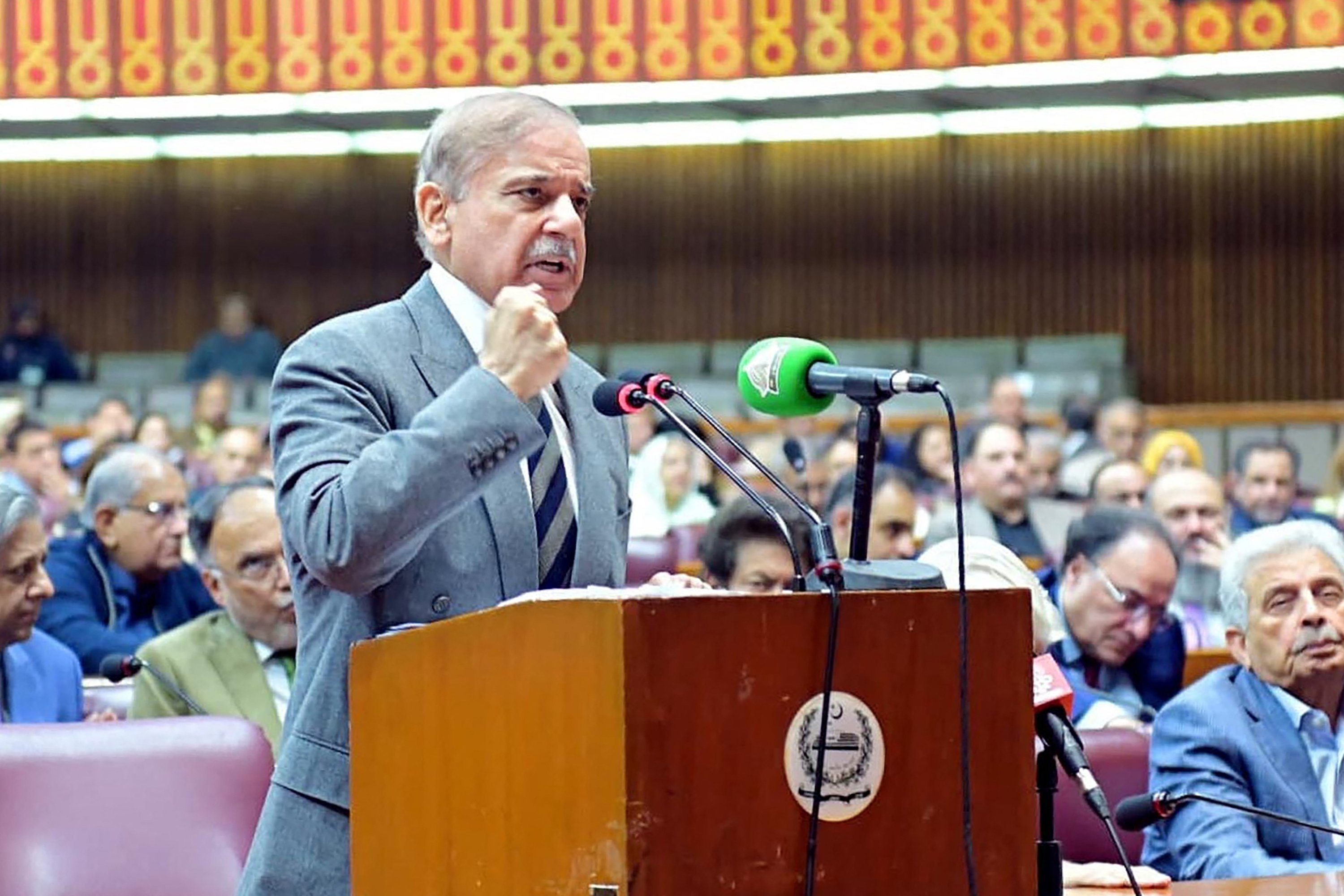
Pakistan urged all parties involved in the Iran war to observe a two-week cease-fire to allow diplomacy to advance, while calling on Tehran to reopen the Strait of Hormuz as a goodwill gesture, Prime Minister Shehbaz Sharif said Tuesday, as U.S. President Donald Trump's 8 p.m. deadline approaches.
Pakistan has been the main go-between for proposals shared by Iran and the United States, but there has been no sign of a compromise.
"To allow diplomacy to run its course, I earnestly request President Trump to extend the deadline for two weeks. Pakistan, in all sincerity, requests the Iranian brothers to open Strait of Hormuz for a corresponding period of two weeks as a goodwill gesture," Sharif said in a post on X.
Trump has given Iran until 8 p.m. EDT (0000 GMT) in Washington - 3:30 a.m. in Tehran - to end its blockade of Gulf oil or see the U.S. destroy every bridge and power plant in Iran.
Sharif urged "all warring parties" to observe a cease-fire everywhere for two weeks "to allow diplomacy to achieve conclusive termination of war."
He added that diplomatic efforts to settle the war peacefully were "progressing steadily, strongly and powerfully with the potential to lead to substantive results in near future."
White House spokeswoman Karoline Leavitt told the Axios website: "The President has been made aware of the proposal, and a response will come."
Pakistan's U.N. envoy also called for diplomacy.
"We continue to believe that time and space must be allowed for ongoing diplomatic efforts to facilitate a return to dialogue and engagement," said Pakistani Permanent Representative to the U.N. Asim Iftikhar, after a Security Council vote on a draft resolution on the Strait of Hormuz.
The Council failed to adopt the draft resolution, brought by Bahrain, that called for coordinated "defensive" measures to ensure freedom of navigation in the Strait of Hormuz after Russia and China exercised their veto powers as permanent members of the top U.N. body.
The draft resolution received 11. Colombia and Pakistan abstained.
Islamabad is engaged in facilitating indirect talks between the U.S. and Iran.
Reiterating Pakistan's "continued" and "unwavering" support and "complete solidarity in these challenging times" with Bahrain and other "fraternal" Gulf countries, Iftikhar said Islamabad would continue seeking a "durable" diplomatic solution to the prevailing situation.
Calling for the security of ships and crew members, the swift and safe passage of civilian ships and restoration of normal passage through the Strait of Hormuz, he warned that if the military escalation and disruptions persist, "the suffering will extend far beyond the region, translating into widespread economic hardship."
"At this critical juncture, restraint, diplomacy and dialogue must prevail," he said.
Pakistan, he said, remains committed to continuing to play its constructive role in "promoting dialogue, fostering understanding, and supporting all efforts aimed at achieving lasting peace in the region."
The White House did not immediately respond to a request for comment.
Sources told Reuters on Tuesday that talks between the U.S. and Iran were at risk of being derailed following Tehran's attacks on Saudi Arabian industrial facilities.