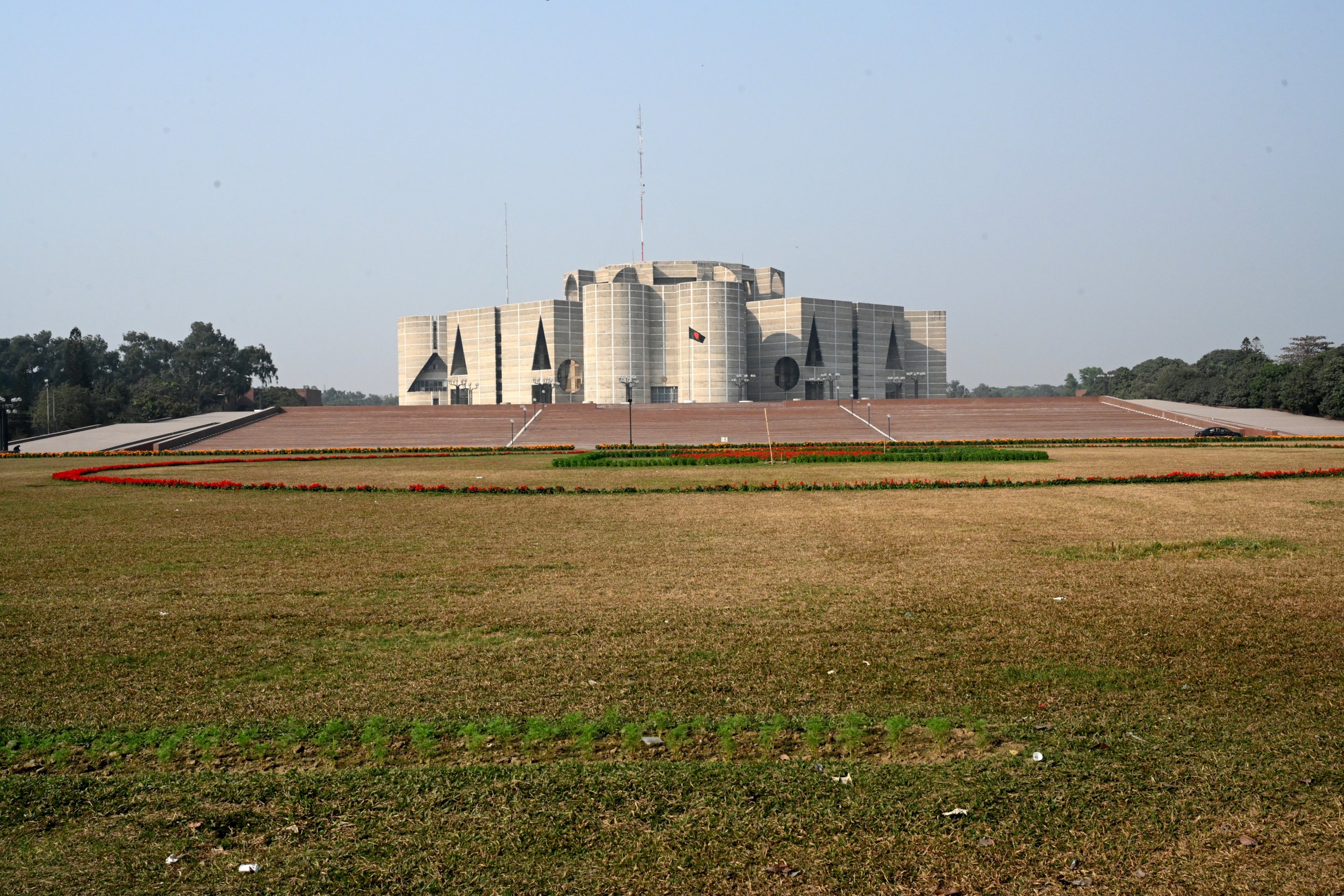
Bangladesh's parliament convened Thursday for the first time since last month's elections, which followed the deadly 2024 uprising that plunged the country into political turmoil.
The government of Prime Minister Tarique Rahman, leader of the Bangladesh Nationalist Party (BNP), took over after the Feb. 12 elections from the interim administration that had led the country of 170 million people since August 2024.
"After more than a decade and a half of fascist and subservient rule, the activities of parliament are beginning today with representatives elected by the people," Rahman told parliament.
"The BNP wants to build a prosperous, safe and democratic country," he added, calling on all lawmakers, whatever their political opinions, to work together.
Rahman blamed the toppled government of Sheikh Hasina and her Awami League party for undermining the previous parliament.
Hasina, 78, who has been sentenced to death in absentia for crimes against humanity, is in a self-imposed exile in India.
"The fallen dictatorship made parliament dysfunctional, instead of making it the center of all national activities," Rahman said, promising it would change under his watch.
"We will make parliament the center of all debates and arguments aimed at resolving the country's problems."
They include tackling a sluggish economy, restoring stability and reviving growth after months of turmoil that rattled investor confidence and strained state finances.
The world's second-largest garment exporter, heavily dependent on fossil fuel imports, has also been hit hard by an oil price spike caused by the war in the Middle East.
Rahman's appeal for unity is a bid to heal rifts in a country polarized by years of bitter rivalry.
A new speaker, Hafiz Uddin Ahmad, and his deputy, Kayser Kamal, were elected to office. Both are members of the BNP.
The parliament building was looted during the August 2024 uprising against Hasina, but it has since been repaired.
The BNP-led alliance secured 212 seats, while the BNP alone won 209 seats.
The leader of the opposition is Shafiqur Rahman, who heads the Jamaat-e-Islami-led alliance with 76 seats, with Jamaat alone holding 68.