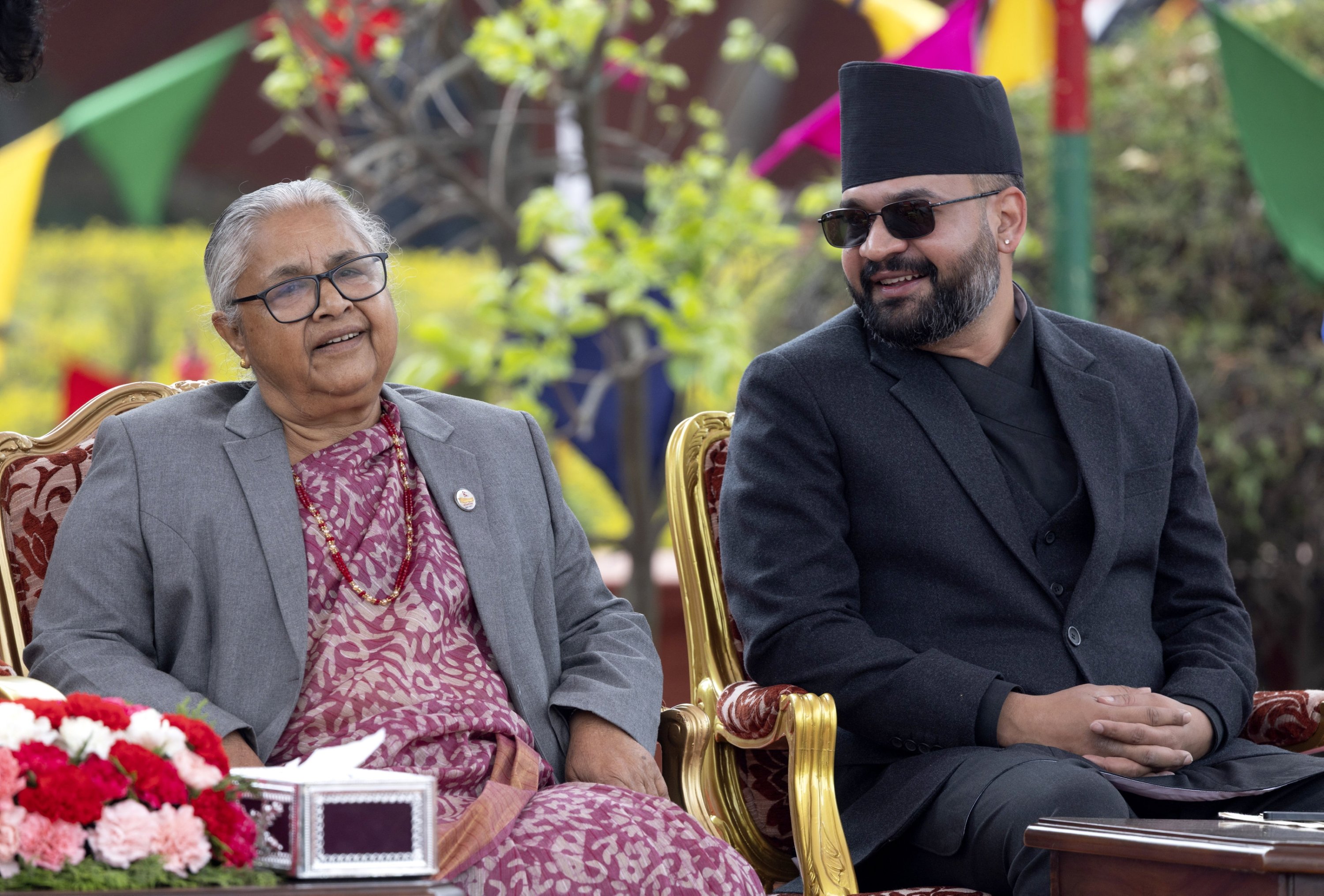
Before 2022, Balendra Shah, known as Balen, was an underground hip-hop artist performing in Kathmandu’s rooftop bars and engaging in online rap battles.
His lyrics, raw, incisive, and socially conscious, tackled poverty, corruption, and decades of underdevelopment in Nepal.
Few imagined that this 35-year-old structural engineer would emerge as a national political force, let alone the prime minister of Nepal.
Born and raised in Kathmandu, Shah’s formative years combined urban exposure with traditional roots.
His father practiced ayurvedic medicine as a government employee, and his ancestral home lay in Nepal’s southern plains along the Indian border.
Politics did not interest him in his youth, and he did not cast a vote until 2022, when he would vote for himself in Kathmandu’s mayoral election.
Shah’s entry into politics was unconventional. In the 2022 local elections, he launched a digital-first campaign with a social media handle, Balen4Mayor, leveraging platforms like Facebook, X, and TikTok to reach voters.
Donning black attire, he canvassed every corner of the capital, speaking directly to citizens about transparency, anti-corruption, and accountability.
Podcasts, television interviews, and viral online videos amplified his appeal, particularly among young voters and the Nepali diaspora, who make up nearly a quarter of Nepalese households.
The results shocked the political establishment: Shah won by a landslide, defeating candidates from entrenched political parties.
His victory signaled a generational shift, tapping into widespread frustration with Nepal’s political elite and fueling hopes for reform.
Once in office, Shah largely withdrew from traditional media, communicating instead through social media.
His posts often sparked debate, blending humor, provocation, and political commentary. Beyond the digital stage, he implemented a hands-on, results-oriented approach to governance.
Shah prioritized bureaucratic efficiency, livestreaming city meetings and personally inspecting projects.
He confronted illegal constructions, reclaiming public land with visible determination.
One viral moment saw Shah confronting a property owner in Baneshwor, resisting a basement demolition for parking violations.
Retrieving official housing plans himself, Shah oversaw the demolition with city workers and security, an act celebrated by supporters as a symbol of decisive leadership.
Yet, his policies sometimes conflicted with the themes of his music.
Street vendors were removed, roads expanded, and tax enforcement intensified, moves criticized by some as favoring urban development over the poor.
Still, Shah’s approach, direct, visible, and uncompromising, resonated with citizens frustrated by bureaucratic inertia.
Shah also challenged political norms.
He publicly threatened to dump garbage outside uncooperative government offices, proposed relocating the government complex, and even displayed a Greater Nepal map in his office, claiming disputed territories in India and Bangladesh.
Bollywood films were banned in Kathmandu cinemas under his mayoral tenure, reflecting a nationalist streak that both courted controversy and solidified his distinctive political persona.
In September 2025, the suspension of social media platforms by the KP Sharma Oli government ignited anger among Nepal’s youth.
Platforms had become a lifeline for exposing corruption and amplifying rural grievances. Shah sided with Gen Z protesters, urging them to mobilize for political accountability.
Protests escalated rapidly. Police firing outside Parliament killed 19 students, igniting nationwide unrest.
Over two days, 77 people died, and government buildings, including the presidential palace, prime minister’s office, parliament, and supreme court, were set ablaze.
Homes of political leaders, businesses, and hotels were also targeted.
Shah urged protest leaders to engage the Nepal Army, helping facilitate discussions that led to the appointment of retired Supreme Court Chief Justice Sushila Karki as head of an interim government.
Despite criticism over failing to protect Kathmandu’s historic monuments, Shah’s influence expanded.
Nepal’s median age is 25.7, with over 40% of the population under 35. Youth frustration with entrenched parties, combined with Shah’s charisma, digital reach, and anti-corruption messaging, set the stage for his ascent to national power.
Earlier this year, Shah resigned as mayor and joined the Rastriya Swatantra Party (RSP), founded by TV personality Rabi Lamichhane.
The party, initially the fourth-largest in parliament, had been embroiled in scandals involving cooperative fraud, organized crime, and money laundering, which saw Lamichhane imprisoned.
Upon Lamichhane’s release, Shah was elevated to deputy party leader and became the party’s public face.
Shah’s approach contrasted with Lamichhane’s confrontational style.
He presented a softer, inclusive image, appealing to youth, women, and diaspora communities without resorting to hate speech or divisive rhetoric.
Running on a platform of generational change, Shah defeated former PM Oli in his constituency by a wide margin.
RSP secured nearly two-thirds of the 275-seat parliament, the largest victory since Nepal’s democracy restoration in 1990, the year Shah was born.
Political analysts see Shah’s victory as a cultural as well as political shift. Santa Gaha Magar, editor of Onlinekhabar, noted: “Balen’s rise reflects deep frustration with the old guard. It signals a new era in Nepali politics, where youth engagement is no longer optional but decisive.”
Shah’s foreign policy record is still nascent. While he previously criticized India, his election victory brought international congratulations from India, the US, and China.
Indian PM Narendra Modi expressed readiness to collaborate for “mutual prosperity.”
Analysts suggest Shah’s untested leadership will be a critical litmus test in balancing Nepal’s relations with powerful neighbors while safeguarding national interests.