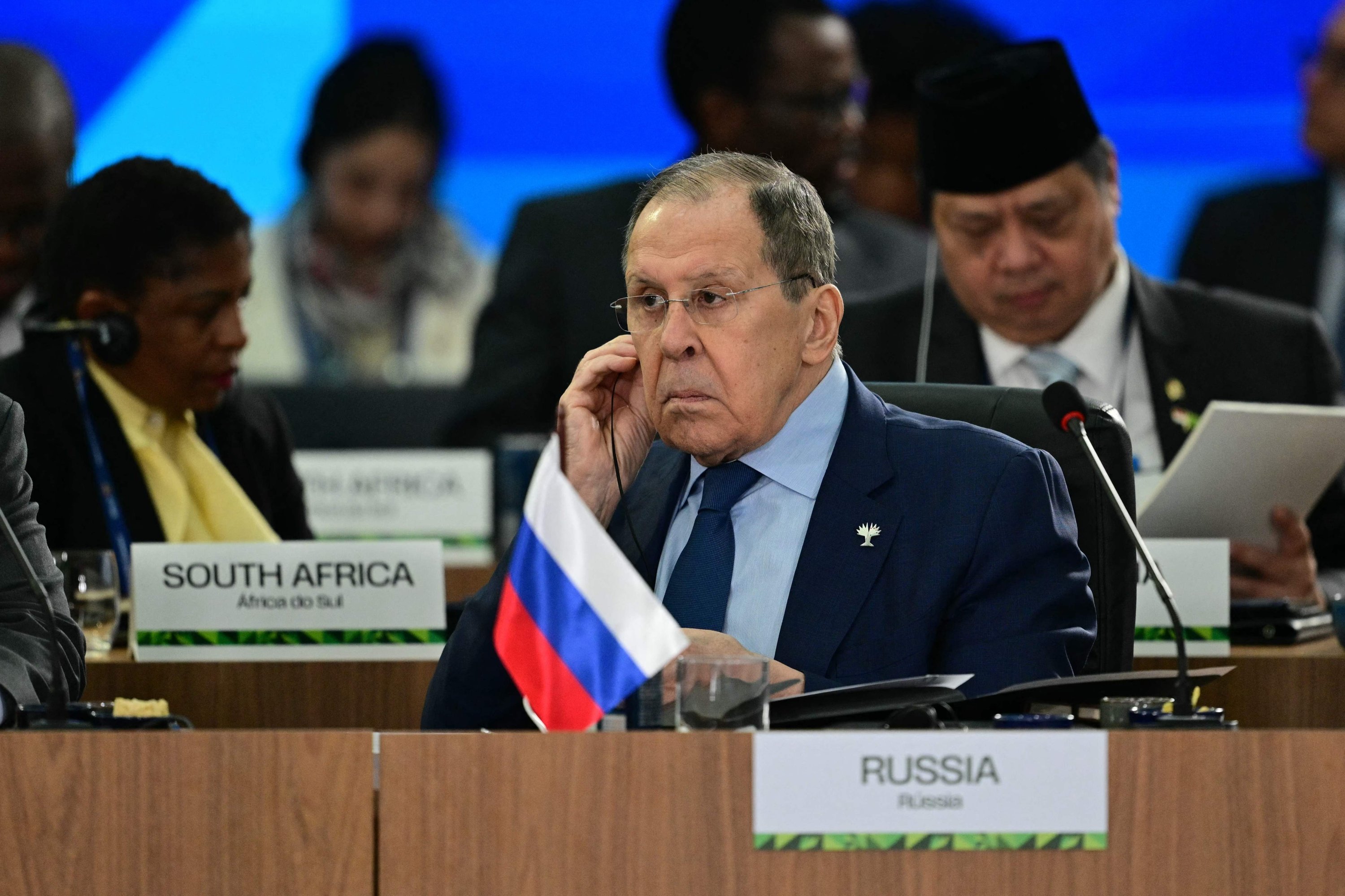
Russian Foreign Minister Sergei Lavrov is set to visit North Korea this weekend, marking the latest in a string of high-level trips by senior Moscow officials as the two nations strengthen their military cooperation.
Pyongyang has emerged as one of the Kremlin's main allies during its Ukraine invasion, sending thousands of troops to Russia's Kursk region to oust Kyiv's forces and providing the Russian army with artillery shells and missiles.
Lavrov "will visit the Democratic People's Republic of Korea on July 11-13" for the "second round of strategic dialogue at the level of foreign ministers", Russian ministry spokeswoman Maria Zakharova told reporters in Moscow on Wednesday.
North Korea's official Korean Central News Agency reported earlier that Lavrov would visit "at the invitation of the DPRK Foreign Ministry."
Ahead of the visit, Russia announced that it would begin twice-a-week flights between Moscow and Pyongyang.
Its aviation agency Rosaviatsia, issued an order allowing Moscow-based airline Nordwind to run flights between the two capitals from later this month.
With North Korea supporting Moscow's Ukraine invasion, Russian officials have touted the secretive state as a reliable holiday destination.
Around 600 North Korean soldiers have been killed and thousands more wounded fighting for Russia, Seoul has said.
North Korea only confirmed it had deployed troops to support Russia's war in April, and admitted its soldiers had been killed in combat.
Leader Kim Jong Un has subsequently been shown in state media images honouring the flag-draped coffins of North Korean soldiers killed while helping Russia fight Ukraine.
Russia's security chief Sergei Shoigu has visited Pyongyang multiple times this year, including last month.
The two heavily-sanctioned nations signed a military deal last year, including a mutual defence clause, during a rare visit by Russian President Vladimir Putin to the nuclear-armed North Korea.
Shoigu announced that North Korea would send builders and deminers to the Kursk region.
The frequency of senior Russian officials' visits to Pyongyang "is highly unusual," Lim Eul-chul, a professor at Kyungnam University in southeastern South Korea, told AFP.
"At the centre of these discussions may well be plans for Kim's anticipated visit to Russia," he added.