A powerful typhoon slammed into the northern Philippines on Friday, complicating disaster response efforts following a deadly earthquake in the central province and two recent storms.
Typhoon Matmo made landfall in Dinapigue, Isabela province, with sustained winds of up to 130 kph (81 mph) and was forecast to sweep northwest across a vast agricultural valley and mountainous regions.
Residents in flood- and landslide-prone villages were being evacuated as a precaution.

Authorities suspended classes, and cargo and fishing vessels were barred from venturing into the turbulent seas along the storm’s path.
Philippine forecasters said Matmo is expected to reach the South China Sea by Saturday, heading toward southern China.
Hong Kong’s observatory said Matmo is expected to pass near the territory on a projected path toward Hainan Island and the Chinese province of Guangdong over the weekend.
Matmo, known locally as Paolo, is the 16th tropical cyclone to hit the Philippines this year.
The Southeast Asian archipelago is struck by about 20 typhoons and storms annually and lies on the seismically active Pacific “Ring of Fire,” making it one of the countries most prone to natural disasters.
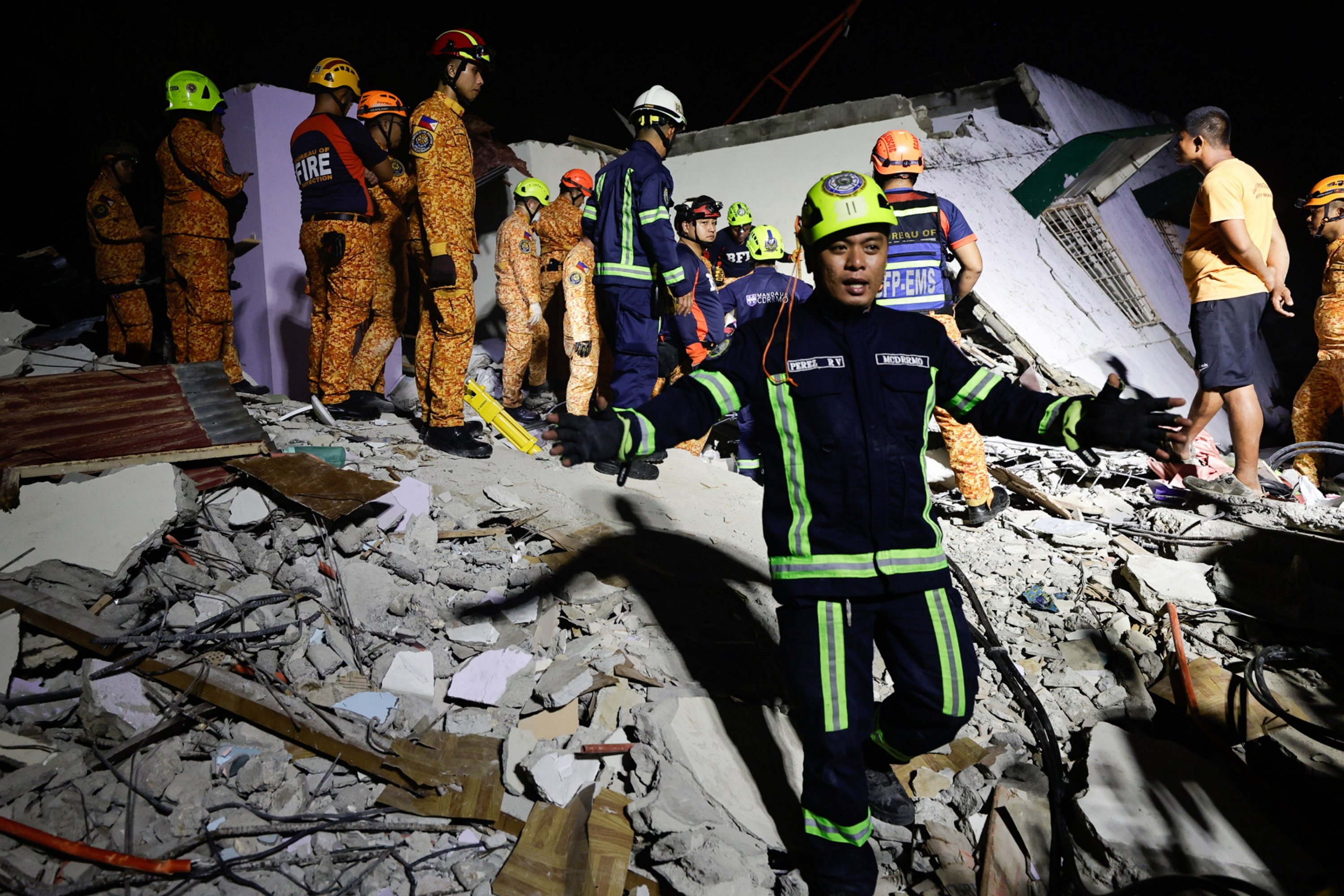
The typhoon is not expected to directly affect the region further south, where a 6.9-magnitude earthquake Tuesday night killed at least 72 people and injured more than 550, mostly in the Cebu province city of Bogo and surrounding towns.
More than 5,000 houses were damaged, and some residents were staying in parks, grassy clearings, and on sidewalks despite sporadic rain, fearful of returning to their homes because of aftershocks.
Another storm, Bualoi, caused at least 37 deaths and displaced thousands in the Philippines last week before hitting Vietnam, where 49 people died and economic damages were estimated at $485 million.
Super Typhoon Ragasa, which at its peak was the world’s strongest tropical cyclone of the year, also caused several deaths in the Philippines before making landfall in southern China.