

Far from the roar of artillery and the churn of frontline hospitals, a maternity ward in western Ukraine sits in near silence – a stark symbol of a nation fighting not only a war, but a demographic collapse that could shape its future long after the guns go quiet.
Only 139 babies have been born this year in Hoshcha, a town of 5,000, a steady slide from 164 last year and a dramatic fall from more than 400 births a decade ago. The empty ward tells a wider national story: Ukraine is losing people faster than it can replace them.
“Many young men have died,” gynaecologist Yevhen Hekkel said quietly. “Men who were supposed to replenish Ukraine’s gene pool.”
Nearly four years of war have drained the country’s population through death, displacement and a birth rate that has crashed to the world’s lowest.
Even towns hundreds of miles from the front feel the strain. In nearby Sadove, a school that once held more than 200 students shut down after enrollment fell to nine children.
Ukraine counted 42 million people before Russia’s full-scale invasion in 2022. Today, demographers say the real number is below 36 million – including several million living under Russian control.
And projections are bleak: the National Academy of Sciences estimates the population could plunge to 25 million by 2051. U.N. forecasts warn it could drop to as low as 9 million by the end of the century.
The scale of loss is visible in Hoshcha’s town square, where portraits of fallen soldiers line the walkway to the council building.
Residents stop to lay flowers, weep and whisper prayers. Since 2022, 141 people from Hoshcha and surrounding villages have been killed fighting Russia.
Eleven more died in earlier clashes dating back to 2014.
Those who remain are increasingly older.
At the town’s school, headteacher Marianna Khrypa says the number of first-graders is shrinking while about one in ten teens leaves for Europe as soon as they finish school.
“Parents take their children out before they turn 18,” she said, a move driven by fear of mobilization and a desire to rebuild lives elsewhere.
The migration wave worsened a decline that began long before the war. Millions of Ukrainians moved abroad over the past two decades, fleeing corruption and stagnant wages.
The Russian invasion triggered another mass departure – 5.2 million people remain overseas, according to the Centre for Economic Strategy. Up to 2.7 million may never return.
Those who left are disproportionately young women, deepening the imbalance. Male life expectancy has fallen from 65.2 years before the invasion to 57.3 this year. For women, it has dropped from 74.4 to 70.9.
Kyiv acknowledged the crisis last year, warning that Ukraine faces a shortage of 4.5 million workers over the next decade.
The government’s 2040 demographic strategy aims to stem emigration, bring citizens home with better housing and services, and fill gaps through immigration if needed – a sensitive proposition in a country at war.
Officials hope the population could rebound to 34 million by 2040. But if current trends persist, it may fall to 29 million instead.
For now, the decline is visible in abandoned farmhouses, shuttered clinics and villages hollowing out as residents drift toward towns like Hoshcha in search of remaining services.
Even in Duliby, a settlement of fewer than 200 people, nine men have been mobilized. One of them – the husband of resident Oksana Formanchuk – has been missing since July.
She fears her two sons could be next. “What would I do without them?” she said.
Inside Hoshcha’s maternity ward, head physician Inna Antoniuk says about a third of pregnant women have husbands at the front – some already dead or missing.
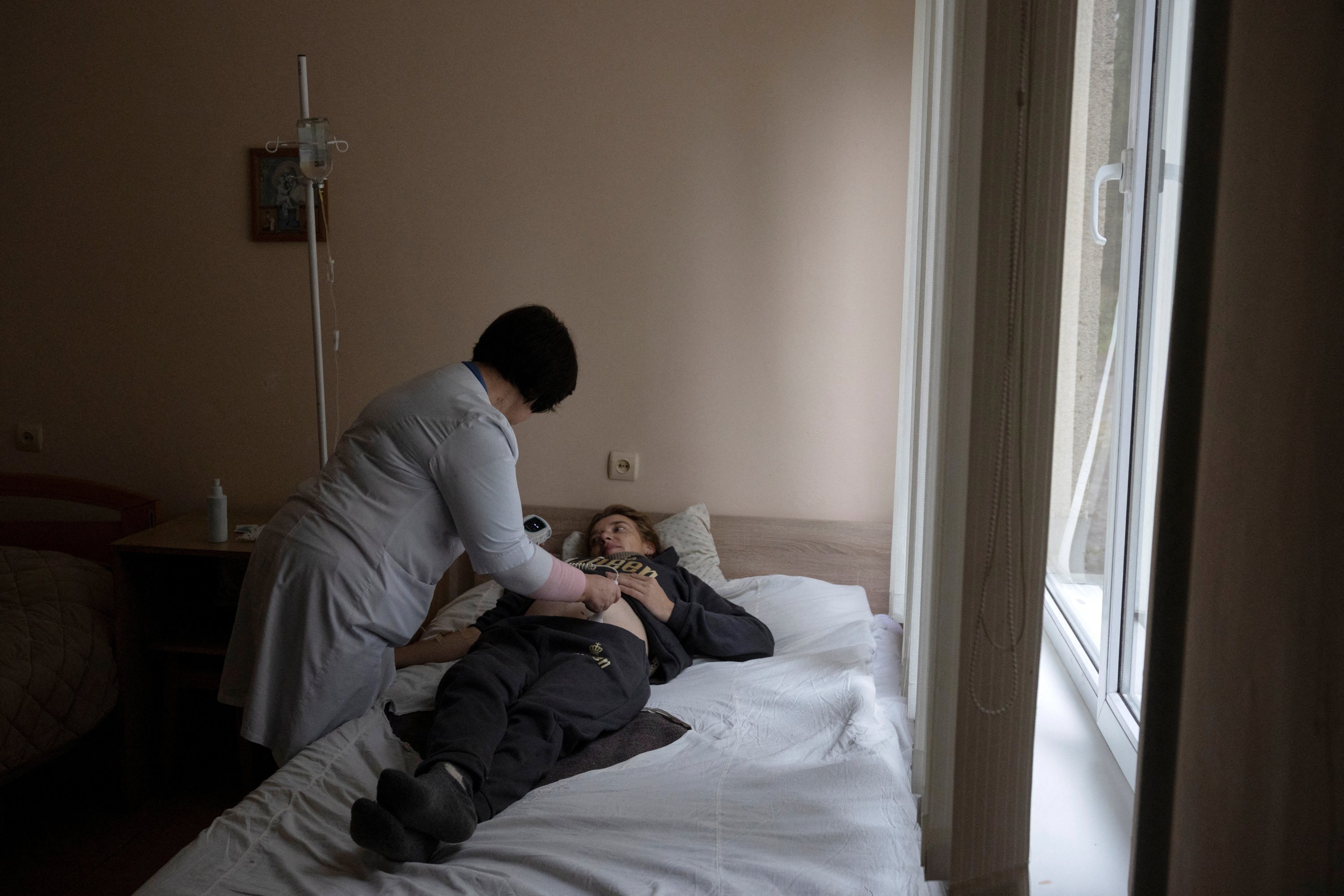
The ward lost its state funding last year after failing to reach the minimum of 170 births. “We had a baby born 15 minutes after midnight,” council head Mykola Panchuk said. “If she’d arrived a little earlier, we would have made the target.”
Uncertainty hangs over every decision. Rent, food and utilities rise faster than wages. Missiles continue to strike cities far from the front. Young couples delay families, unsure what tomorrow looks like.
“There’s no stability, nothing to build on,” said 21-year-old barista Anastasiia Yushchuk. She wants children someday – just not now. “Life changes every month. How do you plan for the future?”
Still, hope clings to the edges of life here. Council deputy Anastasiia Tabekova, whose husband serves in the military, gave birth shortly after he was mobilized.
He was granted just enough leave to see his child come into the world. “He left with tears in his eyes,” she recalled.
“I know wives whose husbands are fighting. I know wives whose husbands are gone,” she said. “For some, their children are the only reason not to give up. A reminder that something still waits on the other side of this war.”


