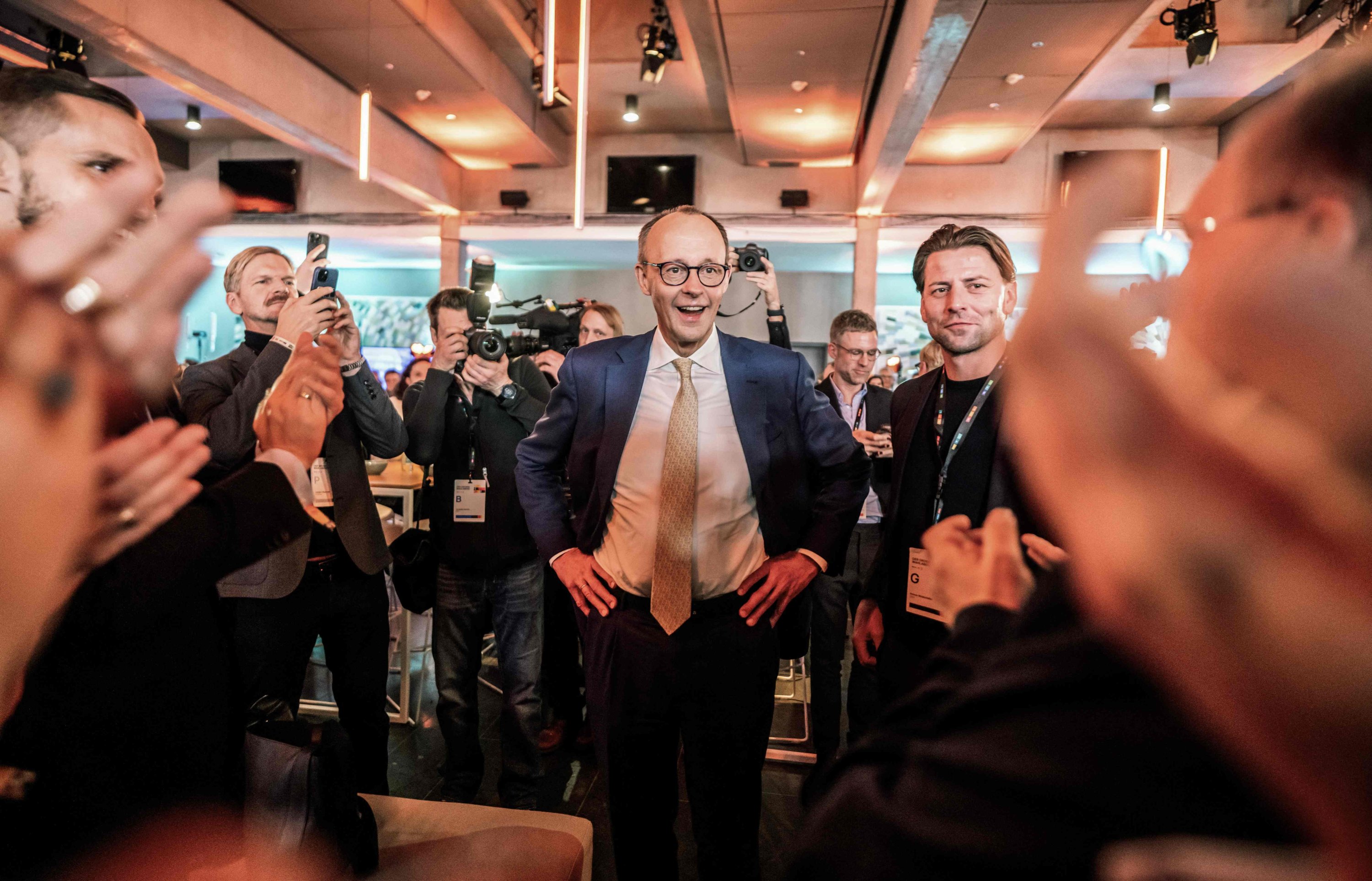
Germany's upcoming elections, marked by a contentious campaign and a rising far-right movement, look set to select conservative Friedrich Merz in charge of the chancellery.
According to current polling, Merz's Christian Democrats (CDU/CSU) are expected to secure a win, bringing with it a range of challenges for the country, including economic stagnation, divisive immigration debates and the ongoing influence of former President Donald Trump.
If the CDU/CSU bloc, which has consistently polled around 30%, prevails, Merz will face the complex task of forming a coalition government. This process, which could take weeks or even months, comes amid Germany’s current political fragmentation.
Merz, 69, has committed to a significant shift to the right, diverging from the centrist politics of outgoing Chancellor Olaf Scholz and his predecessor Angela Merkel.
He has argued that addressing public concerns over immigration is critical to preventing the rise of extremist factions, such as the Alternative for Germany (AfD), which has surged to a record 20% in the polls.
Germany, which historically viewed itself as immune to far-right movements due to its Nazi past, now faces a formidable far-right challenge.
The AfD, which celebrates support from figures like Trump and tech billionaire Elon Musk, has managed to capitalize on growing resentment over immigration issues, particularly following a series of violent attacks.
Merz’s recent move to break the anti-AfD "firewall" in parliament by using the far-right party's backing to push forward a motion on immigration reform sparked widespread protests.
Critics, including Scholz, condemned the move as a dangerous step toward greater polarization, but Merz defended it as necessary to address public anxiety over immigration.
As coalition negotiations loom, the future of Germany’s government rests on how well Merz can navigate these turbulent waters.
A new coalition could involve a complex mix of parties, with Merz potentially seeking alliances from the fractured political landscape that includes the Free Democrats, Social Democrats (SPD), or the Greens.
Beyond domestic challenges, Germany also faces a volatile geopolitical environment. Its economy, once a global model, has slowed significantly in recent years, exacerbated by China’s growing competitiveness and the potential threat of a trade war with the United States.
The German Institute for Economic Research has warned that ongoing economic uncertainty could prolong the nation’s recession.