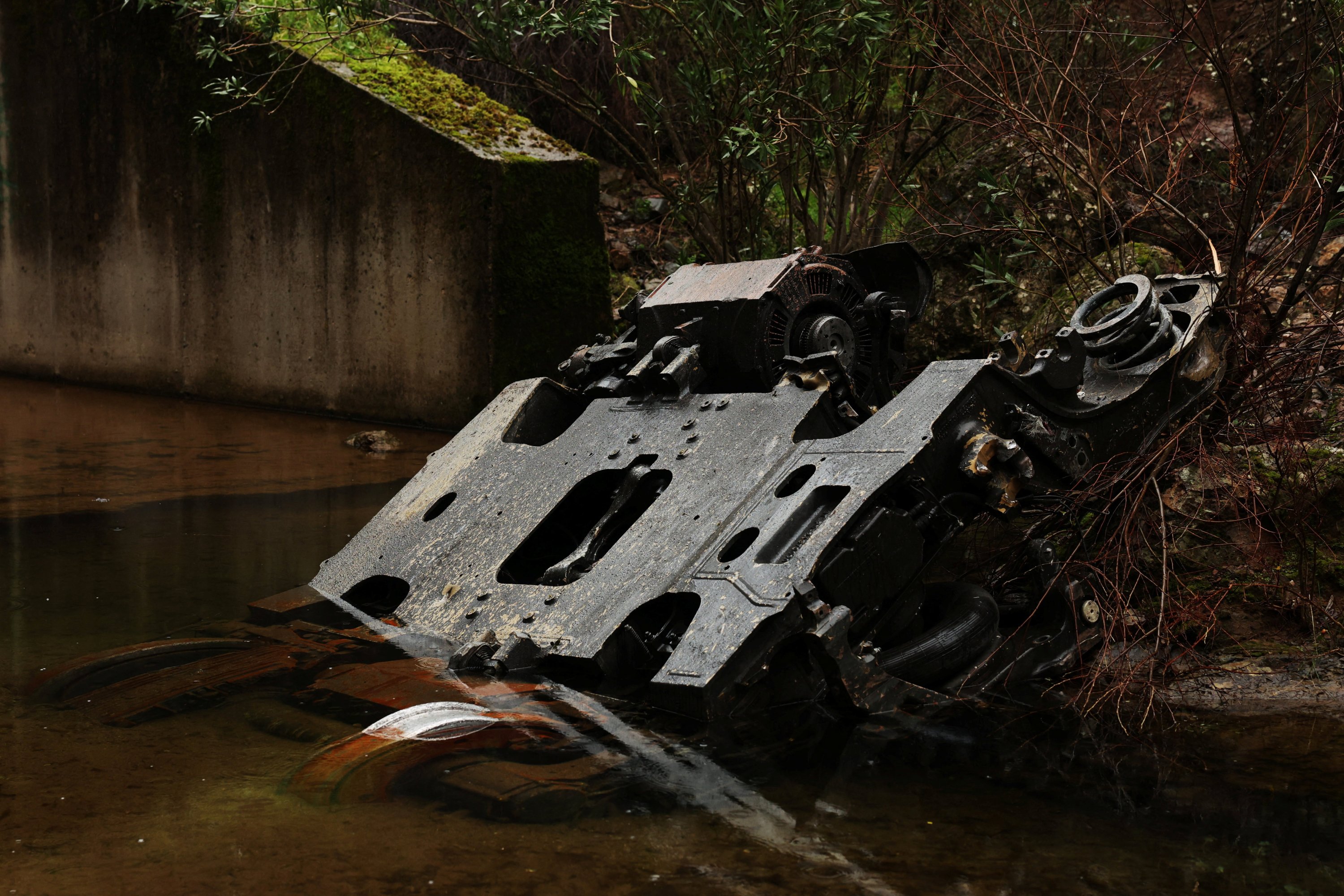
A heavy piece of metal recovered near the scene of Spain’s deadliest rail disaster in years may be the missing undercarriage component investigators believe holds the key to understanding how two high-speed trains derailed and collided, killing at least 43 people.
The crash unfolded late Sunday near the southern town of Adamuz, in Cordoba province, when two trains traveling at high speed derailed within seconds of each other in a remote, hilly stretch of track. The impact left mangled carriages scattered across the ravine below and triggered one of Europe’s worst rail accidents in recent decades.
Spain’s rail accident investigation body, the CIAF, quickly zeroed in on a missing bogie, the wheeled undercarriage that connects a train to the rails, describing it as central to reconstructing the derailment.
CIAF head Inaki Barron said the component’s failure or displacement could explain how the train lost stability at speed.
Photographs taken by Reuters on Tuesday showed a large metal structure lying partly submerged in a narrow stream beside a railway bridge, about 15 meters (49 feet) below the tracks and roughly 300 meters from the crash site.
A source briefed on the investigation said the object is believed to be a bogie from the first train to derail, operated by private consortium Iryo.
Despite its immense weight, the bogie was violently ejected by the force of the crash. “It flew out like a bullet,” the source said, noting the extreme speeds involved and the energy released during the impact.
Investigators had combed the cordoned-off crash zone for days, carefully tagging and photographing debris, but the piece lay outside the secured area and bore no identifying markings.
Transport Minister Oscar Puente said the Civil Guard had located the component on Monday but initially left it in place because of its weight.
He described it as “one of hundreds of pieces of evidence” now under examination, adding that investigators have yet to confirm which of the two trains it belongs to.
Railway experts said the photographs strongly suggest the object is a bogie.
“In high-energy derailments, bogies are often torn free,” said Scottish railway engineer Gareth Dennis. Determining where it came from and how far it traveled, he said, will help investigators calculate the forces involved and trace the sequence of events.
As the technical investigation continues, pressure is mounting on Spain’s rail authorities.
The country’s largest train drivers’ union, SEMAF, called for a nationwide strike after three derailments in 48 hours left dozens dead, including two drivers.
The union has threatened legal action, saying it had warned infrastructure manager Adif months ago about severe wear and tear on the Adamuz stretch of track.
Puente said he would try to avert a strike, arguing that two of the three derailments were weather-related and not caused by track conditions.
Still, Adif has imposed new speed limits on several major routes, including parts of the Madrid-Barcelona and Madrid-Valencia lines, after inspections found damaged sections following recent storms.
At the Adamuz site, rescuers continued the grim task of recovering victims.
Authorities said the death toll rose to 43 after another body was found in the second carriage of a Renfe train.
Puente said the derailment and subsequent collision occurred just nine seconds apart, leaving no time for the drivers to brake.