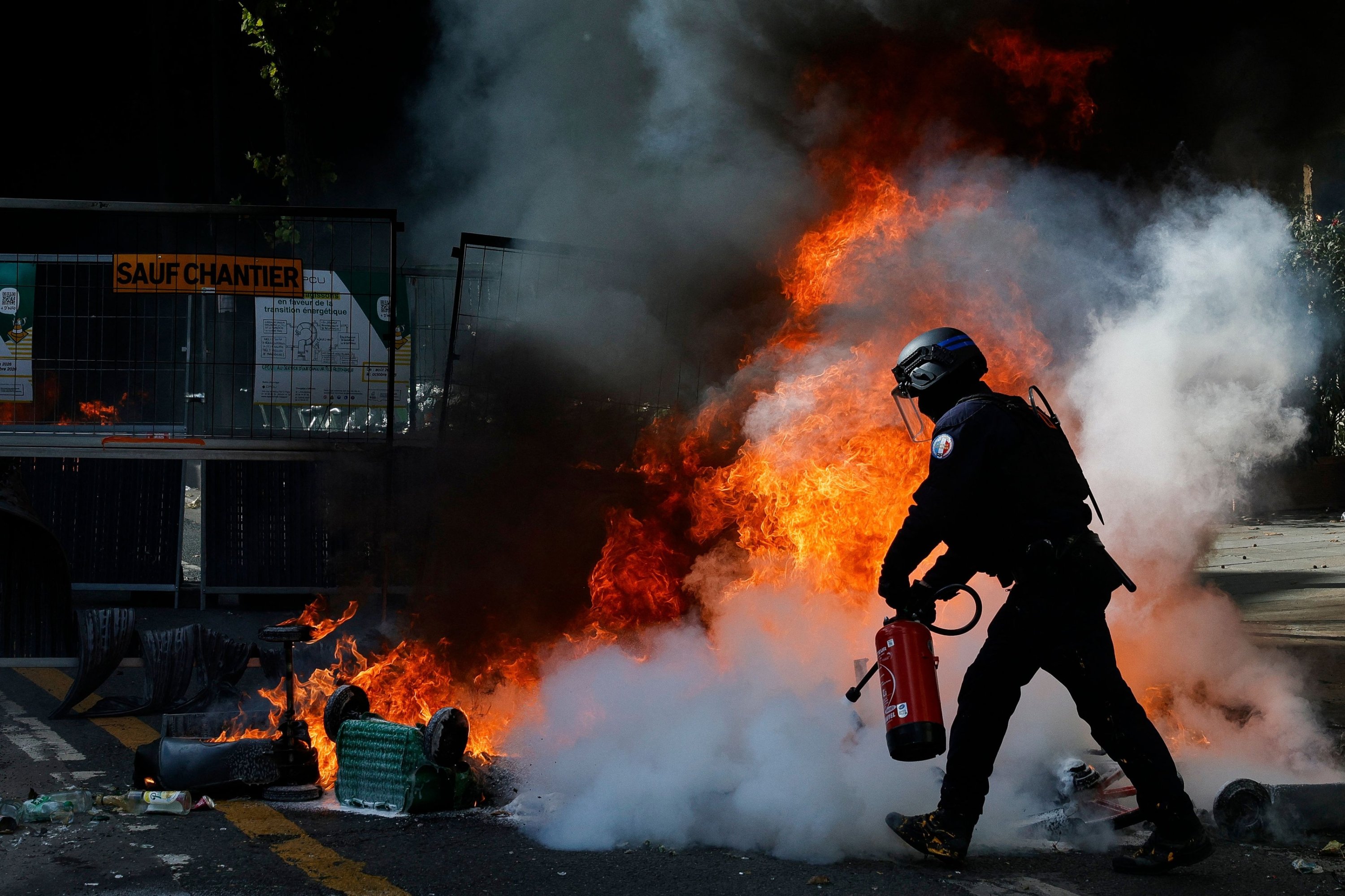
Police clashed with protesters in Paris and other French cities Saturday as thousands demonstrated against rising living costs, stagnant wages and alleged police brutality, reviving the Yellow Vest movement and increasing pressure on President Emmanuel Macron’s government ahead of the presidential election.
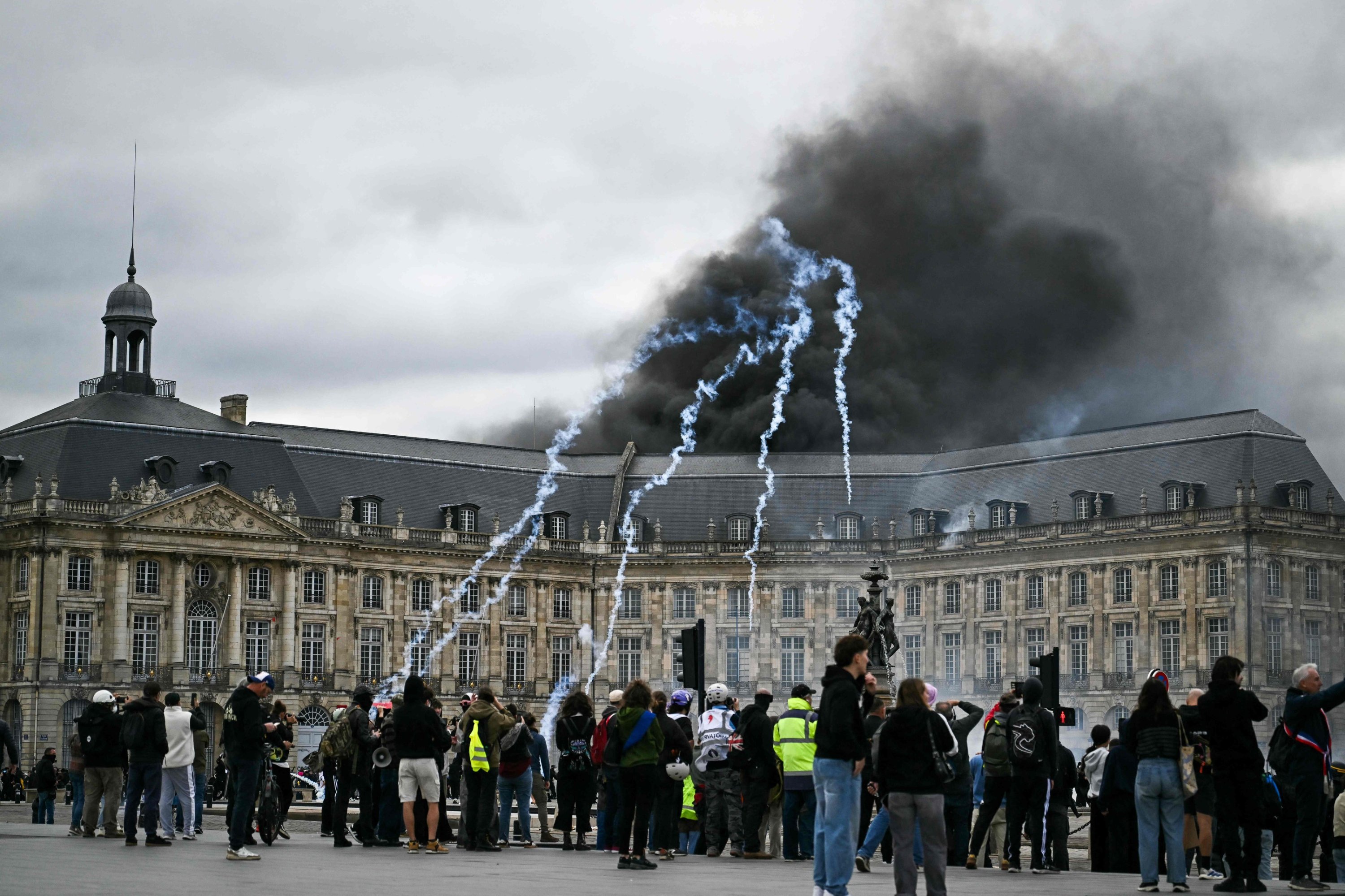
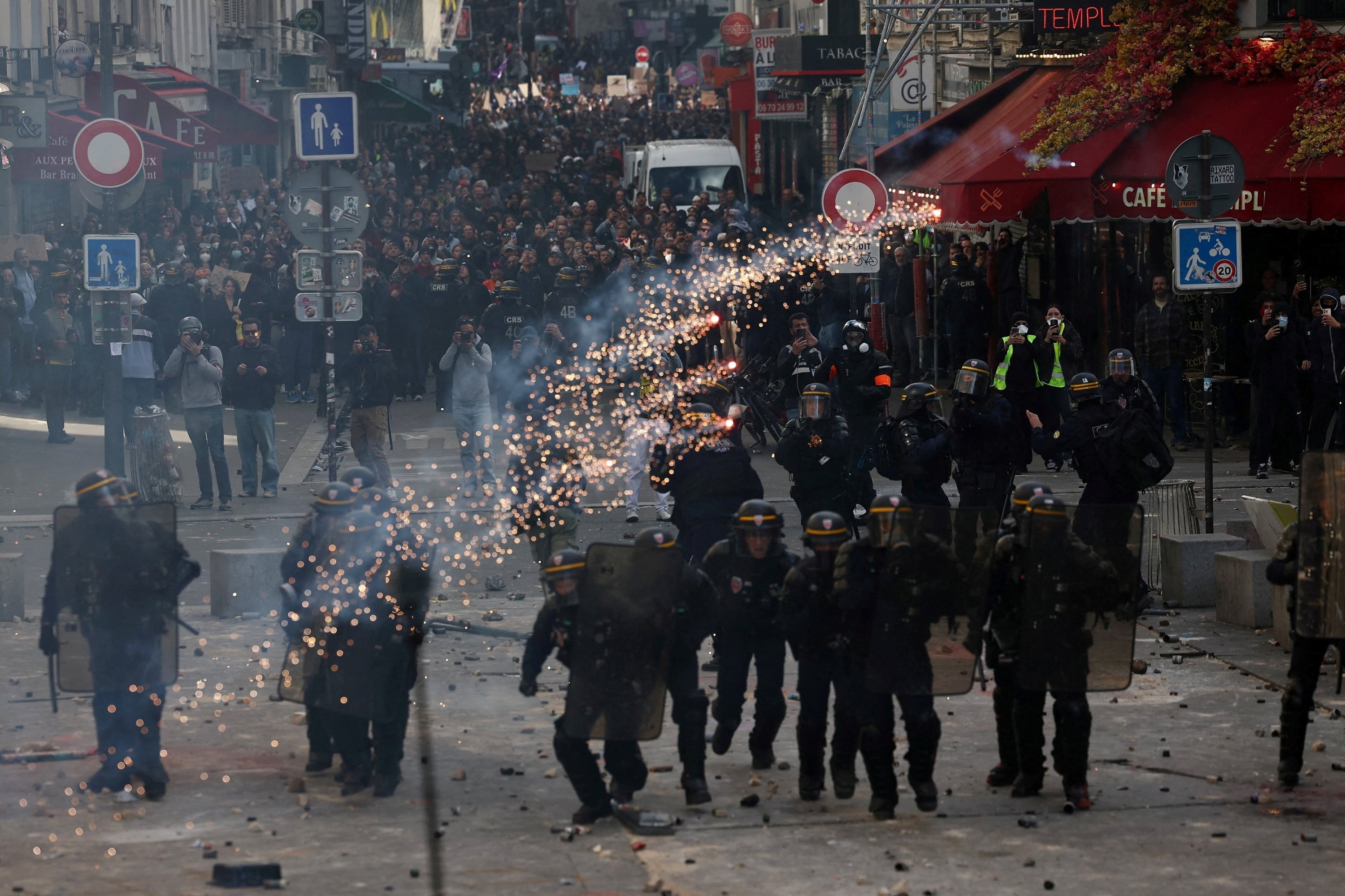
Officers fired tear gas and used water cannons in Paris to disperse groups of demonstrators wearing hoods and face masks who threw fireworks and other objects at police.
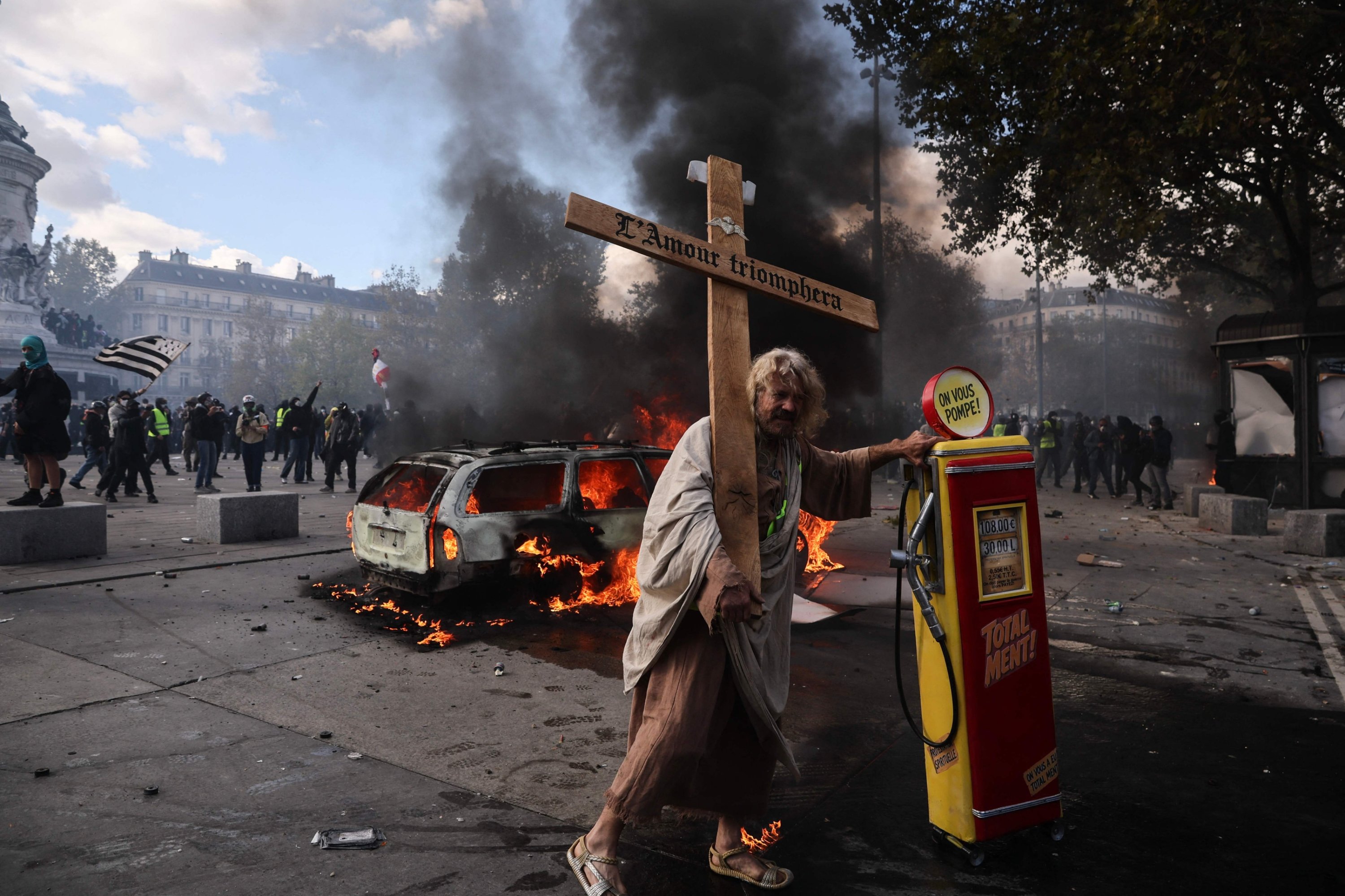
Riot police were deployed around Place de la Republique, while authorities closed metro stations and banned some gatherings near government buildings.
Windows at the Paris offices of French broadcasters CNews and Europe 1 were broken after protesters threw projectiles at the buildings, according to reports from the scene.
The Interior Ministry said authorities had recorded about 140 protest actions outside the Paris region by shortly after midday, involving more than 32,000 people. Police had detained at least 166 people nationwide.
The demonstrations followed weeks of student-led protests over education funding and police conduct, with labor unions and supporters of the Yellow Vest movement joining calls for higher wages, lower prices and better public services.
The unrest has intensified scrutiny of the government’s response to demonstrations, particularly after several teenagers suffered serious injuries during confrontations with riot police.
In Marseille, France’s second-largest city, masked demonstrators forced their way into the lobby of City Hall after striking the entrance with security barriers.
Some entered the building, and one spray-painted an anarchist symbol on an interior wall before police moved in to disperse them.
Shops and a municipal police station were also damaged. Mayor Benoit Payan described the damage inside City Hall as limited in an interview with French broadcaster BFM TV.
“We’re taking the Bastille,” one demonstrator shouted, invoking the 1789 storming of the Paris fortress that became a defining moment of the French Revolution.
An Agence France-Presse (AFP) photographer also witnessed protesters attacking a police building in Marseille.
“We’re here to protest the deplorable resources allocated to education and against police brutality,” said Aude, a masked student who declined to give her surname.
In the western city of Rennes, about 20 people erected a barricade using trash bins and large wooden pallets near a shopping mall.
Christophe, a 47-year-old carpenter and former Yellow Vest protester, said he was angered by what he considered excessive police force against teenagers during recent demonstrations.
“We’ve reached the point where the repression is targeting our own children,” he told AFP.
In central France, about 300 people, including high school students, gathered in Gueret to protest rising prices and stagnant wages.
“At the end of the month, I have nothing left. Prices are going up but wages aren’t,” said Franck, a civil servant in his 40s who declined to give his surname.
“We can’t take it anymore, we’re suffocating,” he added.
Authorities also reported violence in Paris, Marseille, Rennes, Toulouse and Angers, including attempted looting, attacks on police officers, fires involving street furniture and damage to government institutions and media offices.
The demonstrations were organized partly through social media, with supporters seeking to revive the Yellow Vest movement, which emerged in 2018 in opposition to planned fuel tax increases and broader concerns about economic inequality.
Named after the high-visibility vests worn by protesters, the movement organized months of demonstrations against Macron’s government, drawing support from workers and rural communities who felt the cost of living was rising faster than their incomes.
Organizers called for renewed protests under the slogan “yellow and youth,” urging teachers, students, workers, pensioners and farmers to participate. More than 600 demonstrations were planned across France, according to a website established by organizers.
The mobilization coincided with the start of school half-term holidays, as student groups sought to broaden support for protests that began in mid-September. School blockades and demonstrations have focused on education funding and allegations of excessive police force.
The CGT, one of France’s largest labor unions, also backed the protests, calling for higher wages and pensions, lower prices and the protection of public services.
Authorities imposed restrictions on demonstrations in central Paris, including near the Champs-Elysees, major railway stations and government buildings. Police detained about 60 people in the capital on Saturday morning, according to AFP.
Macron appealed for calm Friday in Brussels, emphasizing that the right to demonstrate did not justify violence or property damage.
“There is a constitutional right to protest and to express oneself,” he said. “But this right comes with the need to respect. Respect for people, respect for property, and therefore a commitment not to insult or destroy.”
The demonstrations have unfolded amid growing criticism of police tactics during student protests. Thousands of people have been arrested in recent weeks, while hundreds have been injured and some schools have been set on fire during the unrest.
Some of the most serious injuries have involved teenagers struck by police crowd-control weapons. Interior Minister Laurent Nuñez suspended the use of a type of stun grenade against young demonstrators after a 15-year-old lost a hand.
The incidents have become a rallying point for protesters who accuse authorities of using disproportionate force to control demonstrations.
Climate activist Greta Thunberg joined students at a high school in the Paris suburb of Saint-Denis on Tuesday, bringing further international attention to the student movement.
The government faces the challenge of addressing public anger over household costs while preventing further violence. The demonstrations have also become a political issue as France approaches a presidential election campaign in which purchasing power, public services and law enforcement are prominent concerns.
A survey of 2,000 people published earlier this month found that about 45% of French people were concerned about the cost of living and inflation.
Purchasing power has come under pressure, while fuel prices have climbed since the outbreak of the U.S.-Iran war earlier this year, adding costs for motorists and businesses.
France is also struggling with mounting public debt, which is projected to exceed 120% of gross domestic product next year, roughly double the European Union’s 60% benchmark.
Economists say significantly reducing the debt will require major reforms, potentially including changes to France’s costly pension system. Such proposals have long been politically sensitive, particularly among workers and retirees concerned about their incomes and benefits.
The unrest has given political parties on both the far left and far right an opportunity to position themselves ahead of the presidential race.
Jean-Luc Melenchon, leader of the left-wing France Unbowed party, has backed the student protests and joined a demonstration earlier in the week. Marine Le Pen, whose National Rally party has led opinion polls in the presidential race, has positioned herself in support of the police.
The competing responses reflect the political divisions surrounding the demonstrations, as protesters demand relief from rising prices and improvements to public services while the government faces calls to restore order.