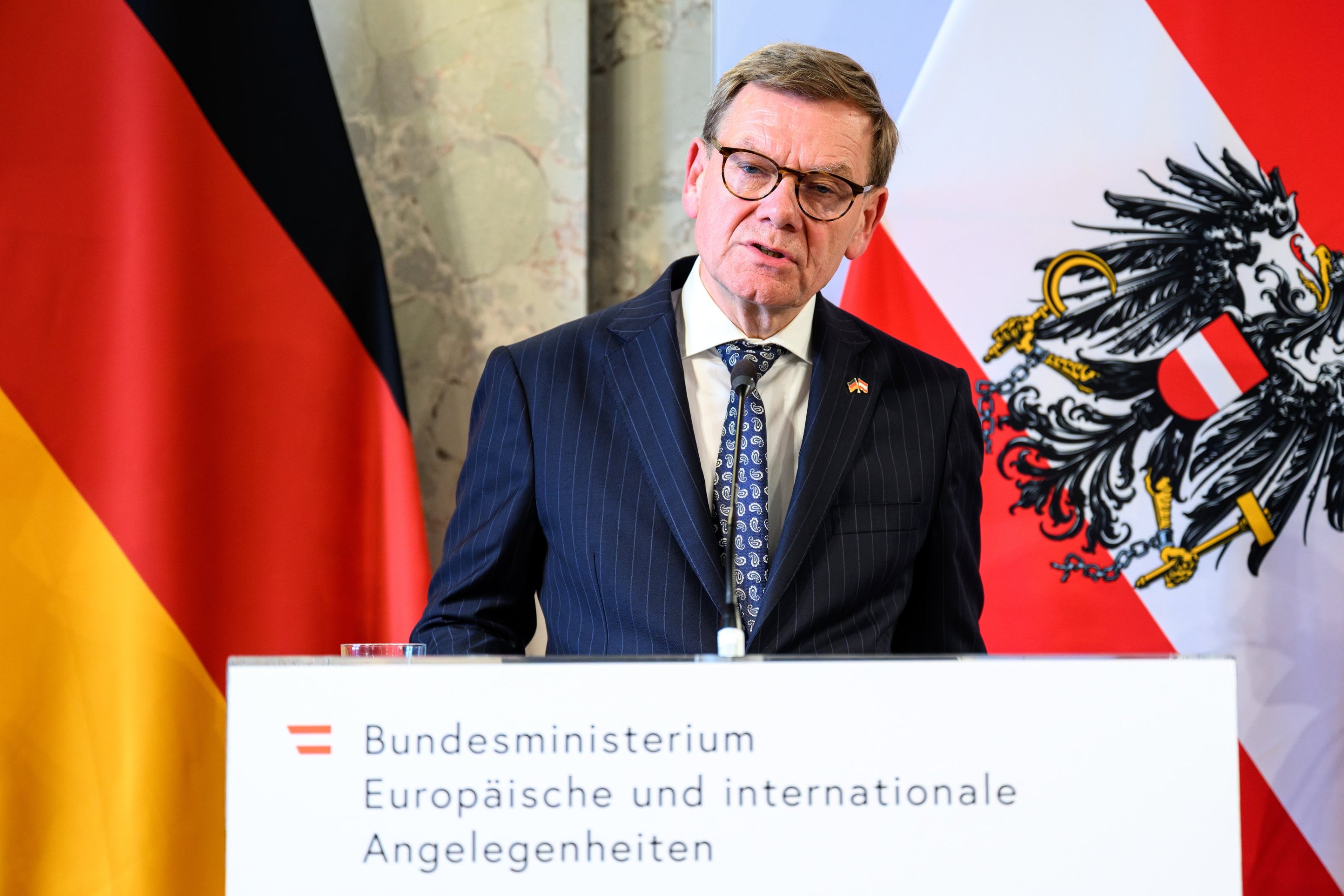
German Foreign Minister Johann Wadephul on Thursday voiced strong opposition to resuming diplomatic ties with Afghanistan’s Taliban rulers, amid calls within the government to engage the regime in order to facilitate deportations of convicted criminals.
Speaking at a joint news conference in Vienna with his Austrian and Israeli counterparts, Wadephul said Berlin’s limited contacts with the Taliban remained strictly technical and insisted that Germany would not recognize the group as Afghanistan’s legitimate government. He emphasized that this position also applied to the Interior Ministry.
The remarks come after Interior Minister Alexander Dobrindt said he was open to holding direct talks with the Taliban to enable the repatriation of Afghan nationals convicted of crimes in Germany. Dobrindt told Focus magazine that third-party mediators were no longer a viable long-term solution, suggesting that Berlin should reach direct agreements with Afghan authorities to carry out deportations.
“Third parties are still needed to conduct talks with Afghanistan. This cannot remain a permanent solution,” he said. “My idea is that we should reach agreements directly with Afghanistan to enable repatriations.”
Wadephul, however, highlighted serious concerns over the humanitarian situation in Taliban-ruled Afghanistan, particularly the treatment of women and girls, saying these realities made diplomatic engagement untenable.
Germany halted deportations to Afghanistan following the Taliban’s return to power in August 2021. But recent violent incidents involving asylum seekers — including several deadly attacks — have reignited public and political debate over the resumption of deportations, especially of convicted offenders.
In a rare move last August, Germany deported 28 convicted Afghan criminals via Qatar, a one-time effort by the previous center-left administration to ease domestic pressure over migration policy. The operation was not followed by a broader shift in policy.