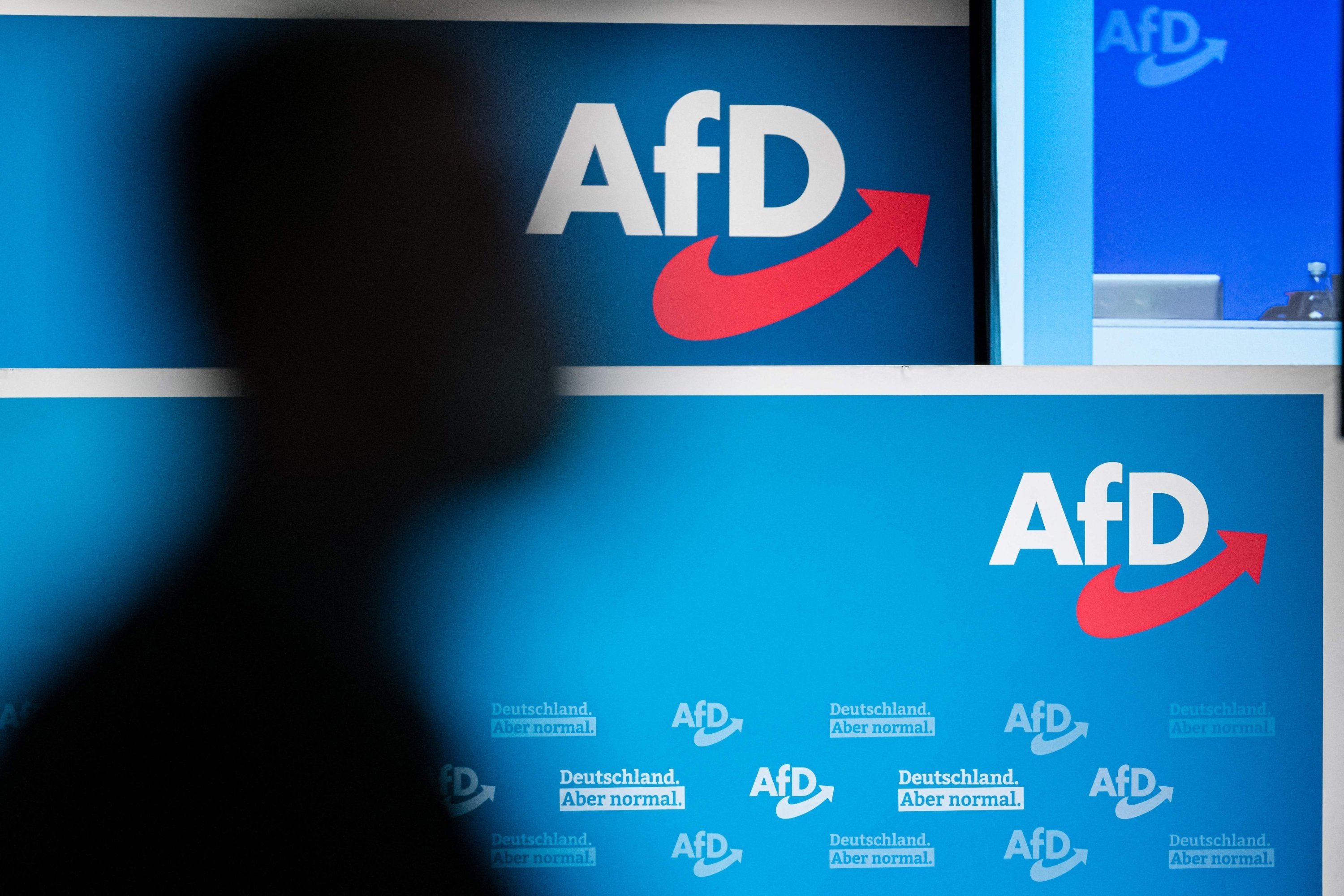
Regional leaders of the far-right Alternative for Germany (AfD) voiced outrage Thursday after a fourth state branch was officially labeled a far-right extremist group.
The reaction came as authorities released on Thursday a redacted version of the 142-page assessment that classified the AfD's branch in Brandenburg, which surrounds Berlin, as a confirmed far-right extremist group.
Brandenburg's domestic intelligence chief, Wilfried Peters, said the party advocated for people who do not "belong to the German mainstream" to leave the country.
"This is about discrimination and exclusion," Peters said during the presentation of the 140-page report outlining the justifications for the classification.
"The AfD Brandenburg is highly xenophobic and, in parts, racist. The party advocates an ethnocultural concept of the German people that excludes and discriminates against certain individuals," he said, referring to the far-right party's discriminatory stance against immigrants and Muslims.
"Additionally, there are serious statements from AfD party officials that are directed as an immediate declaration of war against democracy and its central core, the free democratic constitutional order," he said.
Brandenburg's decision to classify the AfD's regional branch as a "proven right-wing extremist" organization follows similar classifications made earlier in the federal states of Saxony, Saxony-Anhalt, and Thuringia.
Brandenburg Interior Minister René Wilke said the far-right party has shown contempt for state institutions.
Brandenburg's AfD parliamentary leader Hans-Christoph Berndt slammed the assessment, which was only released after a lengthy legal dispute and is based on findings by the domestic intelligence, as arbitrary.
Berndt, addressing the state parliament in Potsdam, described the domestic intelligence agency as a "danger to democracy," accusing it of "making judgements" instead of weighing matters in a neutral manner.
The Brandenburg branch of the anti-immigrant party is its fourth regional division to be classified as confirmed far-right extremist following the AfD branches in Thuringia, Saxony and Saxony-Anhalt - all states that were part of the former Communist East Germany.
The AfD's rise to become Germany's second-largest party, with over 20% support in February's parliamentary elections, has alarmed mainstream parties concerned about the future of German democracy amid growing polarization.
The party has built its support base through anti-migration campaigns and by stoking fears about Muslims and immigrants. The AfD has also capitalized on widespread frustration with traditional political parties and concerns about economic decline.
In a poll released earlier this week, the AfD surpassed Chancellor Friedrich Merz's Christian Democrats, reaching 26% support - up one percentage point from the previous week. According to the RTL/ntv poll, Merz's conservative CDU/CSU alliance dropped one point to 24%.
The Social Democratic Party (SPD), Merz's junior coalition partner, remains stagnant at 13% in the polls, representing a decline of more than three percentage points from their February election performance.