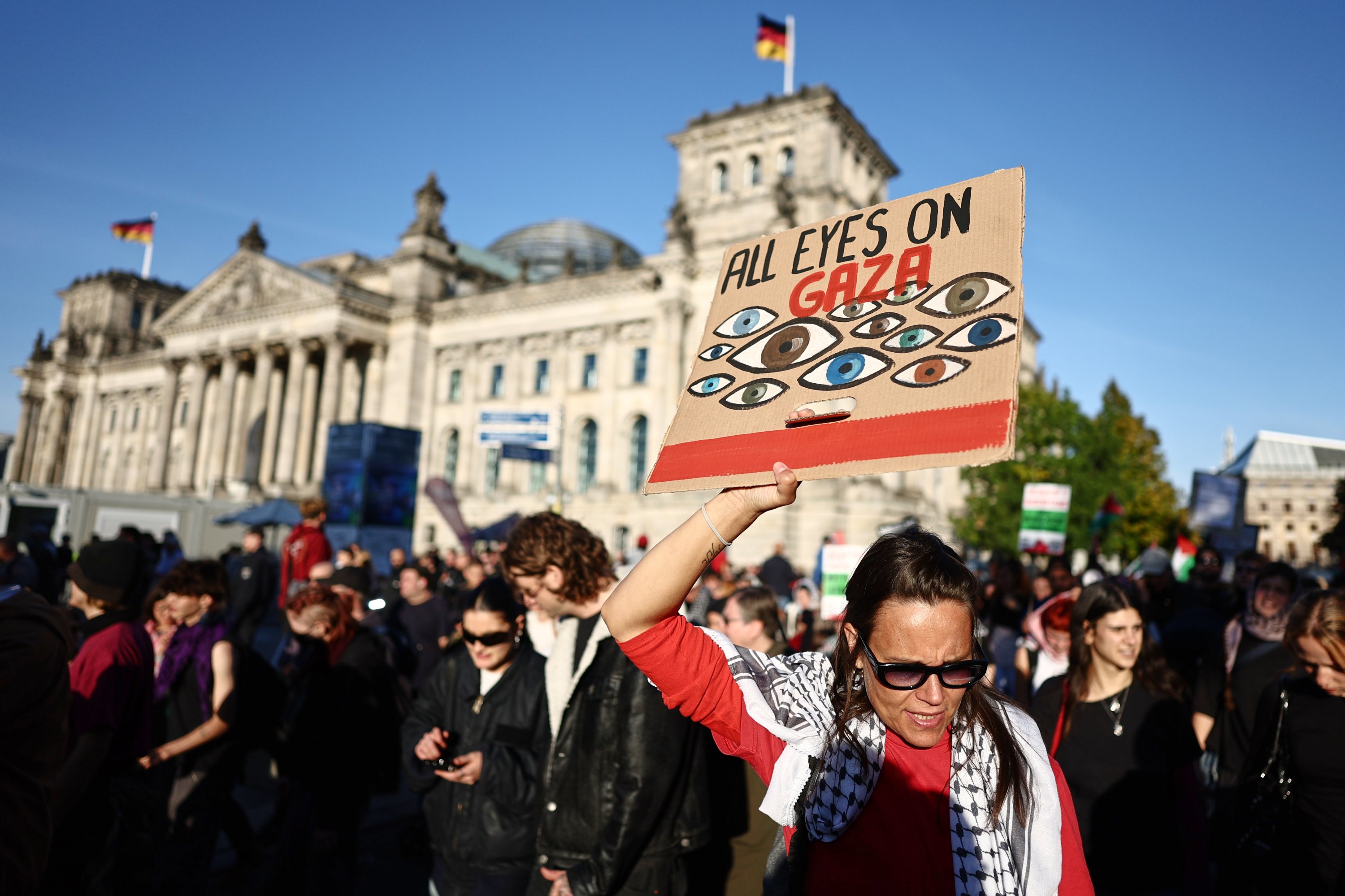
Young Muslims in Germany increasingly feel sidelined in public debates over the Middle East, creating space for extremist influencers to gain traction among frustrated youth, experts warned this week.
The Association for the Prevention of Islamism and the Promotion of Democracy (KN:IX connect), which works to prevent young people from drifting into extremist circles and supports those seeking to leave them, said global crises – particularly the Gaza war – have intensified feelings of exclusion.
Jamuna Oehlmann, managing director of the Federal Working Group on Religiously Motivated Extremism, said the Middle East conflict has acted as a “catalyst,” but emphasized that the way Germany handles such crises is equally important.
“The discourse here has been different than in other countries,” she said, noting that many Muslims, especially those with Palestinian roots, felt their perspectives were ignored despite being directly affected by the Gaza war.
Experts said extremist actors have exploited this sense of exclusion and broader political rhetoric that often frames migration and extremism in sweeping terms. By presenting themselves as the only voices that “truly understand” young Muslims, they have been able to attract followers seeking recognition and empathy.
Teaching complex issues like the Middle East conflict requires time and specialized methods, said Friederike Müller, who works in violence and extremism prevention in North Rhine–Westphalia. She warned that many Palestinians in the Ruhr region were unfairly criminalized for participating in demonstrations and labeled as anti-Semitic even when expressing grief and calling for an end to the Gaza war.
“The fact that their distress and emotions are not given any space is worrying,” she said.
Experts also criticized what they described as a particularly restrictive approach to Middle East topics in Berlin’s schools.
The German government has been a fervent supporter of Israel, despite its genocidal attacks in Gaza, and has had a hostile attitude against even the most vulnerable Palestinians, including children. The government rejected a proposal from several cities to take in injured and traumatized children from the Gaza Strip, despite growing calls. Its refusal to accept injured children from Gaza stands in sharp contrast to its response during the early days of the war in Ukraine, when the government swiftly opened its doors to tens of thousands of Ukrainian refugees, including children, offering medical care, housing, and psychological support. Critics say the differing treatment exposes a double standard in Germany’s humanitarian policy, raising questions about whose suffering is deemed worthy of compassion and state support.