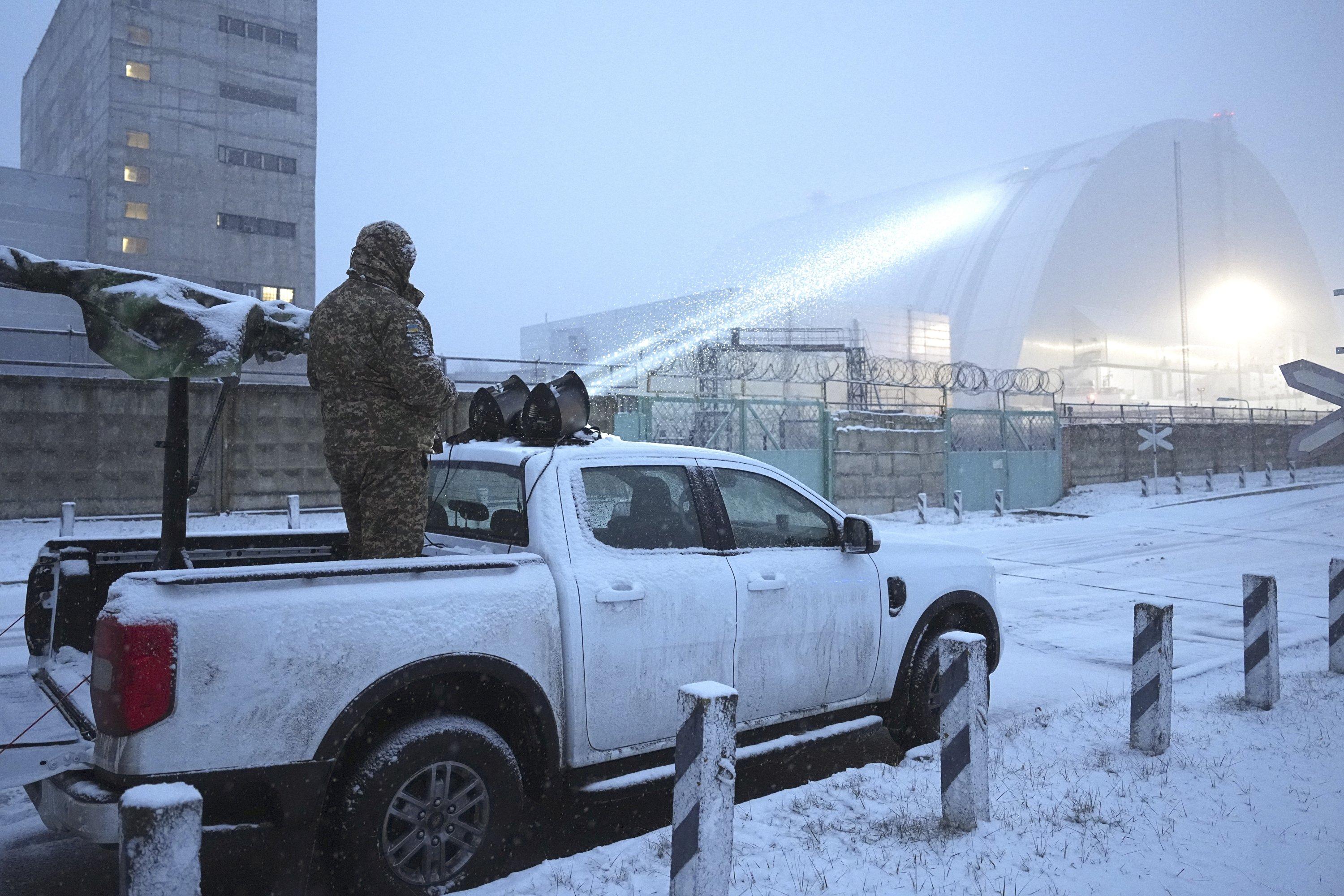
The protective structure over Chernobyl’s ruined Reactor 4 needs substantial restoration because of war-related damage, the International Atomic Energy Agency (IAEA) said Friday, warning that only limited temporary fixes have been made since a February drone strike compromised the shelter’s defenses.
"Limited temporary repairs have been carried out on the roof, but timely and comprehensive restoration remains essential to prevent further degradation and ensure long-term nuclear safety," IAEA Director General Rafael Grossi said in a statement on Friday.
According to the agency, a recent safety assessment found that the shelter had lost protective functions after a drone strike in February.
This includes containment capability around the reactor, which blew up during safety testing in 1986.
The IAEA recommends further repairs and protective measures, including moisture controls, updated corrosion monitoring and improved monitoring of the concrete sarcophagus that was built over the damaged reactor immediately after the disaster.
The entire Chernobyl was permanently shut down in December 2000 when the last operating reactor was closed.
Further preliminary repairs are to be carried out next year to improve the new shelter at the plant, located around 100 kilometers north of Kiev.
In February, according to Ukrainian President Volodymyr Zelensky, a Russian drone damaged the New Safe Confinement (NSC) - a huge hangar-like structure installed over the fourth reactor in 2016. No increased radiation levels were reported after the drone incident.
Moscow denied that it had attacked the site, which its troops occupied for 35 days at the start of the war before withdrawing.
Since the full-scale Russian invasion of Ukraine, there have been repeated incidents at the country's partially decommissioned nuclear power plants. At the beginning of October, according to Kiev, the shelter at Chernobyl was left without power due to attacks on energy infrastructure.
The decommissioned Zaporizhzhya nuclear power plant, which has been occupied by Russian troops since March 2022, was cut off from the external power supply for about a month in the autumn.