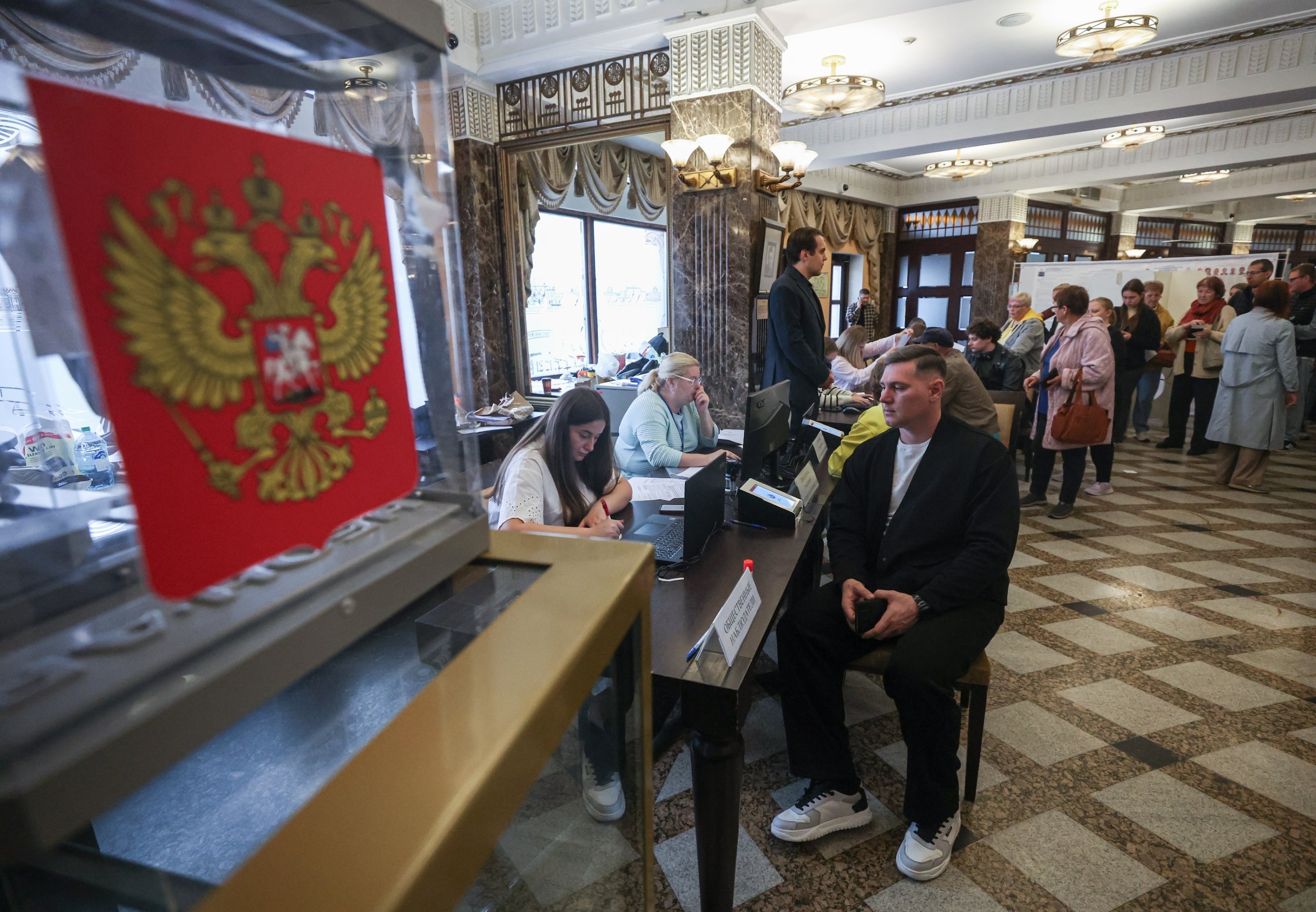
Russians began voting Friday in a three-day parliamentary election that is widely expected to preserve President Vladimir Putin’s political dominance, with the Kremlin using the first State Duma vote since the full-scale invasion of Ukraine as a measure of public support for the war and a test of domestic stability.
The election will determine all 450 seats in Russia’s lower house, with voting continuing through Sunday and initial results expected after polls close at 6:00 p.m. GMT.
United Russia, Putin’s ruling party, currently controls about two-thirds of the Duma and is expected to retain its dominant position.
The vote comes as the war enters its fifth year and its effects are increasingly felt inside Russia. Ukrainian drone strikes have reached targets far from the front line, while fuel shortages, high interest rates, labor shortages and Western sanctions have added pressure to an economy that has continued functioning despite the restrictions.
Moscow Mayor Sergei Sobyanin said Friday that Ukraine launched more than 350 drones at the Moscow region overnight, adding that most were destroyed. The strikes underscored how the war has increasingly reached Russian territory as voters head to the polls.
Putin has framed the election as a demonstration of national unity and support for Russia's war effort. In a televised address ahead of voting, he urged Russians to cast ballots as a way of helping secure victory in Ukraine and showing resolve against what the Kremlin describes as external threats.
For many voters, however, the election offers little genuine choice.
Russia's political landscape has narrowed sharply since the invasion of Ukraine in February 2022. Major parties contesting the election, including the Communist Party, the nationalist Liberal Democratic Party, A Just Russia and New People, broadly support Putin's policies and the war.
The liberal Yabloko party, which has called for an end to the fighting, was removed from the nationwide party-list contest after Russia's Supreme Court ruled that it had violated electoral rules. Some Yabloko candidates are still competing in individual constituencies.
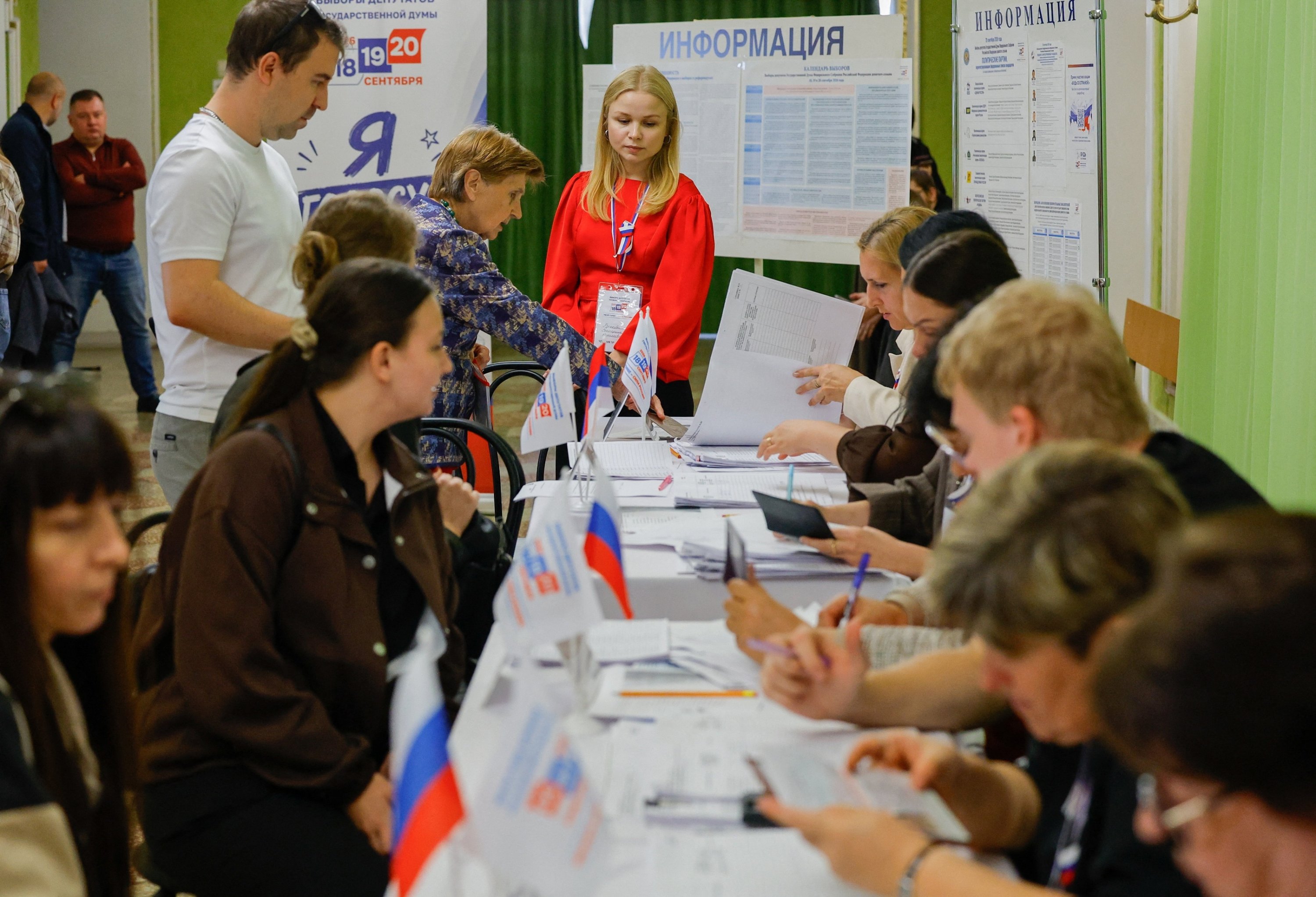
Russia has also intensified restrictions on dissent since the invasion. Critics of the war have faced imprisonment, exile or other forms of pressure, while former opposition leader Alexei Navalny died in an Arctic prison in 2024.
The result has been an election in which United Russia faces no major anti-war force capable of challenging its dominance nationally.
Despite the limited political competition, the vote could offer the Kremlin clues about how Russians are responding to a war that has lasted far longer than many initially expected.
The conflict has brought casualties, economic disruption and growing security concerns. Ukrainian attacks have struck infrastructure and industrial facilities deep inside Russia, while businesses have faced higher borrowing costs and shortages of workers.
Some Russians remain firmly behind Putin and his military campaign.
At a Moscow polling station, rail worker Sergei Korenets, 41, said he planned to vote for United Russia because he wanted "stability." He also said he wanted the war to end as quickly as possible but did not want political change at home, saying he was satisfied with his financial situation.
Lyubov, 55, expressed support for the Kremlin's justification for the war, saying NATO should not be near Russia's borders. But she also criticized domestic policies, including Putin's decision several years ago to raise the retirement age.
Such views reflect the complicated picture facing the Kremlin. Support for the government and its military campaign does not necessarily translate into satisfaction with every aspect of Russian life.
One of the biggest concerns among some Russians is what could happen after the election.
The 2022 mobilization of 300,000 reservists was deeply unpopular and prompted a large exodus of draft-age men from the country. As the war continues, some Russians fear another call-up could follow the parliamentary vote.
Ukrainian President Volodymyr Zelenskyy has accused the Kremlin of preparing a new mobilization campaign this autumn, a claim Putin has denied.
The Kremlin has not announced a new mass mobilization, but concerns about further recruitment have added to anxiety surrounding the election.
Russia's exiled opposition has urged anti-Kremlin voters not to boycott the election. Instead, it has called on them to use their ballots against United Russia.
Navalny's widow, Yulia Navalnaya, has urged anti-war Russians to gather at polling stations at noon Sunday as part of a protest strategy.
Yabloko has taken a different position, arguing that participating in an election with such limited political competition would simply strengthen the system it opposes.
The disagreement highlights the difficult choices facing Russians who oppose the war or the Kremlin but have few avenues for expressing that opposition through the formal political system.
Voting is also taking place in Ukrainian territories that Russia claims to have annexed, a move Ukraine and its international partners have rejected.
With United Russia expected to retain control of the Duma, the most closely watched question may not be whether Putin's party wins, but what the vote reveals about turnout, economic frustration and the public's willingness to continue supporting a war that has increasingly affected daily life inside Russia.
Partial results are expected to begin coming in Sunday evening, with near-complete results expected Monday.