A deadly heatwave sweeping Europe has killed two people in Spain and two in France and forced the shutdown of a nuclear reactor in Switzerland, officials said.
With scorching temperatures again Wednesday, Spanish officials said a wildfire in Catalonia had killed two people a day earlier and France's energy minister reported two deaths with a direct link to the heatwave, with 300 others taken to hospital.
Italy issued red alerts for 18 cities because of the extreme heat and Türkiye has been tackling wildfires in what meteorologists say is an "exceptional" heatwave because it has come so early in Europe's summer.
The blaze in Torrefeta in the Catalonia region of Spain destroyed several farms and affected an area stretching for about 40 kilometers (25 miles), official said. It was largely contained, though more wind and thunderstorms were expected Wednesday.
"The fire was extremely violent and erratic due to storms and strong winds, generating a convection cloud that complicated extinguishing efforts," the fire service said.
Authorities in the Spanish city of Barcelona said Tuesday they were also looking into whether the death of a street sweeper at the weekend was heat-related.
Spain experienced its hottest June on record this year, and
France had its hottest June since 2003, Energy Minister Agnes Pannier-Runacher said.
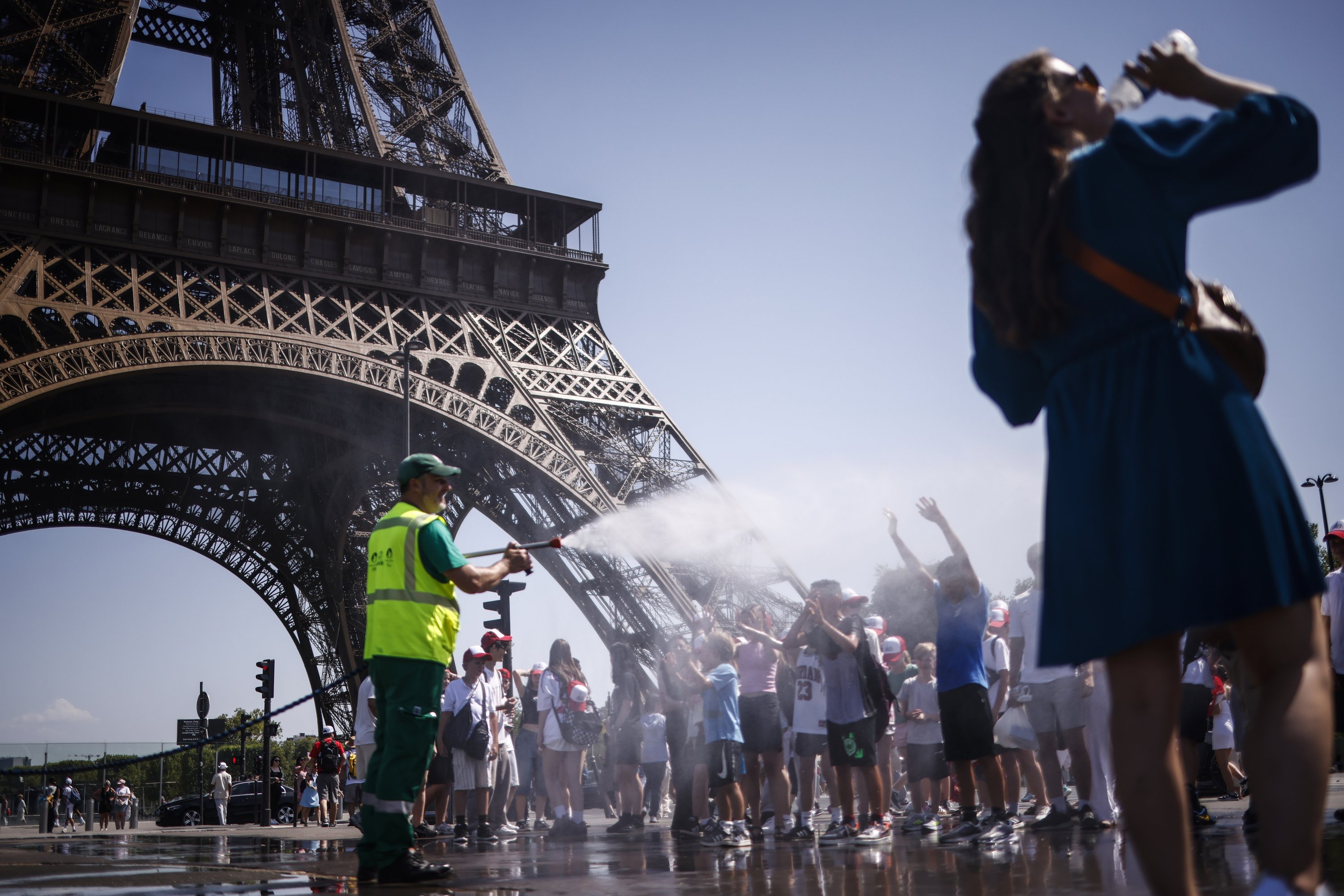
Weather forecaster Meteo France said red alerts remained for several areas of central France but that heat was easing in the west, though intense thunderstorms with possible heavy bursts of rainfall were expected in many parts of the east.
Temperature highs were expected around 39 degrees Celsius (102.2 degrees Fahrenheit), with up to 34 degrees Celsius in Paris, and 36 degrees Celsius to 38 degrees Celsius in Strasbourg, Lyon, Grenoble and Avignon.
In Italy, Florence was expected to bear the brunt of the heat with a top temperature of 39 degrees Celsius during the day. Red alerts were issued in 18 cities, including Milan and Rome.
There was a risk of violent and sudden rain and storms, particularly along the central Apennine mountain region and Sardinia and Sicily.
Swiss utility Axpo shut down one reactor unit at the Beznau nuclear power plant and halved output at another on Tuesday because of the high temperature of river water.
Water is used for cooling and other purposes at nuclear power plants, and restrictions were expected to continue as temperatures are monitored.
Scientists say greenhouse gas emissions from burning fossil fuels are a cause of climate change, with deforestation and industrial practices being other contributing factors. Last year was the planet's hottest on record.